Drought Declared in 265 Talukas Across Maharashtra

Chief Minister Devendra Fadnavis directed district collectors to immediately begin crop surveys and conduct panchnamas in the affected areas.
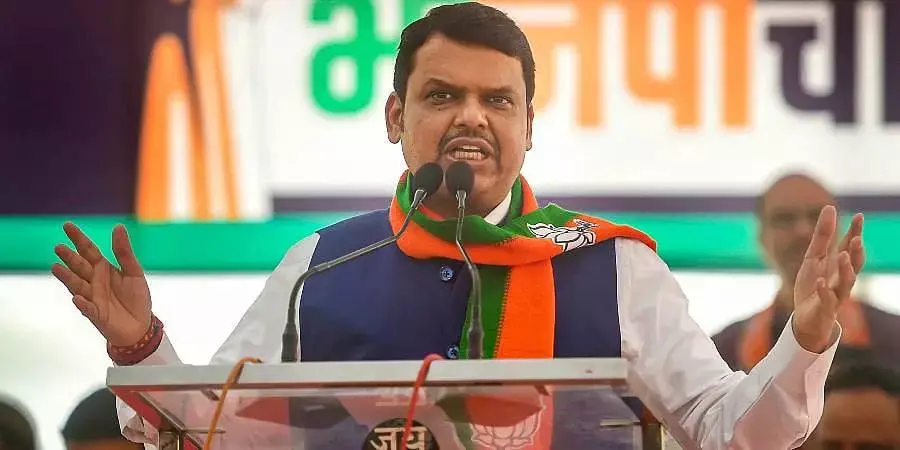
Mumbai:The Maharashtra government on Saturday declared drought in 265 of the state’s 358 talukas and announced a package of relief measures for farmers, agricultural labourers, students, livestock owners and other affected residents.
The measures include exemption from land revenue, restructuring of crop loans, deferment of recovery of agriculture-related loans, concessions on electricity bills for agricultural pumps above 7.5 HP, waiver of examination fees for school and college students, relaxation of norms for rural employment guarantee works, tanker supply of drinking water, and arrangements for foodgrain and fodder.
The government said separate assistance for crop losses would be announced after completion of the prescribed assessment process. Chief Minister Devendra Fadnavis directed district collectors to immediately begin crop surveys and conduct panchnamas in the affected areas.
The declaration came three days after Fadnavis visited drought-affected areas in the Marathwada and Vidarbha regions.
The Relief and Rehabilitation (R&R) Department, headed by Additional Chief Secretary Vinita Vaid-Singal, issued a government resolution (GR) on Saturday declaring drought in 265 talukas. According to the GR, the Agriculture Commissioner’s report found drought conditions in these talukas based on rainfall deficit and other factors during the period from June to September 26.
The R&R department has activated “Trigger-1” under the state’s Drought Management Manual, 2016, and the Drought Management Code. Trigger-1 is the first stage in the state’s drought-response framework and is activated when the prescribed rainfall-deficit and prolonged dry-spell conditions are met.
“Since Trigger-1 (First Trigger) is applicable in these 265 talukas, the District Collectors should immediately initiate the process of conducting crop damage assessments (panchnamas) in these areas,” the GR said. It directed officials to collect photographs showing crop conditions along with their GPS coordinates and submit reports to the government through the Commissioner of Agriculture.
The relief measures also include protecting agricultural power connections, undertaking water-conservation works, ensuring fodder and foodgrain availability, and providing drinking water through tankers. Employment guarantee works will be expanded by relaxing prescribed norms.
The 265 talukas are spread across districts including Raigad, Ratnagiri, Sindhudurg, Nashik, Dhule, Jalgaon, Nandurbar, Ahilyanagar, Pune, Solapur, Sangli, Satara, Kolhapur, Chhatrapati Sambhajinagar, Jalna, Beed, Latur, Dharashiv, Nanded, Parbhani, Hingoli, Buldhana, Amravati, Akola, Washim, Yavatmal, Wardha, Nagpur, Bhandara, Gondia, Chandrapur and Gadchiroli.
The GR said assistance to farmers for crop losses in the 265 talukas would be announced through a separate GR after completion of the prescribed procedure.
Fadnavis said farmers and agricultural labourers would remain at the centre of the government’s relief efforts and called for coordinated action to tackle the drought situation.
Meanwhile, Maharashtra Congress president Harshvardhan Sapkal demanded that the government immediately deposit compensation of Rs 1 lakh per hectare into the bank accounts of drought-affected farmers, with panchnama formalities to be completed later.
Sapkal said the relief package announced by the government offered only limited concessions despite the severity of the situation. With Dussehra and Diwali approaching, he said farmers’ homes should not remain in darkness and demanded a waiver of crop loans, free seeds and fertilisers for the rabi season, adequate fodder and drinking water, and financial assistance for agricultural labourers.
He said the kharif crop had suffered extensive damage and farmers were facing difficulties related to water availability, livestock and preparations for the rabi season.
Sapkal also demanded a complete waiver of educational fees for students instead of only examination fees. He questioned the government’s preparedness and alleged that the current drought was more serious than the 1972 drought and that the government lacked a comprehensive plan to deal with the situation.
Questioning the provision for electricity-bill concessions for agricultural pumps, Sapkal said farmers would not benefit from the measure if water was unavailable for irrigation.
