Don’t Like Live-ins, But UCC For Safety Of Women, Girls: Uttarakhand CM Dhami

Dhami further asserted that the UCC would guarantee equal inheritance rights for women and expedite thousands of pending personal-law cases in the state’s courts.
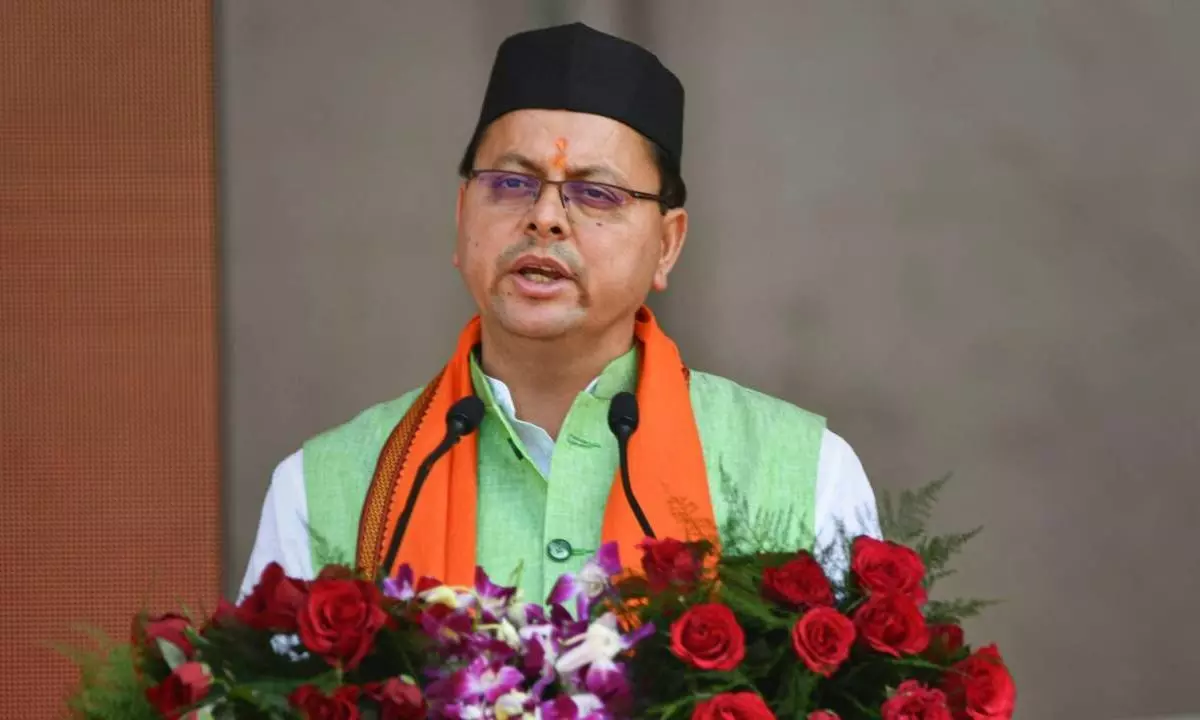
Dehradun: Uttarakhand Chief Minister Pushkar Singh Dhami on Saturday defended his government’s decision to legalise live-in relationships under the state’s Uniform Civil Code (UCC), saying it was necessary to protect women who choose cohabitation.
Addressing a seminar on effective UCC implementation, Dhami acknowledged that, personally, he did not endorse live-in arrangements. “Live-in relationships were never part of our culture,” he said. “However, the reality today is that without legal recognition, many women are vulnerable to abuse and violence.”
Citing two high-profile crimes, the Chief Minister referred to the 2022 murder of Shraddha Walker — whose body was dismembered by her live-in partner, Aftab — and a more recent case in Sitarganj, where a woman was allegedly beheaded by her cohabiting partner. “In both instances, families had no official record of these relationships and were unable to intervene,” he said. “By bringing live-in relationships under the UCC, we aim to ensure that no ‘monster’ can prey on our daughters with impunity.”
Dhami explained that prior to the UCC’s enactment, Uttarakhand law contained no provisions for live-in partnerships. “Parents had no legal means to track or support their children in these arrangements. They were left helpless in the wake of tragic incidents,” he added.
Beyond cohabitation, the Chief Minister highlighted broader UCC reforms, including the abolition of social practices such as halala, iddat, triple talaq, child marriage and polygamy for Muslim citizens. “Uniform Civil Code is a constitutional measure to mitigate differences based on caste, religion and sex,” he said. “It has ushered in judicial equality and an era of women’s empowerment in Uttarakhand.”
Dhami further asserted that the UCC would guarantee equal inheritance rights for women and expedite thousands of pending personal-law cases in the state’s courts. “Our aim is to build a society where no woman is left unprotected by outdated customs or legal gaps,” he concluded.
