Domestic LPG Up ₹60, Commercial Cylinders Rise ₹115

7 March 2026 7:12 AM IST7 March 2026 7:12 AM IST
Cooking gas prices in India have increased, but it remains the most affordable in the region despite varying local rates due to state taxes.
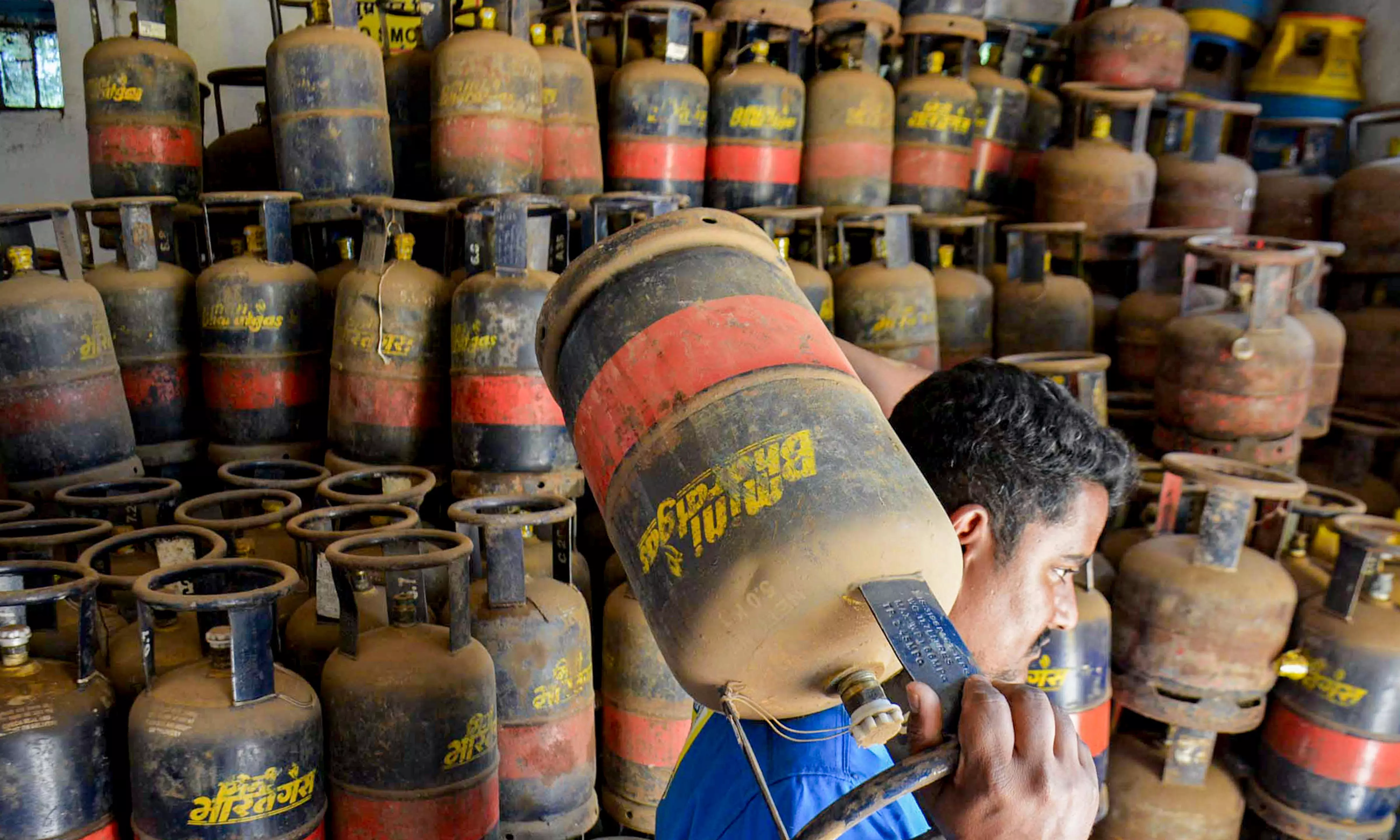
A worker carries an LPG cylinder, in Thane, Friday, March 6, 2026. Rumours about a shortage of petroleum products and liquefied petroleum gas (LPG) due to the ongoing West Asia conflict has triggered consumers to brace for the issue. (PTI Photo)
New Delhi/Kolkata: The government-controlled oil companies on Saturday hiked the price of domestic cooking LPG gas by a steep `60 per cylinder. While the Opposition slammed the second increase in rate in less than a year, the government sources attributed it to the spike in global energy rates amidst the ongoing conflict in West Asia but ruled out any immediate increase in the petrol and diesel prices.
According to the Indian Oil Corporation (IOC) website, beginning Saturday, non-subsidised LPG, the one that common households use in kitchens, will cost ₹913 per 14.2 kg cylinder in Delhi as against ₹853 previously. In Mumbai non-subsidised LPG now costs ₹912.50, in Kolkata ₹939 and in Chennai ₹928.50. Rates differ from state to state depending on the incidence of local sales tax or VAT.
The hike will also impact over 10 crore Ujjwala Yojana beneficiaries, who got free LPG connections since 2016. They will also bear the same amount of price increase and pay ₹613 per 14.2 kg cylinder after accounting for a subsidy of ₹300 per bottle they get for up to 12 refills in a year.
Alongside this, the price of commercial LPG, the one used by establishments such as hotels and restaurants, was increased by ₹114.5 per 19 kg cylinder. It now costs ₹1,883 in Delhi. This increase comes on top of the ₹28 per 19 kg cylinder raise effected on March 1. The commercial LPG rate has risen by ₹302.50 this year.
While the government maintains it has steady supplies of oil due to a diversified portfolio, the oil companies said the hike in domestic rates is due to a steep rise in global energy prices since the US and Israel attacked Iran last weekend, leading to a wider military conflict in the oil- and gas-rich Middle East. The conflict has led to massive disruptions of oil tanker movement through the Strait of Hormuz, triggering a spike in global oil and gas prices. Roughly half of India’s crude oil supplies transit through the Strait of Hormuz. In addition, nearly 40 per cent of India's natural gas imports, largely in the form of LNG from Gulf suppliers like Qatar and the UAE, also pass through the strait.
Sources in the government insist there is no shortage of oil in the country. Also, India is exploring purchasing oil from countries like Australia and Canada, among others, to boost its domestic reserves. So far supplies from Russia, West Africa, the Americas, Central Asia, and non-Gulf Mideast routes have ensured that disruption in any single corridor results in a managed sourcing adjustment, rather than a supply emergency.
India has also recently entered into new energy supply arrangements with partners such as the United States and the United Arab Emirates to ensure stable long-term supplies.
Leading the Opposition's attack, West Bengal chief minister Mamata Banerjee accused the Centre of arbitrarily hiking LPG prices without making alternative arrangements in an "anti-people manner". She also announced that the TMC’s women's wing will stage protests on the streets against the hike on Sunday.
Ms Banerjee said: "They increased the LPG price by ₹60. Then they put a lock-in period of 21 days for booking gas. What will people do if their cylinder is exhausted? Should they not have thought about these issues beforehand? They have also reduced the kerosene quota. You are forcefully increasing prices. Why did you not plan all this earlier? Why did you not think about these things?"
Meanwhile, the Congress doubled down on its attack on the Modi government over US officials' remarks on India's Russian oil purchase and accused it of being "cowardly and compromised".
Congress general secretary in-charge communications Jairam Ramesh said the US treasury secretary has given the Modi government its certificate for faithfully following the US President's orders. The Opposition party's jibe came after the US said it has given "permission" to India to buy Russian oil that is on ships already floating on waterways with a view to easing supplies around the world amid the West Asia conflict.
"We source crude from wherever supplies are available, competitively priced, and deliverable, and we will continue to do so. This has been our consistent position across administrations and across geopolitical cycles," a senior government official said, adding that the recent US statements are meant for the country's domestic audience.
Dismissing the Opposition allegations, a senior government functionary said India has never been dependent on permission from any nation to buy Russian oil and though the US sanctions' waiver allowing refiners to purchase it removes friction, it does not define the country's policy.
"We source crude from wherever supplies are available, competitively priced, and deliverable, and we will continue to do so. This has been our consistent position across administrations and across geopolitical cycles," a senior government official said, adding that the recent US statements are meant for the country's domestic audience.
Russian oil continued to flow into India even after the US objected to it and imposed sanctions, the functionary said, citing a 2013 adjustment done by the then Congress government in oil imports under US sanctions.
The hike will also impact over 10 crore Ujjwala Yojana beneficiaries, who got free LPG connections since 2016. They will also bear the same amount of price increase and pay ₹613 per 14.2 kg cylinder after accounting for a subsidy of ₹300 per bottle they get for up to 12 refills in a year.
Alongside this, the price of commercial LPG, the one used by establishments such as hotels and restaurants, was increased by ₹114.5 per 19 kg cylinder. It now costs ₹1,883 in Delhi. This increase comes on top of the ₹28 per 19 kg cylinder raise effected on March 1. The commercial LPG rate has risen by ₹302.50 this year.
While the government maintains it has steady supplies of oil due to a diversified portfolio, the oil companies said the hike in domestic rates is due to a steep rise in global energy prices since the US and Israel attacked Iran last weekend, leading to a wider military conflict in the oil- and gas-rich Middle East. The conflict has led to massive disruptions of oil tanker movement through the Strait of Hormuz, triggering a spike in global oil and gas prices. Roughly half of India’s crude oil supplies transit through the Strait of Hormuz. In addition, nearly 40 per cent of India's natural gas imports, largely in the form of LNG from Gulf suppliers like Qatar and the UAE, also pass through the strait.
Sources in the government insist there is no shortage of oil in the country. Also, India is exploring purchasing oil from countries like Australia and Canada, among others, to boost its domestic reserves. So far supplies from Russia, West Africa, the Americas, Central Asia, and non-Gulf Mideast routes have ensured that disruption in any single corridor results in a managed sourcing adjustment, rather than a supply emergency.
India has also recently entered into new energy supply arrangements with partners such as the United States and the United Arab Emirates to ensure stable long-term supplies.
Leading the Opposition's attack, West Bengal chief minister Mamata Banerjee accused the Centre of arbitrarily hiking LPG prices without making alternative arrangements in an "anti-people manner". She also announced that the TMC’s women's wing will stage protests on the streets against the hike on Sunday.
Ms Banerjee said: "They increased the LPG price by ₹60. Then they put a lock-in period of 21 days for booking gas. What will people do if their cylinder is exhausted? Should they not have thought about these issues beforehand? They have also reduced the kerosene quota. You are forcefully increasing prices. Why did you not plan all this earlier? Why did you not think about these things?"
Meanwhile, the Congress doubled down on its attack on the Modi government over US officials' remarks on India's Russian oil purchase and accused it of being "cowardly and compromised".
Congress general secretary in-charge communications Jairam Ramesh said the US treasury secretary has given the Modi government its certificate for faithfully following the US President's orders. The Opposition party's jibe came after the US said it has given "permission" to India to buy Russian oil that is on ships already floating on waterways with a view to easing supplies around the world amid the West Asia conflict.
"We source crude from wherever supplies are available, competitively priced, and deliverable, and we will continue to do so. This has been our consistent position across administrations and across geopolitical cycles," a senior government official said, adding that the recent US statements are meant for the country's domestic audience.
Dismissing the Opposition allegations, a senior government functionary said India has never been dependent on permission from any nation to buy Russian oil and though the US sanctions' waiver allowing refiners to purchase it removes friction, it does not define the country's policy.
"We source crude from wherever supplies are available, competitively priced, and deliverable, and we will continue to do so. This has been our consistent position across administrations and across geopolitical cycles," a senior government official said, adding that the recent US statements are meant for the country's domestic audience.
Russian oil continued to flow into India even after the US objected to it and imposed sanctions, the functionary said, citing a 2013 adjustment done by the then Congress government in oil imports under US sanctions.
( Source : Deccan Chronicle with agency inputs )

Next Story