
The IRIS Dena incident occurred within Sri Lanka's maritime zones, but was deemed permissible under wartime rules, as warships enjoy passage rights in most areas. India's maritime reach in the Indian Ocean is substantial, but limited.
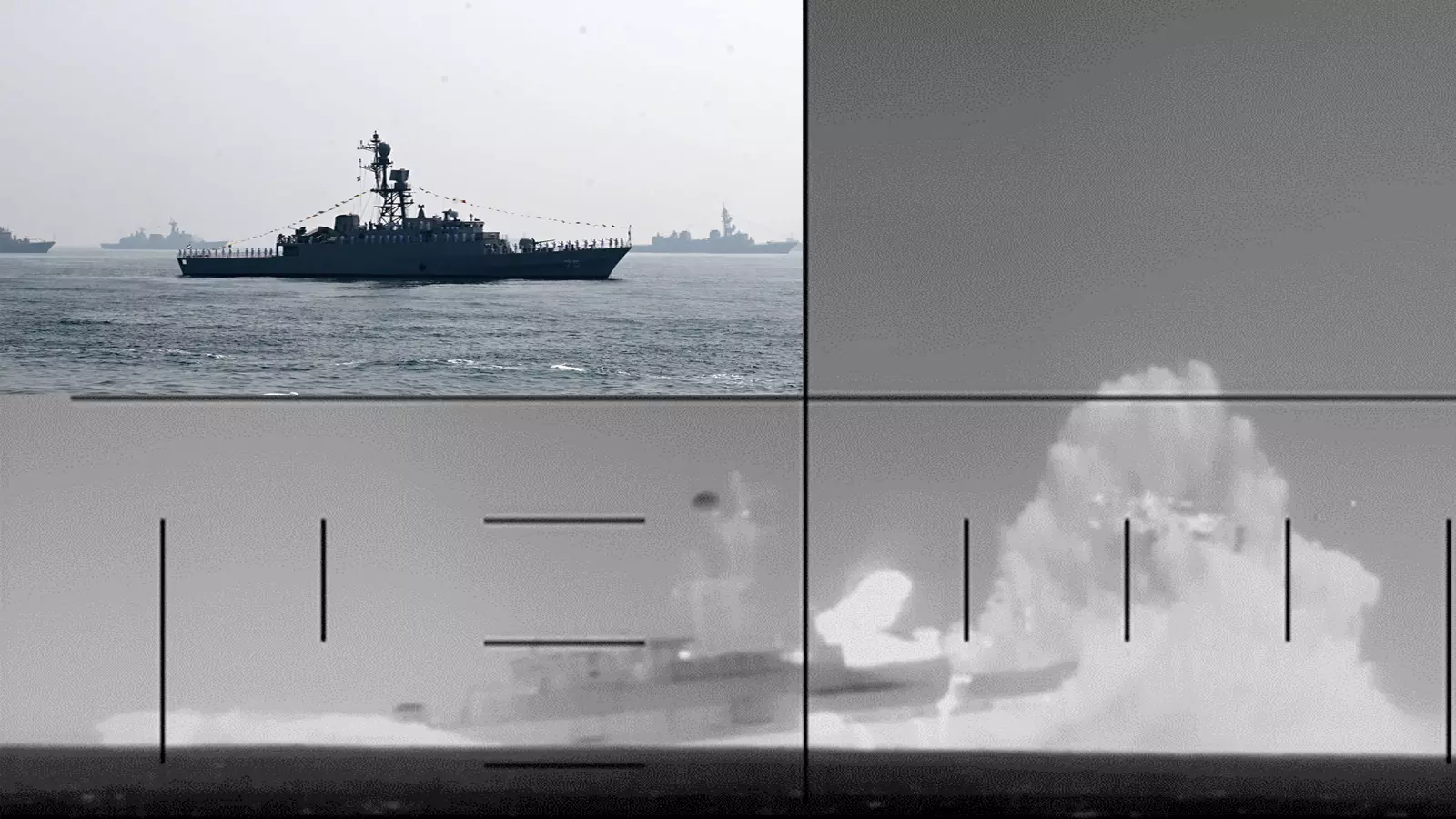
This frame grab from a video released by the US Department of Defense on March 4, 2026, shows what the Department of Defense says is periscope footage of a US Navy submarine firing on and sinking an Iranian warship in the Indian Ocean. A US submarine torpedoed and sank an Iranian warship in the Indian Ocean, Defense Secretary Pete Hegseth said Wednesday. Nearly 150 were missing and several dead after the frigate IRIS Dena sank Wednesday off Sri Lanka, officials said. (Photo by US Department of Defense / AFP)
Recently, amidst the ongoing West Asian conflict, the US Navy torpedoed an Iranian warship, IRIS Dena, near Sri Lanka in the Indian Ocean, sparking an intense debate over India's role and responsibility in the strategic waters. Does the Indian Ocean mean India's ocean? What about India's maritime jurisdiction and its role as the guardian of the Indian Ocean? Could India have protected IRS Dena from sinking? To delve deeper into this issue, we need to understand a few geographical facts.
The Indian Ocean, which was historically known as ‘Hind Mahasagar’ or ‘Bharatiya Mahasagar’, is perhaps the only ocean out of the five major oceans in the world to be named after a cultural subcontinent. Most of what today is the South Asian subcontinent was historically known as India. The Indian subcontinent has historically been blessed with this large ocean body, as this was the way through which major maritime trade and commerce took place. Many claim the whole ocean belongs to the modern-day nation-state of India. This topic was in the limelight recently, after the sinking of the Iranian warship IRIS Dena amidst the major West Asia conflict. After the sinking of the Iranian warship, many have claimed that India failed to assist in its own backyard and has invited war to its own doorstep.
The IRIS Dena was returning after a naval drill in Visakhapatnam, Andhra Pradesh. Indian Navy and the defence ministry said the Iranian warship had participated in the International Fleet Review and the Multilateral Naval Exercise MILAN 2026, organised by the Indian Navy in the port of Vishakhapatnam from February 15 to February 25, 2026. Over 74 countries had participated in the event. After the ship left to go back to its home country, the ship perceived to be a threat by the US Navy, was later torpedoed in Sri Lankan international waters in the Indian Ocean, in an area which was out of the maritime jurisdiction of India. As the incident occurred about 40 nautical miles south of Galle, Sri LankaSri Lankan jurisdiction, the ship was later retrieved by the Sri Lankan Navy, in what US officials described as international waters.
This incident started a debate about whether the Indian government or the forces should have taken action or done something, but many are unaware of what the International jurisdictions are.
Due to historical, geographical and cultural reasons, the Indian Ocean is named after India. But despite the name, it's not India's private domain. The ocean is a shared space that is governed by international law. Coastal nations assert only limited claims to the ocean. Under the United Nations Convention on the Law of the Sea (UNCLOS), signed in 1982 and ratified by over 160 countries, the Indian Ocean is divided into zones with varying degrees of control. These rules balance coastal states' interests and grant freedom of navigation to other countries as well.
The IRIS Dena incident occurred within Sri Lanka's maritime zones, but was deemed permissible under wartime rules, as warships enjoy passage rights in most areas. India's maritime reach in the Indian Ocean is substantial, but limited. With a coastline of over 7,500 kilometres, including the mainland, Andaman and Nicobar Islands, and Lakshadweep, India claims an Exclusive Economic Zone (EEZ) of approximately 2.3 million square kilometres — the 18th largest globally. However, other nations also retain freedoms of navigation, overflight, and laying submarine cables in the EEZ, as long as they don't interfere with India's economic activities.
This zone extends 200 nautical miles (about 370 kilometres) from India's baselines, granting sovereign rights over natural resources like oil, gas, minerals, and fish.
Where do the High Seas start in the Indian Ocean?
Beyond the EEZ lies the high seas, where no country has sovereignty. India's territorial sea, where it exercises full control like on land, extends only 12 nautical miles from the coast. It is around 22 kilometres. A contiguous zone up to 24 nautical miles allows enforcement of customs, immigration, and sanitation laws. India's jurisdiction doesn't cover the entire Indian Ocean; it's a patchwork, shared with neighbours like Sri Lanka, the Maldives, and Indonesia.
Strategically, India views the Indian Ocean as its "backyard", a sphere of influence important for both security and trade. Over 90% of India's trade by volume passes through these waters, and threats like piracy or rival navies could disrupt supply lines. India has aircraft carriers, submarines, and bases in the Andamans to deter intrusions. The IRIS Dena sank outside India's EEZ. It sank in Sri Lanka’s jurisdiction, and rightfully so, the Sri Lankan navy reacted appropriately.
No state can claim ownership, ensuring open access for trade and military movements. The IRIS Dena was in such waters—technically within Sri Lanka's EEZ, but treated as international for navigation purposes, allowing the US strike under freedom of the seas principles.
Experts have divergent opinions regarding the US strike on an Iranian warship returning from an exercise in India. Though it was attacked in international waters, the strike took place in India's strategic backyard, they argue. There might be no legal responsibility here, but some are claiming this might tarnish the image of India's "carefully cultivated soft power".
"The result is a jarring paradox: Washington may see the torpedoing as legitimate wartime action against an enemy vessel, but from New Delhi's vantage point it was an unfriendly act — one that undermined India's diplomacy, its convening power and its claim to regional maritime leadership. In one torpedo strike, American hard power has punctured India's carefully cultivated soft power," wrote strategic expert Brahma Chellaney on X.
Senior journalist and defence expert Sandeep Unnithan said: “India cannot be held responsible for any ship that comes in or goes out. India can't be held responsible. They (Iran crew) didn't ask for any help, escort or protection," Unnithan told India Today. He explained that the captain of the IRIS Dena knew Iran was at war, and he should have asked India for shelter.
The sinking of IRS Dena happened outside India’s maritime jurisdiction, and there really was nothing that the Indian Government could have done legally. Despite multiple polarising opinions on the issue, the Indian Ocean, although having our name, doesn't necessarily belong to us, but is governed by International law, just like any other ocean. All countries follow Internationally accepted law regarding maritime jurisdictions, and that includes India too.
This article is written by Satvik AVP, a student of Loyola Academy, Secunderabad, interning with Deccan Chronicle.
( Source : Guest Post )


Next Story