Development vs. Appeasement: PM Modi and Mamata Banerjee Trade Final Blows Before Thursday’s Vote

While all 234 constituencies in Tamil Nadu will vote in one go, 152 constituencies across 16 districts in West Bengal will go to the polls in the opening phase.
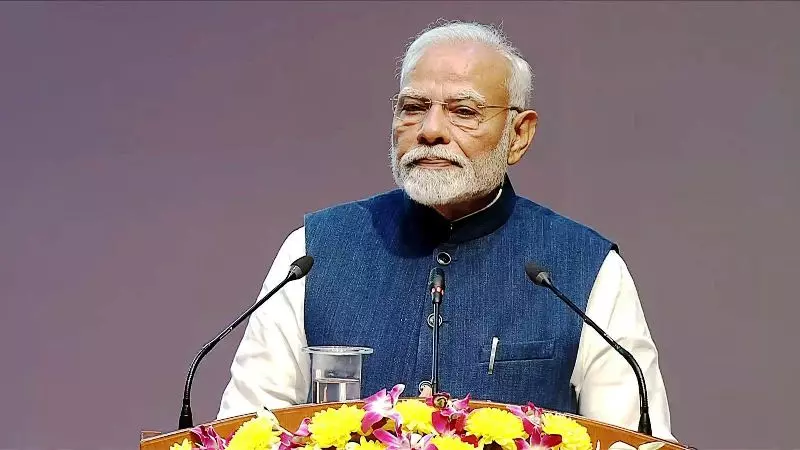
New Delhi: Campaigning hit fever-pitch on Tuesday, the final day of canvassing for the first phase of elections in West Bengal and the single-phase polls in Tamil Nadu on April 23.
While all 234 constituencies in Tamil Nadu will vote in one go, 152 constituencies across 16 districts in West Bengal will go to the polls in the opening phase. The first phase of polling in West Bengal will cover large parts of North Bengal, Jungle Mahal and the Rarh region, setting the stage for a crucial electoral contest across diverse terrain.
In West Bengal, there has been a massive deployment of Central forces in the districts going to the polls and over 8,000 booths have been identified as "super-sensitive." North Bengal, with 54 Assembly seats, is the BJP's main route to dismantling the TMC's rule in the state. In the 2019 Lok Sabha polls, the BJP swept North Bengal by winning seven of the eight parliamentary seats and bagged 30 of the 54 Assembly seats during the 2021 state elections. On Thursday polling will be held in Cooch Behar, Alipurduar, Jalpaiguri, Kalimpong, Darjeeling, North Dinajpur, South Dinajpur and Malda.
Besides playing the aggressive Hindutva card, the BJP has also promised all-round development, ranging from AIIMS to IIM to cancer hospitals. The BJP has also promised a speedy solution to the Gorkhaland issue and the demand for Kamtapur, or Greater Cooch Behar. The Kamtapur State Demand Council has thrown its weight behind the BJP. Yet the cracks are visible. Despite winning six of the eight Lok Sabha seats in 2024, the BJP's marginal slide in the region has given the TMC what its sees as a crucial opening. Chief minister Mamata Banerjee and TMC leader Abhishek Banerjee have been relentlessly criss-crossing North Bengal, pushing an aggressive ground campaign to reclaim the local turf. The TMC is apparently relying heavily on the minorities, women and the beneficiaries of welfare schemes. In recent years, the TMC claims to have consolidated its advantage in minority-dominated districts such as North Dinajpur and Malda. Also, the TMC has aligned with the Gorkha Prajatantrik Morcha counter the BJP's alliance with the Gorkha Janamukti Morcha (GJM). Complicating matters further for the BJP is the SIR exercise, which could prove to be a setback in the region with many Gorkha voters finding their names missing from the electoral rolls.
In the 2019 Lok Sabha polls, the BJP swept Jungle Mahal, winning five Lok Sabha seats as against the TMC's one. But the script flipped in the 2021 Assembly elections with the TMC staging a comeback, securing 24 of the 40 seats, while the BJP was confined to 16. The TMC carried the momentum into the 2024 general elections, winning four Lok Lok Sabha seats to the BJP's two, reinforcing its resurgence in the region. Setting the tone for the high-stakes battle, Prime Minister Narendra Modi, at a recent rally in Jungle Mahal, framed the contest between the BJP and TMC as a choice between "development and appeasement”. Jungle Mahal, stretching across four districts, accounts for nearly 40 of the 294 Assembly seats in the state. The tribal votes comprise nearly 6-8 per cent of West Bengal's population.
