Delimitation Key Factor for NDA's Landslide Win in Assam

5 May 2026 11:58 AM IST5 May 2026 11:58 AM IST
The 24 seats that the opposition won, mostly in constituencies unaffected by delimitation
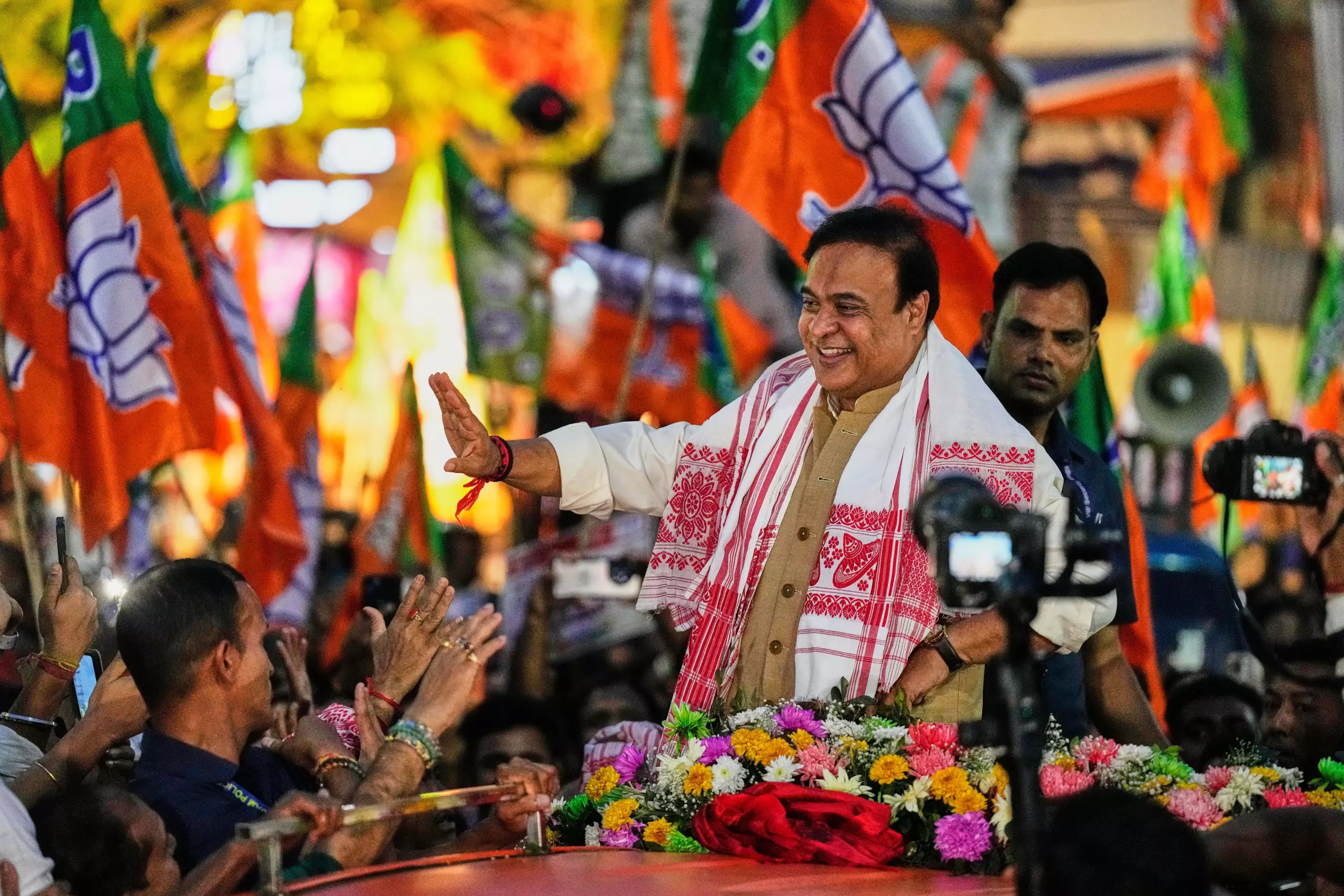
BJP's Himanta Biswa Sarma (File Photo)
Guwahati: The delimitation of constituencies to reduce the impact of minority candidates in their earlier strongholds is one among the many factors that led to the NDA's stupendous performance in the Assam polls, securing a record win of 102 seats in the 126-member assembly.
The 2023 delimitation exercise, which redrew and realigned constituencies with some earlier Muslim-majority seats getting reserved for indigenous communities, played a significant role in the increase of seats for the BJP and its allies in the just-concluded assembly polls.
The minority votebank played a key role, particularly for the Congress and AIUDF, in all previous assembly polls in 35 seats but delimitation reduced its influence to less than 25.
The 24 seats that the opposition won, mostly in constituencies unaffected by delimitation, include 22 Muslim candidates with both the Congress and AIUDF showing a sharp decline in their erstwhile bastions.
The realignment led to the fragmentation of Muslim-majority constituencies, and their merger with areas dominated by the indigenous community resulted in the dilution of the vote-bank.
The delimitation exercise kept the number of assembly seats the same at 126 but reserved more constituencies for the Scheduled Tribe and the Scheduled Caste, with the former being increased from 16 to 19 and the latter to nine from eight.
Barpeta and Goalpara (West), seats having a significant number of Bengali-speaking Muslims, were reserved for the Scheduled Caste and the Scheduled Tribe, respectively, and the NDA wrested both from the Congress.
The impact of the delimitation was also evident in the other tribal reserved seats in the Bodoland region, where their number was increased from 11 to 15, as the NDA ally Bodoland Peoples' Front (BPF) won 10 of these seats while its sole Muslim candidate lost the polls.
Both the Congress and AIUDF have been severely impacted by the exercise, with most of its winning candidates restricted to the 25 seats, with only one achieving electoral success from the scheduled caste reserved Naoboicha seat.
The AIUDF, which had won 16 constituencies in the last polls, managed to secure only two seats this time, while one candidate each from Raijor Dal and Trinamool Congress also won from within these 25 constituencies.
The ruling alliance, with not much influence in the 25 seats where the Bengali-speaking Muslims are in the majority, made an effort to make an entry with the regional party AGP giving tickets to 13 from the community but none, including sitting MLAs who had shifted to the party following delimitation of their constituencies, could win a seat.
The NDA allies, led by the BJP, ensured that the majority of reserved seats remained in its own kitty.
The saffron party, with a sharp focus on identity politics and practically no influence in these areas, did not give tickets to Muslims.
Assam Chief Minister Himanta Biswa Sarma had on several occasions asserted that in the 2026 assembly polls, the BJP stood a better chance due to the delimitation, which has created new constituencies.
The exercise was held in 2023 based on the 2011 census, and the last Lok Sabha polls were the first to be held under the redrawn boundaries, while this was the first assembly poll.
The BJP won 82 seats, while its allies, the BPF and AGP, bagged 10 each. The opposition Congress secured 19, the Raijor Dal and AIUDF two each and the Trinamool Congress one constituency.
( Source : PTI )

Next Story