Delhi Police Plans AI Traffic System to Ease Congestion in New Delhi

This system promises to enhance efficiency, reduce travel times, and lower automobile emissions, contributing to a cleaner environment.
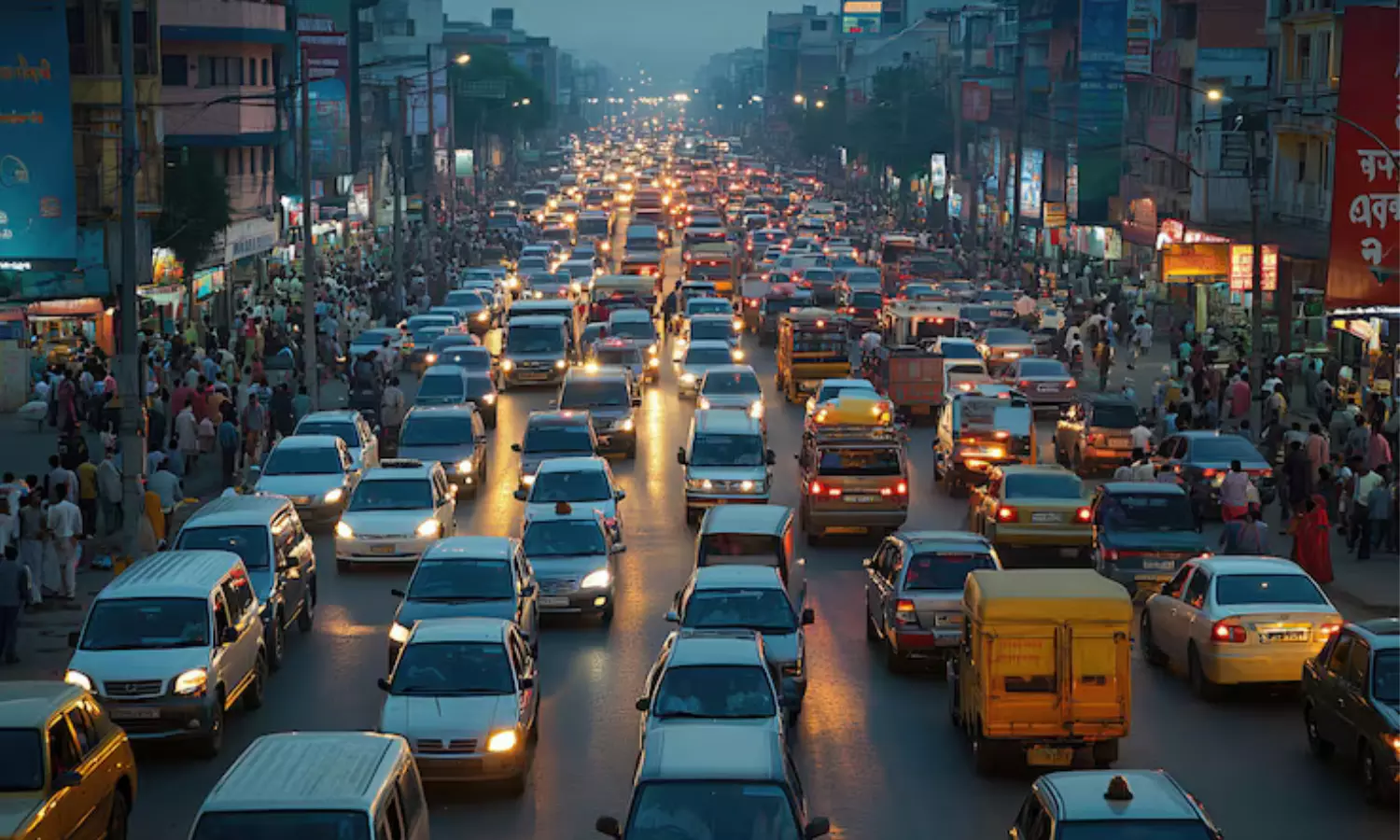
To deal with the environmental pollution, longer duration of commutes, and traffic congestion, the Delhi police has prepared a detailed project. This project’s proposal was to the Union Ministry regarding introducing AI-powered Traffic Management Systems to New Delhi.
This process also includes automatic number plate recognition cameras (ANPR)to detect violations and automated challans will be issued for the vehicles over the course of three years. This project is still at a proposal stage and once it is implemented, big changes are to take place in the ongoing rise in traffic.
Commuters will receive real-time traffic updates, and the system will be capable of regulating traffic in real time, resulting in the decreased need for human intervention and the traffic signals will run automatically based on the average speed of the vehicles and also the density of traffic. This will also reduce the dependency on manual checks and improve compliance and diligent efficiency. Quite predictably, this will also cut down the travel times, and the automobile emission levels will decrease and also for the commuters it will probably reduce their fuel expenses.
In the first phase, it said that at least five corridors with 250 adaptive traffic signal junctions and 271 enforcement points will be commissioned.
These kinds of AI Traffic managements are not new to people. In developed nations such as Singapore, these systems are already implemented, and it had greatly helped in managing traffic systems. Another interesting part is that every year during Formula One, almost 300,000 people visit Singapore, and despite being such a small nation, it still managed the crowd quite efficiently and caused no traffic issues due to the event.
When compared to India, during the FIA Formula E race held in Hyderabad back in 2023, commuters had to take many diversions due to the race, and were put to great inconvenience, and were stuck in traffic. Whereas in Singapore, this situation was never really faced. So, these kinds of positives can be attributed to AI Traffic Management Systems. If this turns out to be a success, around 800 more signal junctions will be covered throughout the city of Delhi in phases 2 and 3.
This article is authored by Naga Aditya, interning at Deccan Chronicle, Secunderabad.
