Delhi Breathes 'Poor' Air Again, AQI At 220; Wazirpur Among Worst-Affected Areas

According to the CPCB classification, an AQI between 0 and 50 is considered 'good', 51-100 'satisfactory', 101-200 'moderate', 201-300 'poor', 301-400 'very poor', and 401-500 'severe'.
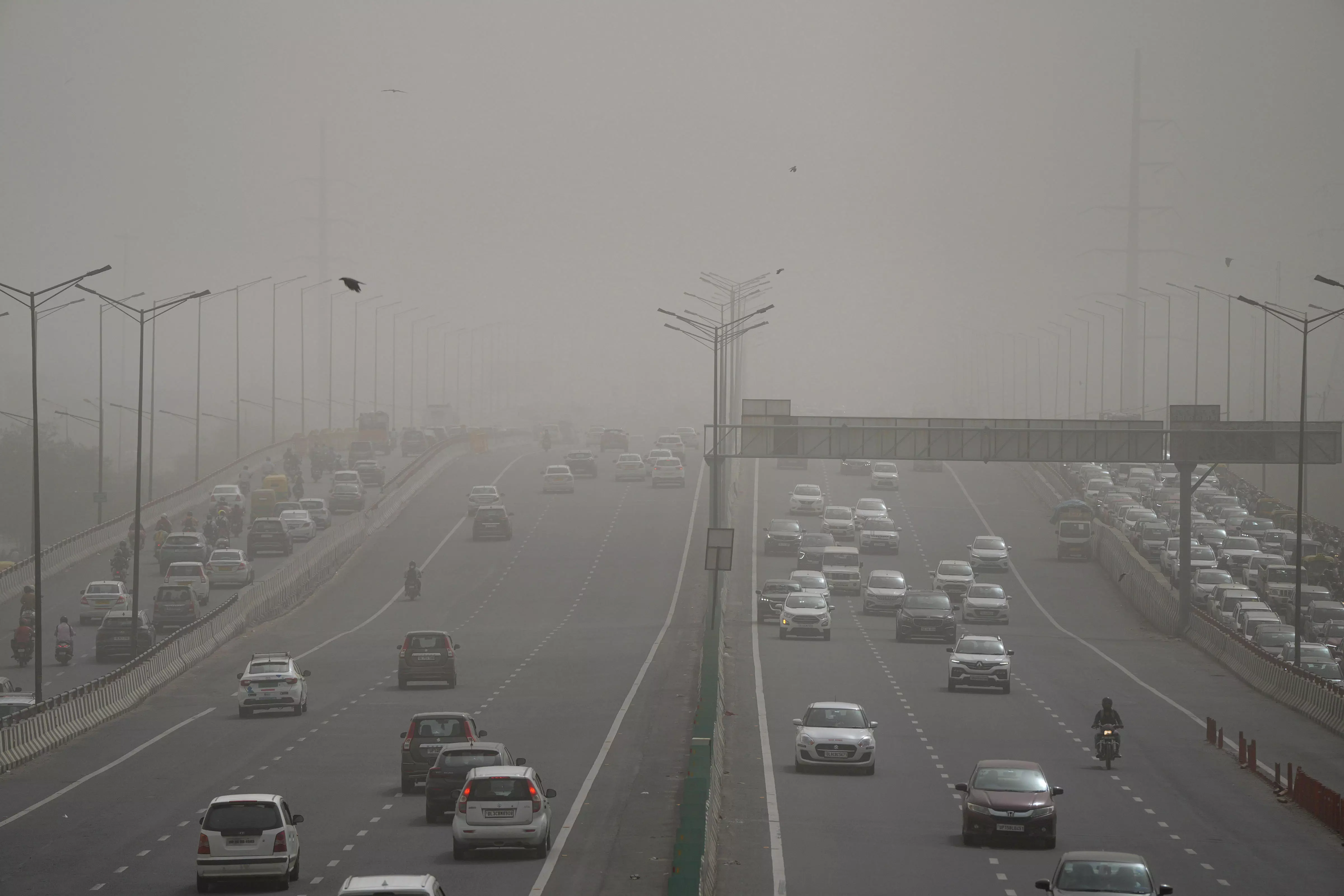
New Delhi: Delhi's air quality remained in the 'Poor' category on Friday, with the overall Air Quality Index (AQI) recorded at 220 at 8 am, according to the Central Pollution Control Board (CPCB).
Among the listed monitoring stations, Wazirpur recorded the highest AQI at 273, falling in the 'Poor' category, followed by Bawana at 266, Punjabi Bagh at 260 and Chandni Chowk at 257. IGI Airport (T3) registered an AQI of 289, while ITO recorded 285, both in the 'Poor' category.
Other locations reporting 'Poor' air quality included IIT Delhi at 242, Anand Vihar and Narela at 239 each, Rohini at 233, Mundka at 231, Vivek Vihar at 222, Ashok Vihar at 221 and RK Puram at 220. Sonia Vihar recorded an AQI of 217, while Dwarka Sector 8 and Okhla Phase 2 registered 207 and 203, respectively.
In the 'Moderate' category, Uttam Nagar recorded an AQI of 193, followed by Vasundhara Enclave at 181. In contrast, Major Dhyan Chand National Stadium recorded an AQI of 125, the lowest among the listed monitoring stations.
According to the CPCB classification, an AQI between 0 and 50 is considered 'good', 51-100 'satisfactory', 101-200 'moderate', 201-300 'poor', 301-400 'very poor', and 401-500 'severe'.
Meanwhile, the Supreme Court on Monday indicated that it may consider restricting vehicles operating in Delhi-National Capital Region (NCR) to those complying with Bharat Stage-VI (BS-VI) emission norms as part of measures to combat worsening air pollution in the region.
A Bench comprising Chief Justice of India Surya Kant and Justices Joymalya Bagchi and V Mohana observed while hearing a matter concerning air pollution in the national capital.
"We are clear we will allow only BS-VI vehicles in Delhi, if not NCR," the Bench remarked.
The Bench also suggested an alternative arrangement for the supply of essential commodities, proposing the establishment of warehouses at Delhi's borders where goods could be unloaded and subsequently transported into the city using smaller battery-operated or other non-polluting vehicles.
Separately, the Commission for Air Quality Management (CAQM) has introduced district-level action plans, setting a mandatory minimum target of 15 per cent reduction, with the potential to reach 20 per cent, in annual average air pollution levels across Delhi-NCR for 2027. The Commission has written to the governments of Delhi and other NCR states, calling for comprehensive Annual Action Plans for 2027 at the State, District and Municipal Corporation levels.
The plans aim to shift the focus from listing pollution-control activities to achieving measurable outcomes through defined targets, timelines, monitoring parameters and ground-level accountability.
Earlier, CAQM began assessing and ranking Delhi and neighbouring states on their performance in implementing pollution-control measures. Its 2026 report card, covering progress up to October, highlighted gaps in several areas, including industrial inspections, waste management, public transport and pollution-monitoring infrastructure.
According to the report card, none of the four states and Delhi had established the targeted number of green crematoriums. Against a combined target of 421 across Delhi, Haryana, Rajasthan and Uttar Pradesh, the achievement stood at zero as of October 31.