US SC Strike On Tariffs: Reciprocal, Punitive Tariffs To Go, Trade Talks In Limbo

The Supreme Court decision is applicable on tariffs imposed under the International Emergency Economic Powers Act (IEEPA). This includes reciprocal tariffs of 10 per cent to 50 per cent on different trade partners
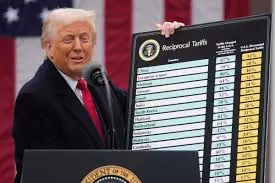
Chennai: With the US Supreme Court striking down the global tariffs levied by President Donald Trump under emergency powers law, the reciprocal tariffs of 18 per cent on India will be scrapped. The verdict also rendered the punitive tariffs of 25 per cent illegal. However, the sectoral tariffs on iron, steel, aluminium, copper, automobiles and auto parts will remain. The industry hopes that the verdict will slow down the pace at which the trade talks were progressing.
The Supreme Court decision is applicable on tariffs imposed under the International Emergency Economic Powers Act (IEEPA). This includes reciprocal tariffs of 10 per cent to 50 per cent on different trade partners. In case of India, the reciprocal tariffs were recently brought down to 18 per cent after both countries finalised on an interim framework on bilateral trade agreement (BTA).
While the 25 per cent punitive tariffs for buying crude oil from Russia has been lifted, the US has indicated re-imposition of it if India continued purchase of oil from Russia. This tariff also was imposed using IEEPA.
However, the sectoral tariffs under Section 232 will continue. Steel imports will continue to attract 50 per cent tariffs, aluminum, 50 per cent, automobiles 25 per cent, auto parts 25 per cent, copper 50 per cent, timber and lumber, kitchen/bathroom cabinets and upholstered furniture will attract between 10 per cent to 50 per cent. These tariffs are common for all countries and hence do not affect Indian exports much.
Removal of reciprocal tariffs will free about 55 per cent of India’s exports to the US from the 18 per cent duty and now they will be subject to MFN tariffs alone. Further, products accounting for roughly 40 per cent of export value, including smartphones, petroleum products and medicines, will remain exempt from US tariffs.
The Treasury has collected more than $133 billion from the import taxes the president has imposed under the emergency powers. This will have to be refunded to the importers.
“It will take a few days for the executive order to be issued on this. The refunds have to be given to the importers and then they will settle with the exporters and this will take time,” said Ajay Sahai, director general, FIEO.
However, industry is still worried about whether the Trump administration will use some other laws to impose tariffs. “We will have to wait and watch,” said Pankaj Chadha, chairman, EEPC.
Trump could attempt to reimpose similar tariffs under Section 301 or Section 232, but those statutes require new investigations and public justification, delaying action and inviting further legal challenges. But such measures cannot serve as a universal enforcement tool,” said Ajay Srivasatava, founder, GTRI.
After the Supreme Court order, the talks on the Bilateral Trade Agreement, which is seen as one-sided and a transgression on the sovereignty of trade partners, is most likely to go slow.
“There will absolutely be an impact on the trade talks. We should watch what other countries are doing and decide on the BTA. We should not take the first step to back out,” said Chadha.
“The decision effectively renders recent trade deals initiated or concluded by the United States with the UK, Japan, the EU, Malaysia, Indonesia, Vietnam and India one-sided and useless. Partner countries may now find reasons to dump these deals,” said GTRI.
