UNSC Poses Tough Questions To Pakistan Over Pahalgam Attack

The members refused to accept the “false flag” narrative planted by the Pakistani side
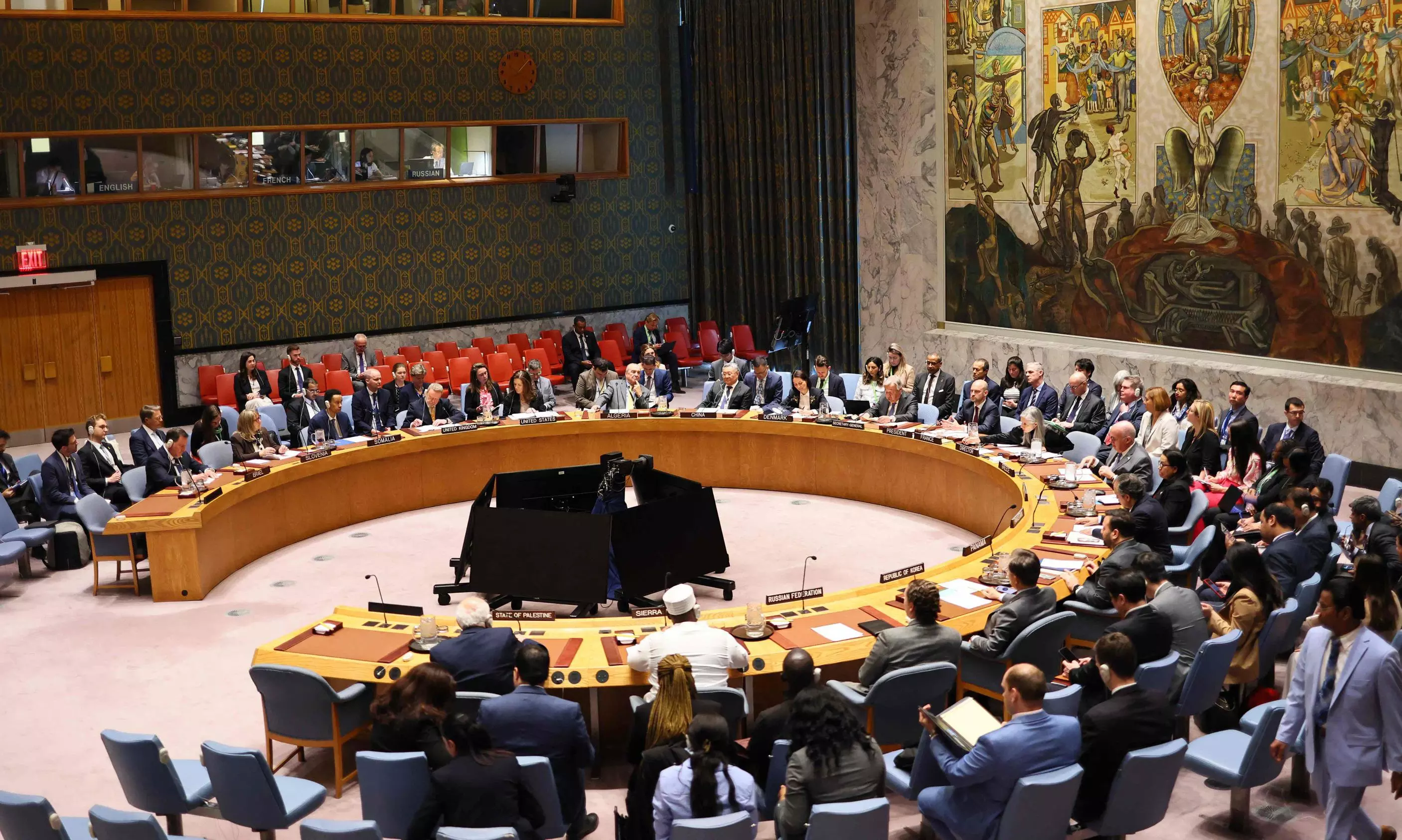
New Delhi, New York: “Sort out issues bilaterally with India,” United Nations Security Council (UNSC) member nations told Islamabad, thwarting Pakistan’s attempt to internationalise the situation in Kashmir in the wake of the Pahalgam terror attack. At a closed-door consultation, the UNSC called for de-escalation and dialogue between New Delhi and Islamabad as several member nations came down heavily on Pakistan and posed tough questions over the terror group Lashkar-e-Tayyaba (LeT) operating from its soil, according to a news agency report.
According to reports, the UNSC members pointed out to Islamabad that tourists were gunned down after segregation based on religion, and condemned the Pahalgam terror attack in the Kashmir Valley that took place April 22, in which 26 people lost their lives. Islamabad was also clearly told that its nuclear rhetoric and missile tests were escalating tension with India.
Also, Pakistan’s “false flag” narrative accusing India was soundly rejected, the reports suggested, adding that Pakistan’s attempt to internationalise the situation in Kashmir failed and it was told to sort out its issues bilaterally with India.
After the meeting, India’s former permanent representative to the UN Syed Akbaruddin was quoted by another news agency as stating that “Pakistan’s grandstanding has flopped again today as in the past”.
“As was expected, there was no meaningful response by the Council. Indian diplomacy has yet again successfully parried Pakistani efforts to seek UNSC intervention,” Akbaruddin added. Before the UNSC meeting too, he had said that no “consequential outcome" can be expected from “a discussion where a party to the conflict seeks to shape perceptions by using its membership of the Council and that India will parry such Pakistani efforts."
Pakistan, currently one of the 10 non-permanent members of the council, had requested the UNSC's Greek presidency for "closed consultations" in view of the tensions with India. The meeting that began early on Tuesday at about 1.30 am (IST) lasted about one-and-a-half hours. The closed-door meeting did not take place in the UNSC Chamber where Council members sit at the horseshoe table but in a consultations room next to it.
The 15-member UNSC did not issue a statement after the meeting. Apart from the five veto-wielding permanent members — the United States, Russia, the UK, France and China— the current 10 non-permanent members are Algeria, Denmark, Greece, Guyana, Panama, Pakistan, South Korea, Sierra Leone, Slovenia, and Somalia.
External affairs minister S. Jaishankar had launched a diplomatic offensive last week with all the UNSC non-permanent members barring Pakistan and had spoken to nine of his counterparts from these nations. India also has excellent ties with four of the five permanent members.
Eager for a face-saver, Pakistan reportedly claimed after the meeting that its own objectives were "largely served". Pakistan's permanent representative to the United Nations ambassador Asim Iftikhar Ahmad told the media that the objectives of the closed consultations included enabling the Council members to have a discussion on the deteriorating security environment and rising tensions between India and Pakistan and to have an exchange of views on how to address the situation, including avoiding confrontation that could have serious consequences and the need for de-escalation.
Ahmad claimed that while Pakistan does not seek confrontation, “We are fully prepared to defend our sovereignty and territorial integrity.”
Pakistan also raised the issue of India’s suspension of the Indus Waters Treaty of 1960. “Water is life, not a weapon. These rivers sustain over 240 million Pakistanis,” Mr Ahmad was quoted as stating, adding that Pakistan reiterated its “commitment to peaceful, cooperative relations with all our neighbours, including India”.
Khaled Mohamed Khiari of Tunisia, assistant secretary-general for the Middle East, Asia and the Pacific in the departments of political and peacebuilding affairs and peace operations, briefed the UNSC and later said there was a call for “dialogue and peaceful resolution of the conflict”, adding that the “situation is volatile.”
Evangelos Sekeris, Greece's permanent representative to the United Nations ambassador, described the consultations as a “productive meeting, helpful”. A Russian diplomat, coming out of the meeting, said, “We hope for de-escalation.”
Shashi Tharoor, chairman of the parliamentary committee on external affairs and Congress Thiruvananthapuram MP, who had earlier served as a diplomat at the UN, pointed to the “sad reality” of such UNSC consultations and was quoted by a news agency as saying, "I am quite confident that the Council will not pass a resolution criticising Pakistan because China will veto it, (and) they will not pass a resolution criticising us as many countries will object to it and probably veto it. It is going to be more of a call for peace and concern about terror in a general kind of language."
