Tiranga: How It Evolved Reflecting Indians’ Aspirations

The first version of the flag looked completely different from the one we know today. It had three stripes -- orange (at the top), yellow and green (in the bottom) with Vande Mataram (meaning "Mother, I bow to thee!) slogan written in blue at the centre (on the yellow). This flag was hoisted at Kolkata's Parsee Bagan Square on August 7, 1906
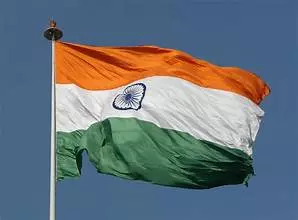
The National Flag is a quintessential element of national festivals and celebrations, as it symbolizes a free country. The Indian national flag is a symbol of pride, unity and diversity, evoking patriotism in the citizens.
Fondly called the Tricolor or Tiranga, as it contains three colours, the Indian national flag in its present form was adopted by the Constituent Assembly on July 22, 1947.
On tracing back to its origin, citizens can understand that the flag reflected the constantly changing aspirations of the people, basing on the existing social conditions in the nation.
The Indian Flag took shape at the beginning of the 20th Century when the country struggled for freedom and achieved it after a long battle. The first version of the flag looked completely different from the one we know today. It had three stripes -- orange (at the top), yellow and green (in the bottom) with Vande Mataram (meaning "Mother, I bow to thee!) slogan written in blue at the centre (on the yellow). This flag was hoisted at Kolkata's Parsee Bagan Square on August 7, 1906. The orange stripe contained eight half-opened white lotuses representing the provinces. The bottom green had a white sun on the left and a white crescent moon with a star on the right. The first version of the flag, often called Calcutta Flag or first Flag of Swaraj, was designed by Sachindra Prasad Bose and Hemchandra Kanungo, to oppose the 1905 Partition of Bengal. It was designed to unite various sections of communities in the country and lead them towards a common goal, Independence. Saffron stood for courage, while yellow represented optimism and warmth, green signified prosperity, growth and fertility of land. The lotuses stressed the need for the citizens to achieve liberation from the clutches of the British Colonial Rule.
After nearly 20 years, in 1921, there has been a revolutionary change in the flag with freedom fighter Pingali Venkayya designing the flag with just two colours -- Saffron representing the Hindus and Green, representing the Muslims. He removed the yellow colour and presented the new design to the Father of Nation Mahatma Gandhi. After contemplating for some days, Gandhi felt the need for white to be added to the flag, representing the rest of India and also the spinning wheel (charkha), to signify independence and economic self-reliance, the Swadeshi movement. The spinning wheel represents the empowerment of the Indians through the production of their own khadi cloth, aiming to unite all communities in the country and motivate every Indian to fight for Independence.
In 1931, the tricolour was officially adopted for the freedom struggle. The Swaraj flag had saffron at the top, white in the middle and green at the bottom with the charkha in the centre, which was considered a symbol of growth, peace and courage. Inspired by significance of this version of the flag, freedom fighters, Independence leaders and the public united for movements and marches for the country's liberation from the Britishers.
The present form of the Tricolour was officially adopted on July 22, 1947. The only change from the previous version is replacement of the charkha with the Ashok Chakra, adapted from the Lion Capital of Ashoka. The Ashok Chakra has 24 evenly spaced spokes, representing progress and righteousness. The Tricolour was officially hoisted on August 15, 1947, in Independent India. The national flag gained more prominence and penetrated into every household with the Har Ghar Tiranga campaign launched in 2022 by Prime Minister Narendra Modi, as part of Azadi Ka Amrit Mahotsav. It encouraged the citizens to hoist the flag at their homes.
The same Tricolour was hoisted during the Republic Day celebrated for the first time on January 26, 1950 when the Constitution of India came into force. The 77th Republic Day celebrations are organised around the central theme of “150 Years of Vande Mataram”.
