Rupee Value Is Market-determined, Says FM

On Tuesday, the rupee pared initial losses and settled 12 paise higher at 96.24 (provisional). Traders attribute the recovery to RBI's intervention
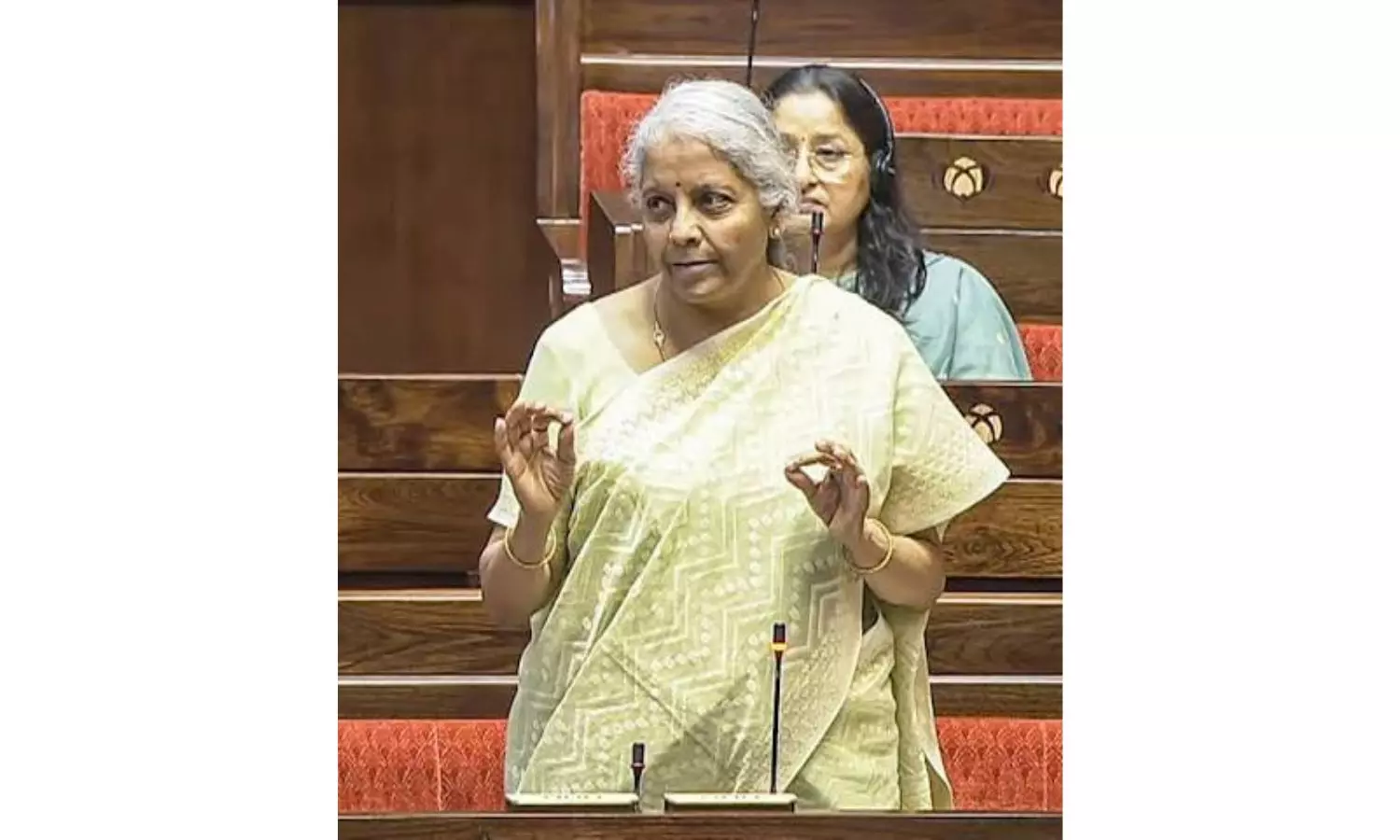
New Delhi: Union finance minister Nirmala Sitharaman on Tuesday said the rupee’s value against the US dollar is market-determined and there is no target or specific band for the domestic currency. “The government closely tracks the trends in key economic parameters, including exchange rate movements, along with their implications for economic growth and fiscal stability. These issues are discussed at various fora at various levels of the government,” she replied in a written reply in the Rajya Sabha.
However, the government claimed that various measures have been taken by the central bank to boost forex inflows, which in turn may ease the pressure on rupee. “These include amendment to the external commercial borrowings (ECBs) framework in February 2026 through expansion of eligible borrower and recognised lender base, rationalisation of borrowing limits and restrictions on average maturity period,” it said.
On Tuesday, the rupee pared initial losses and settled 12 paise higher at 96.24 (provisional). Traders attribute the recovery to RBI's intervention. However, the finance minister said that the value of the rupee is market-determined, with no target or specific level or band, and RBI regularly monitors the foreign exchange market and intervenes in situations of excess volatility. “Further, the RBI monitors key developments across the globe which may have an impact on the USD-INR exchange rate,” she said.
As far as measures are concerned, on June 5, RBI announced a slew of measures to boost inflow of foreign capital including raising limits for investment by Non-Resident Indians (NRIs) and Overseas Citizens of India (OCIs) in equity instruments traded on the stock market without SEBI registration. Further, the same facility was extended to all individual Persons Resident Outside India (PROIs) at par with NRIs and OCIs.
In addition, a facility of concessional forex swap has been announced to incentivise the ECB by Public Sector Undertakings and overseas foreign currency borrowings with a minimum maturity of three years raised by AD banks, wherein the concessional rate of the swap was fixed at 1.5 per cent per annum compounded semi-annually.
The swap facility has already come into effect and will remain open till January 15, 2027. Also, the time period for realisation of exports has been restored to nine months from the 15-month period stipulated earlier. “The depreciation of the rupee has been influenced by several factors, including reduced support from the capital account amidst rising crude oil prices in the wake of the conflict in the Middle East,” she said.
However, a depreciating domestic currency is likely to enhance export competitiveness, which in turn impacts the economy positively. On the other hand, the minister said, depreciation may raise the prices of imported goods.
Imports are generally determined by global supply-demand conditions, geopolitical developments, domestic demand, and factors such as global value chain integration necessitating imports of intermediate goods for production and exports, and international prices of imported goods.
