Op Sindoor Showed India’s Resolve Against Terror: PM Modi

Marking one year of the operation, PM Modi praised the courage, precision and professionalism displayed by the Indian armed forces following the Pahalgam terror attack
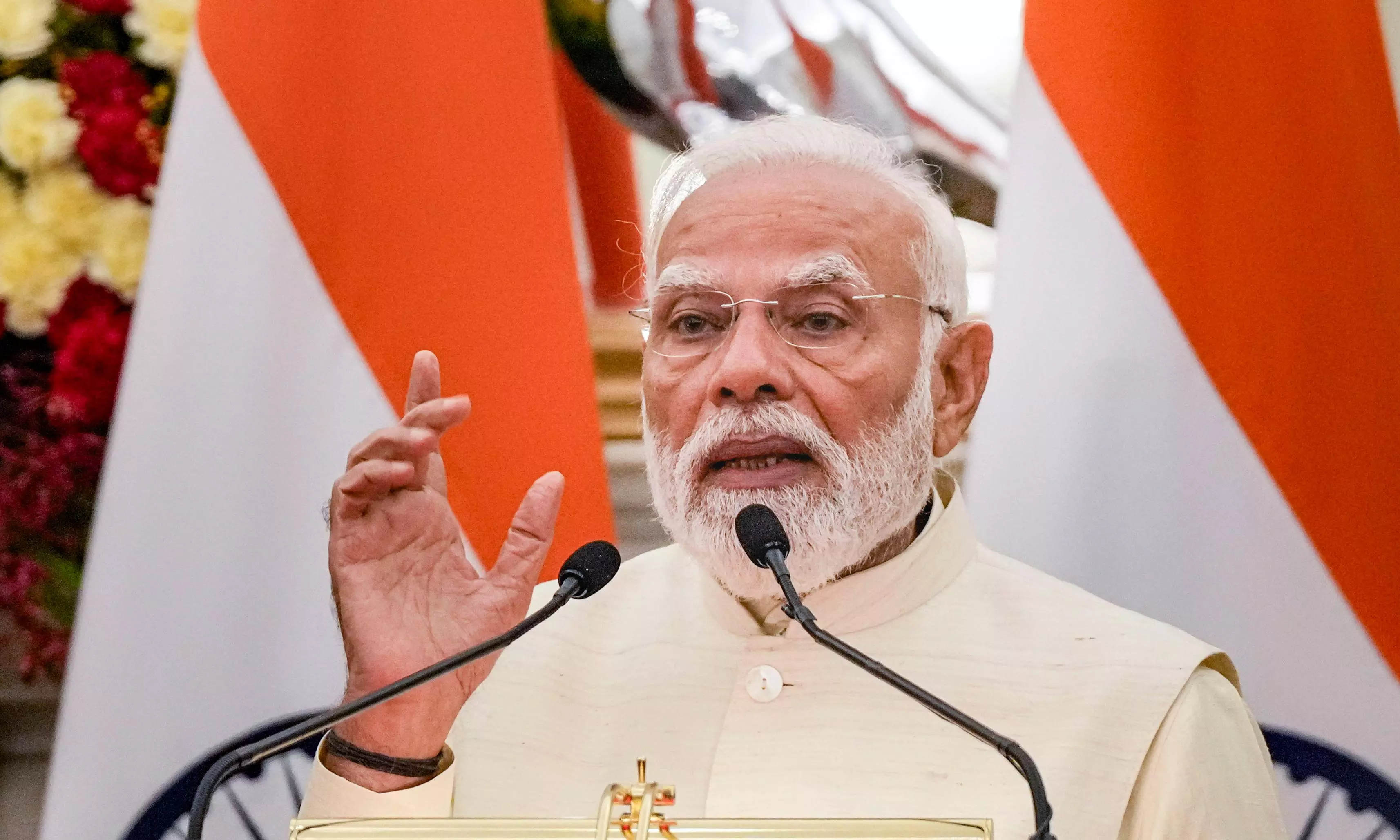
New Delhi: Prime Minister Narendra Modi on Thursday said Operation Sindoor reflected India’s firm response against terrorism and reaffirmed the country’s commitment to national security.
Marking one year of the operation, PM Modi praised the courage, precision and professionalism displayed by the Indian armed forces following the Pahalgam terror attack.
In a post on X, the Prime Minister wrote, “A year ago, our armed forces displayed unparalleled courage, precision and resolve during Operation Sindoor. They gave a fitting response to those who dared to attack innocent Indians at Pahalgam.”
“The entire nation salutes our forces for their valour. Operation Sindoor reflected India’s firm response against terrorism and an unwavering commitment to safeguarding national security,” he added.
PM Modi further said the operation highlighted the professionalism, preparedness and coordinated strength of the Indian armed forces, while also showcasing growing jointness among the services and the impact of India’s push for self-reliance in defence manufacturing.
“Today, a year later, we remain as steadfast as ever in our resolve to defeat terrorism and destroy its enabling ecosystem,” the Prime Minister said.
Meanwhile, PM Modi also changed his display picture on X to “Operation Sindoor” as a tribute to the courage and sacrifice of the armed forces on the anniversary of the military operation.
Operation Sindoor was launched on May 7, 2025, in response to the Pahalgam terror attack that claimed the lives of 26 civilians. The operation was conceived as a targeted military campaign aimed at dismantling terror infrastructure across the Line of Control and inside Pakistan.
According to officials, intelligence inputs identified nine major terror camps that were later targeted during the operation. India’s response was based on detailed planning and intelligence-led execution, with efforts made to minimise collateral damage and avoid civilian casualties.
Following the strikes, Pakistan launched retaliatory drone and UCAV attacks targeting Indian airbases and logistics infrastructure. However, Indian air defence systems successfully intercepted the threats using a multilayered defence network supported by the Integrated Command and Control Strategy (ICCS).
Operation Sindoor witnessed extensive coordination between the Indian Army, Air Force and Navy, backed by various government agencies and departments.
The Indian Air Force played a key role in carrying out precision strikes on terror infrastructure, including operations targeting Nur Khan Air Base and Rahimyar Khan Air Base in Pakistan.
India’s air defence network, including the indigenously developed Akash missile system along with legacy platforms such as Pechora and OSA-AK, helped neutralise aerial threats during retaliatory attacks.
The Indian Army also carried out both offensive and defensive operations, deploying advanced air defence systems to counter drones and loitering munitions launched from across the border.
Meanwhile, the Indian Navy established maritime dominance by deploying a Carrier Battle Group equipped with MiG-29K fighter jets and airborne early warning helicopters. The naval presence acted as a strong deterrent and restricted Pakistani air operations along the western seaboard.
The Border Security Force (BSF) also played a major role during the operation by foiling an infiltration attempt in the Samba district of Jammu and Kashmir. BSF personnel neutralised at least two infiltrators and recovered arms and ammunition during the encounter.
Officials described Operation Sindoor as not only a tactical success but also a strategic demonstration of India’s military preparedness and coordinated defence capability.
