Omar Abdullah Unveils ₹1.13 Lakh Crore Budget to Drive Growth, Stability in J&K

Presenting his second Budget in the Legislative Assembly here, Abdullah who also hlds the finance portfolio described the financial plan for 2026–27 as a “fiscal compass” designed to guide the region toward sustainable prosperity, inclusive growth and modernisation
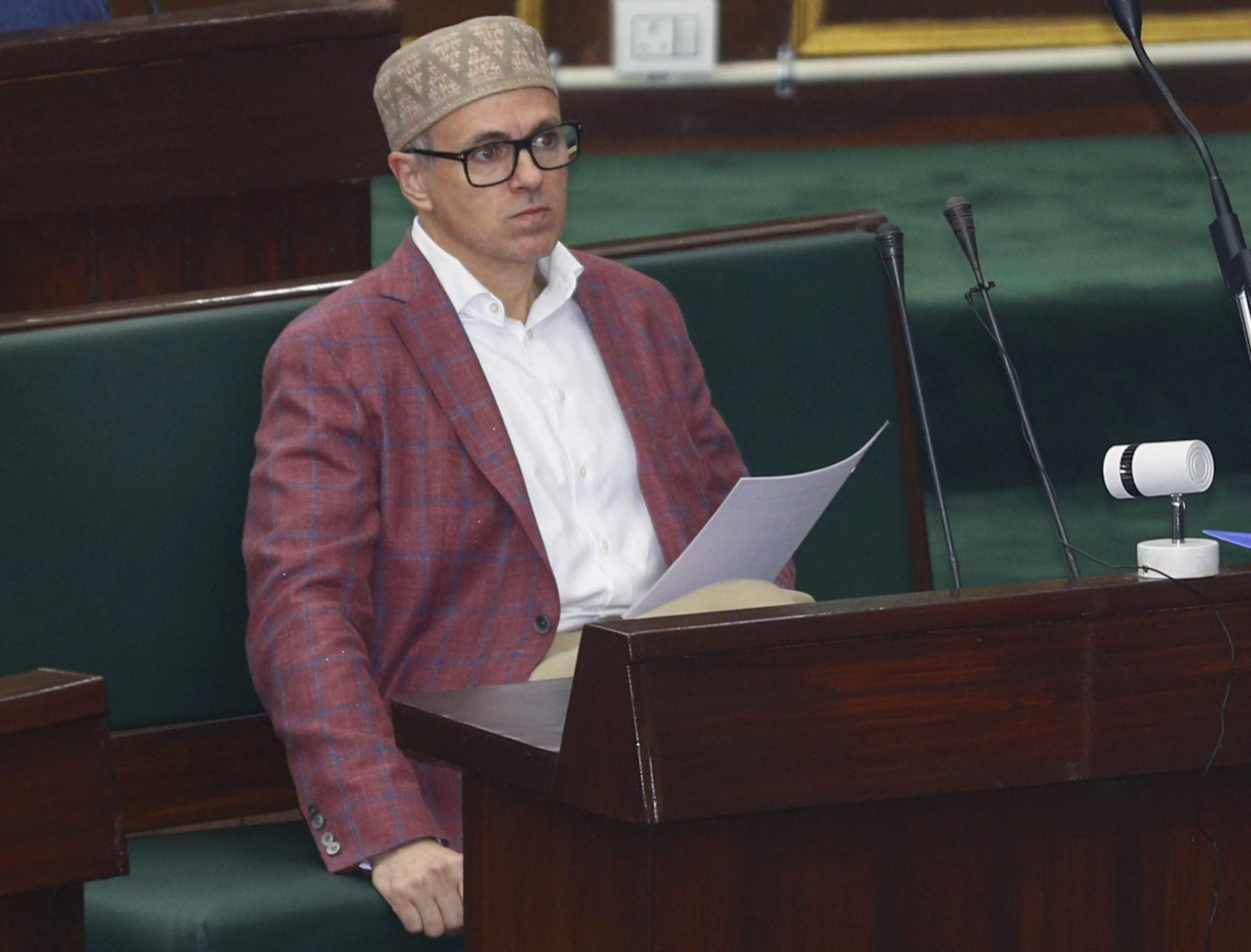
JAMMU: Chief Minister Omar Abdullah on Friday presented a ₹1,13,767 crore Budget for Jammu and Kashmir, outlining an ambitious financial roadmap aimed at strengthening economic stability, accelerating development and fostering social harmony.
Presenting his second Budget in the Legislative Assembly here, Abdullah who also hlds the finance portfolio described the financial plan for 2026–27 as a “fiscal compass” designed to guide the region toward sustainable prosperity, inclusive growth and modernisation.
The Chief Minister announced that the total net Budget Estimates for 2026–27 stand at ₹1,13,767 crore, excluding provisions for ways and means advances and overdraft. The gross Budget, including these provisions, amounts to ₹1,27,767 crore. Of the total outlay, ₹80,640 crore has been earmarked for revenue expenditure and ₹33,127 crore for capital expenditure, reflecting the government’s focus on infrastructure creation, public services and long-term development.
Abdullah projected revenue receipts at ₹90,018 crore and capital receipts at ₹23,749 crore. The Union Territory’s own revenues—comprising tax and non-tax sources—are estimated at ₹31,800 crore. In addition, J&K is expected to receive ₹42,752 crore as central assistance and ₹13,400 crore under Centrally Sponsored Schemes. Despite these inflows, the Chief Minister flagged fiscal constraints, noting that the UT’s own revenues meet only about 25 per cent of its budgetary requirements, while nearly 60 percent of expenditure is committed to salaries, pensions and debt servicing.
Highlighting key fiscal indicators, Abdullah said the tax-to-GDP ratio for 2026–27 is projected at 6.6 per cent, compared to 7.5 per cent in 2025–26. The fiscal deficit for 2026–27 is estimated at 3.69 per cent, slightly higher than the revised estimate of 3.63 per cent for the previous year. The GDP for 2025–26 is projected at ₹2,88,422 crore, marking a 9.5 per cent growth, while the GDP for 2026–27 is expected to rise to ₹3,15,822 crore, maintaining a similar growth trajectory.
Abdullah emphasised that the Budget was prepared after extensive consultations with elected representatives, industry leaders and stakeholders to ensure it remains people-centric. He acknowledged the challenges faced during the past year—including geopolitical tensions, the Pahalgam terror attack and devastating floods in parts of Jammu—which adversely affected tourism, handicrafts, horticulture and agriculture, leading to job losses and financial distress. Despite these setbacks, he praised the resilience of the people and reaffirmed the government’s commitment to turning “obstacles into stepping stones and aspirations into achievements.”
The Budget outlines a series of welfare and development measures aimed at boosting the economy and strengthening social sectors. These include full fee waivers for economically weaker students from Class 9 to college, six free LPG cylinders for eligible households, monthly support for orphaned children, scholarships for tribal students and free government transport for persons with disabilities. In agriculture and allied sectors, the government has proposed crop insurance for apple, saffron, mango and litchi, expansion of storage facilities, promotion of micro and sprinkler irrigation, cultivation of medicinal plants and establishment of livestock genetic improvement labs in every district. Rural development initiatives include a push for achieving ODF-Plus status across villages.
In the education and youth empowerment sectors, the Budget proposes JK e-Pathshala DTH channels for Classes 1–12, modernisation of anganwadi centres, indoor sports facilities in government schools and priority hiring of local youth in subsidised industries. Abdullah reiterated that the government is working to create a business-friendly ecosystem to attract investment, innovation and entrepreneurship.
A major highlight of the Budget is the government’s clean energy and technology push. Abdullah announced the establishment of 15 MW hydro-solar parks to support solar deployment across the UT. These parks will provide turnkey infrastructure for solar projects, reducing risk and enabling faster commissioning. The government also plans to expand electric vehicle charging infrastructure, including solar-powered charging stations, and to solarise feasible government buildings. The Science and Technology sector has been allocated ₹177 crore under capital expenditure—an increase of ₹42 crore from the previous year—underscoring the administration’s focus on renewable energy and innovation.
Abdullah also acknowledged the Centre’s continued support, noting that J&K has been included under the Special Assistance to States for Capital Investment scheme. Funds under this scheme will be utilised for infrastructure development, hydroelectric projects and disaster mitigation, particularly in flood-affected regions.
Concluding his address, the Chief Minister urged all members of the House to work collectively for the region’s progress. “This Budget is not merely a ledger of figures—it is a roadmap for development,” he said. “Together, we will build a strong, modern and flourishing Jammu and Kashmir.” End it
