NREGA Workers Org Rejects VB-G RAM G Draft Rules, Protests From July 1

The groups said the gap between the promised employment guarantee and actual allocations translated into massive funding shortfalls for states
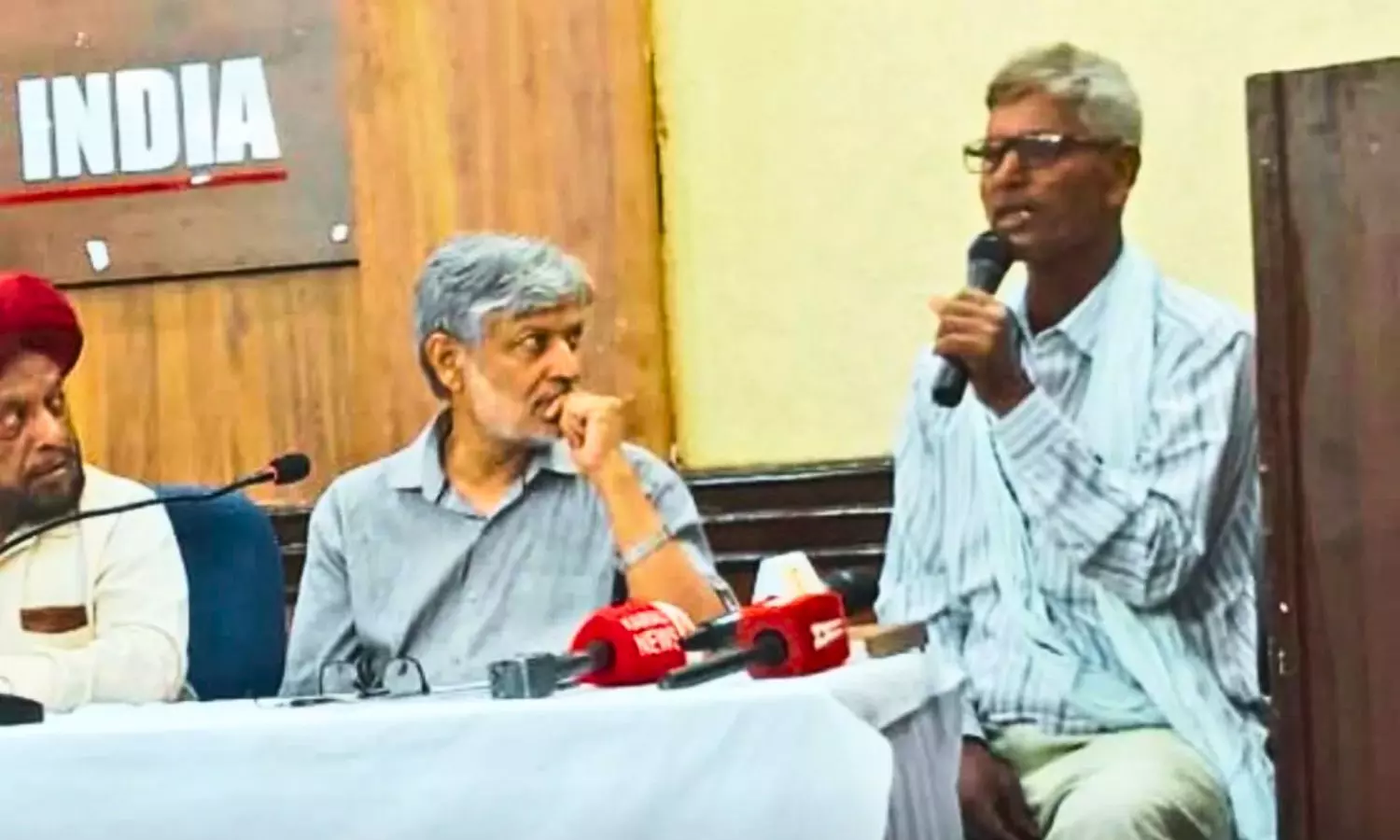
New Delhi: Demanding the repeal of the proposed Viksit Bharat - Guarantee for Rozgar and Aajeevika Mission - Gramin (VB-G RAM G), activists and workers' organisations on Wednesday announced protests against the new scheme from July 1.
Addressing a press conference here, members of the NREGA Sangharsh Morcha, agricultural workers' unions and labour rights groups claimed that an analysis of the government's own data showed the promised 125 days of employment under the proposed scheme was neither financially backed nor administratively feasible.
The draft rules released by the Centre expose the "shrinking employment guarantee" under the scheme, they alleged, adding that "The draft rules continue the opaque erasure of MGNREGA."
They further alleged that the proposed framework centralises powers with the Centre while reducing the effective employment guarantee available to rural workers.
Fear of Lower Employment Generation
According to an analysis by the activists, no major state would be able to generate even half of the promised 125 days of employment per active job card in the proposed interim allocations.
"This law destroys the spirit of the rural employment guarantee act... There is already a downward trend in employment generated," activist Nikhil Dey said.
"The burden will be on the states, and the push would become not to provide employment because the states will have to bear the expenditure," he said.
All India Agricultural Workers Union General Secretary B Venkat said they would hold protests at every village against the new scheme.
"From July 1, nationwide demonstrations would be held at the village, block, panchayat and ward level. We will also hold some protests in Delhi," he said, adding that 'jail bharo' campaigns would also be held along with the Samyukt Kisan Morcha (SKM).
They will also approach Opposition parties to raise their issues.
According to figures released by groups, Andhra Pradesh would be able to generate only about 42 person days per active job card under the proposed allocation, while Chhattisgarh would generate 39 person days, Bihar 31, Karnataka 26, Madhya Pradesh 26 and Uttar Pradesh 28. Maharashtra would be able to generate only about 14 person days per active job card, they claimed.
State Govts to Bear Additional Costs
The groups said the gap between the promised employment guarantee and actual allocations translated into massive funding shortfalls for states.
Based on their calculations, Madhya Pradesh would require an additional Rs 31,013 crore to provide 125 days of employment per active job card, while Rajasthan would need Rs 27,212 crore, Uttar Pradesh Rs 27,987 crore, Maharashtra Rs 22,549 crore, Karnataka Rs 17,481 crore and Bihar Rs 15,939 crore.
They also alleged that employment generation under MGNREGA had already declined sharply compared to last year, presenting data at the press conference, showing that person days generated nationally fell from 25.3 crore in January 2025 to 16.6 crore in January 2026, a decline of nearly 35 per cent.
In March, person days declined from 17.6 crore to 9.4 crore, while April recorded a fall from 23 crore to 12.3 crore person days, they alleged.
The decline was particularly visible in several large states, including Uttar Pradesh, Rajasthan, Karnataka, Madhya Pradesh, Maharashtra, Kerala, Andhra Pradesh and Jharkhand, the activists said.
Unfair Tech Deployment
MGNREGA workers who addressed the press conference alleged that rural households were already finding it harder to access work. Kamla Devi, a worker from Rajasthan, said employment opportunities had become increasingly uncertain and demanded that the government retain MGNREGA.
She also said they faced issues in marking attendance through the National Mobile Monitoring System (NMMS), which required capturing a photograph of the worker to register attendance.
Jagannath, a worker from Sitapur of Uttar Pradesh, claimed that the muster roll was not being prepared in his village, and they were being told it will start when VB-GRAM-G is implemented. He also said that under VB-G RAM G, they will have to ask for work through a mobile app, which is not possible for all workers, as many do not own smartphones.
Draft Rules Ignore Minimum Wage Guarantee
Criticising the draft rules for remaining silent on wage rates and not guaranteeing statutory minimum wages, the activists further opposed the continued use of the NMMS, facial recognition and biometric authentication, alleging that technological failures had repeatedly resulted in loss of wages and workdays for workers.
Demanding the withdrawal of the proposed scheme, the organisations called for restoring a strengthened MGNREGA, payment of statutory minimum wages and removal of NMMS, facial-recognition and biometric attendance requirements.
The VB-G RAM G Act is a rural employment law that replaced the Mahatma Gandhi National Rural Employment Guarantee Act (MGNREGA), guaranteeing 125 days of unskilled manual wage employment per rural household annually and integrating digital governance with targeted infrastructure development.
