CJI Recommends Justice Surya Kant As Successor

27 Oct 2025 11:49 AM IST27 Oct 2025 11:49 AM IST
CJI Gavai, who was sworn in on May 14 this year, recommended to the Union law ministry to appoint Justice Surya Kant as the next CJI
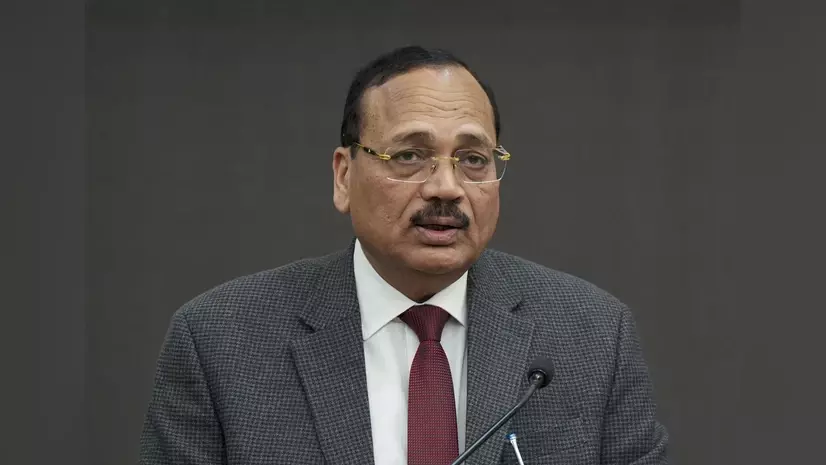
Justice Surya Kant (PTI file image)
New Delhi: Chief Justice of India B.R. Gavai has recommended to the Centre the name of Justice Surya Kant as the next Chief Justice of India (CJI).
Justice Surya Kant, currently the second senior-most judge of the Supreme Court after the incumbent CJI Gavai, is set to become the 53rd Chief Justice of India on November 24, following Justice Gavai’s retirement on November 23.
Justice Gavai, who was sworn in on May 14 this year, has formally written to the Union Law Ministry recommending the appointment of Justice Surya Kant as his successor.
“Hon’ble the Chief Justice of India, Mr. Justice Bhushan Ramkrishna Gavai, recommends the name of Hon’ble Mr. Justice Surya Kant, the senior-most Judge of the Supreme Court, as his successor to be the 53rd Chief Justice of India,” the Supreme Court said in a statement.
Justice Kant, who was elevated to the Supreme Court on May 24, 2019, will have a tenure of nearly 15 months as CJI. He is due to retire on February 9, 2027. The retirement age for Supreme Court judges is 65 years.
According to the Memorandum of Procedure, which governs the appointment, transfer, and elevation of Supreme Court and High Court judges, the CJI’s post should go to the senior-most judge of the apex court considered fit to hold the office. The Union Law Minister, at the appropriate time, seeks the outgoing CJI’s recommendation for his successor, and this letter is conventionally sent about a month before the incumbent retires.
Born on February 10, 1962, in a middle-class family in Hisar district of Haryana, Justice Surya Kant brings to the nation’s top judicial office over two decades of distinguished service on the Bench. His tenure has been marked by landmark judgments on issues such as the abrogation of Article 370, free speech, democracy, corruption, environmental protection, and gender equality.
Justice Kant was part of the historic bench that put the colonial-era sedition law in abeyance, directing that no new FIRs be registered under it until the government completed its review. He also directed the Election Commission of India to disclose details of 6.5 million excluded voters in Bihar after the Special Intensive Revision of the electoral list, underscoring his commitment to electoral transparency.
An advocate for women’s representation in the legal field, Justice Kant ordered that one-third of seats in all bar associations, including the Supreme Court Bar Association, be reserved for women.
He also served on the bench that appointed a five-member committee headed by former Supreme Court judge Justice Indu Malhotra to probe the security breach during Prime Minister Narendra Modi’s 2022 Punjab visit, observing that such matters required “a judicially trained mind.”
Justice Kant upheld the One Rank, One Pension (OROP) scheme for defence forces, terming it constitutionally valid, and continues to hear petitions filed by women officers seeking parity in permanent commission in the armed forces.
He was also on the seven-judge bench that overruled the 1967 Aligarh Muslim University judgment, paving the way for reconsideration of the institution’s minority status.
Additionally, Justice Kant was part of the bench that heard the Pegasus spyware case, which appointed a panel of cyber experts to investigate allegations of unlawful surveillance, famously remarking that the state cannot be given “a free pass under the guise of national security.”
( Source : PTI )

Next Story