J&K: Shia Mourners Defy Police, Display Hezbollah Flags During Muharram Processions

5 July 2025 9:25 PM IST5 July 2025 9:25 PM IST
The slogan-chanting protesters who were carrying the portraits of Nasrallah and Iranian spiritual and political leaders and other Shia religious and political figures denounced the police action
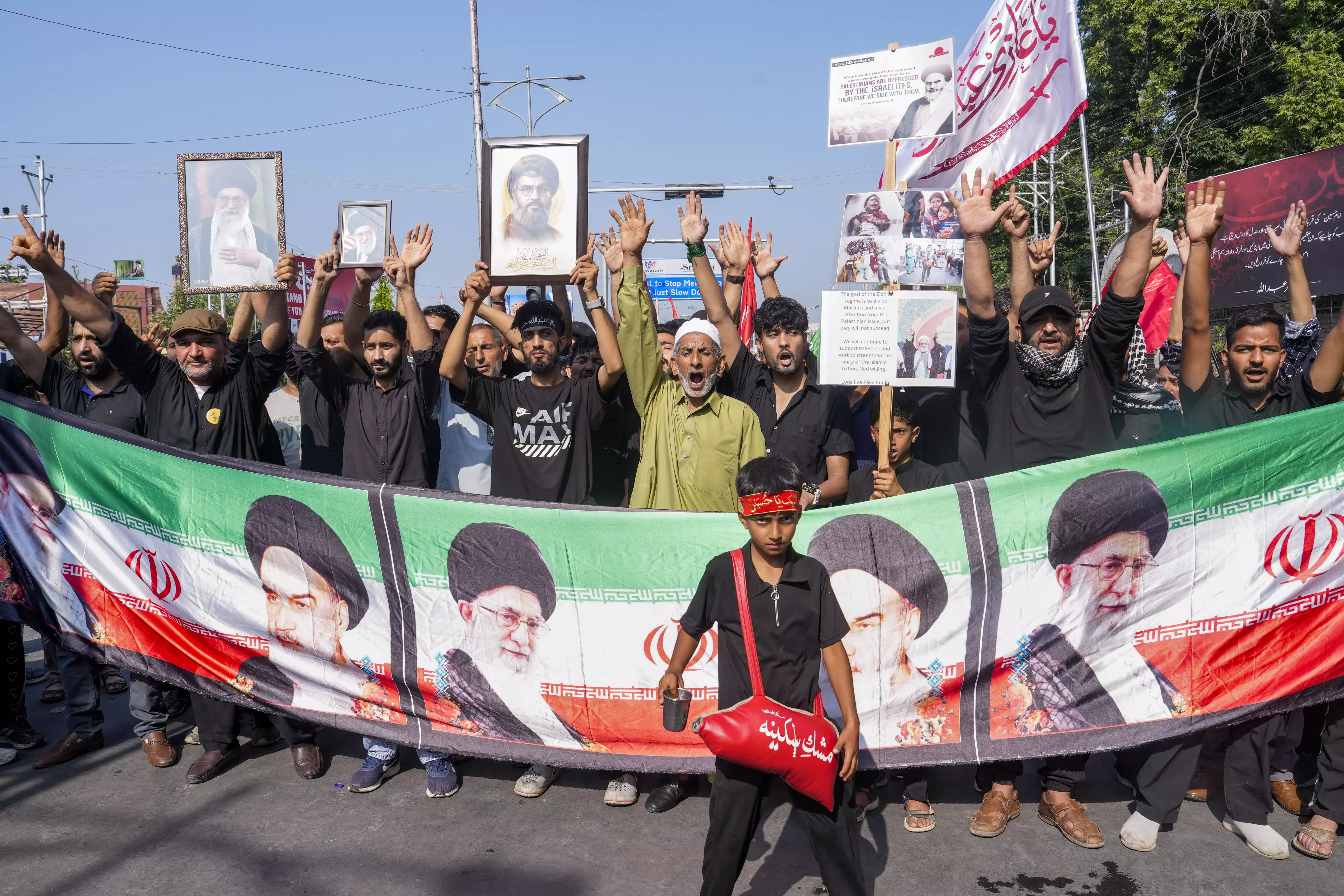
People raise slogans during a Muharram procession, in Srinagar, Jammu and Kashmir (PTI Photo/S Irfan)
SRINAGAR: The Shia mourners have continued to display portraits of Hezbollah leader Syed Hassan Nasrallah and the group’s flags along with that of Palestine during Muharram processions, defying police actions in capital Srinagar and some other parts of the Kashmir Valley.
Meanwhile, ahead of Ashura- the 10th day of Muharram- security has been significantly intensified across Jammu and Kashmir, particularly in Srinagar, to ensure safety during the large Shia mourning processions expected on Sunday. The J&K police, along with the CRPF and other Central Armed Police Forces (CAPFs), have established multiple checkpoints, especially in sensitive areas like Srinagar’s Old City, Zadibal and Hassanabad quarters, and central Budgam and various predominantly Shia areas of neighbouring Baramulla district where large congregations are anticipated. In certain Baramulla areas, restrictions were imposed on Saturday to hold back mourning rallies “in the interest of peace and public order.”
On Friday, the Jammu and Kashmir police registered an FIRs in response to what it said were individuals violating set conditions during a Muharram procession taken from Srinagar’s Guru Bazaar locality and culminating at Dal Gate. The police said that the acts committed were deliberate, unlawful, and aimed at disturbing public order and communal harmony.
It alleged that certain participants in the procession while passing through the City Moulana Azad Road engaged in provocative behaviour that posed a serious threat to the peace and integrity of the region. “In violation of laid-down conditions, certain individuals committed deliberate and unlawful acts during the Muharram procession on MA Road. These actions were intended to provoke unrest, disturb public order, and disrupt communal harmony, posing a serious threat to the security and integrity of the nation,” the police said in a statement.
The FIR has been registered at Police Station Kothi Bagh under relevant sections of the Bharatiya Nyaya Sanhita (BNS). “The accused individuals have been identified, and legal proceedings are underway,” the Srinagar police said and reiterated their commitment to maintaining peace and order in the city. “We will continue to take firm action against any attempts to destabilize public harmony through subversive or provocative activities,” the statement read.
Though the statement did not explicitly detail the specific reasons for the FIR. Based on related incidents in the Kashmir Valley around the same time, it is likely connected to the display of Hezbollah flags and portraits of its leader Nasrallah, during Muharram processions, which the police have cited as potential disturbances to public order.
Eyewitnesses said that many participants of the mourning procession taken out on the eighth day of Muharram in Srinagar on Friday were carrying Iranian, Palestinian and Hezbollah flags and colourful portraits of Nasrallah and Iranian spiritual and political leader Ayatullah Ruhullah Khomeini, incumbent supreme leader Ali Hosseini Khamenei and other Shia religious and political figures particularly Qasem Soleimani, former commander of Iran’s Quds Force who was killed in a U.S. drone strike in January 2020 and remains a revered figure among vast majority of Shias for his role in countering ISIS and supporting Iran-aligned militias.
They also chanted slogans praising them and key Iranian military commanders including Maj. Gen Mohammad Badheri and General Hossein Salami and nuclear scientists killed in the air strikes during Israel’s "Operation Rising Lion" last month.
Aga Syed Ruhullah Mehdi, a prominent Shia leader and ruling National Conference (NC) Lok Sabha member from Srinagar, sought an explanation from the J&K Police regarding the FIR. He wrote on ‘X’, “To @JmuKmrPolice- a simple question: Are you serving us Kashmiris or enforcing the will of a Zionist regime? If you're serving us, then explain: Under what law are you filing FIRs against peaceful expression of support to Gaza? We await your answer.”
It all started from Srinagar Saida Kadal-Ashai Bagh corridor when, on July 2, the police removed banners featuring slain Hezbollah leader. However, the local Shias resisted the police action and, after a face-off, reinstated the banners and flags declared “objectionable” by the latter earlier.
On Thursday, a huge crowd of Shia mourners held a protest outside a police station in the Magam town on the outskirts of Srinagar. The slogan-chanting protesters who were carrying the portraits of Nasrallah and Iranian spiritual and political leaders and other Shia religious and political figures denounced the police action. They also pasted posters featuring Nasrallah on the outer wall of the roadside police station, indicating a defiant response from some community members. A police officer was allegedly assaulted for removing a Hezbollah flag and Nasrallah portrait on July 3.
A vast majority of people living in settlements on the Dal and Nigeen lakes and is neighbourhoods are Shia Muslims and, as in the past, they have, like many other Valley areas particularly those with sizable community population, put up black flags and banners during Muharram to mourn the martyrdom of Imam Hussein ibn Ali, the grandson of Prophet Muhammad, who was killed along with his 72 family members and companions in the Battle of Karbala in 680 CE.
Many of the banners crisscrossing the roads or hanging from walls feature Nasrallah and some other Hezbollah leaders and Iran-linked political and military figures. While black is a symbol of grief and sorrow, many other flags or banners put up across Srinagar and other Kashmir Valley areas also feature inscriptions, religious symbols, or phrases honoring Imam Hussein and commemorating his sacrifice.
Though this practice is common in regions with significant Shia populations, it is believed some of the banners were removed by the police because these featured figures associated with Hezbollah, a group designated as a terrorist organization by several countries, including the US and Israel.
The police cited the potential of such displays to disturb public order, issuing warnings against sharing related content on social media and threatening legal action under applicable laws, including the Unlawful Activities (Prevention) Act (UAPA). Last year also, FIRs were filed by the police against Shia mourners for raising pro-Hezbollah and pro-Palestine slogans and flags during Muharram processions, with cases registered under UAPA and other relevant laws.
( Source : Deccan Chronicle )

Next Story