
From grassroots rallies to national uprisings, youth leaders take the global stage. Beyond borders and context, they shared pursuit of dignity, rights, and systemic change
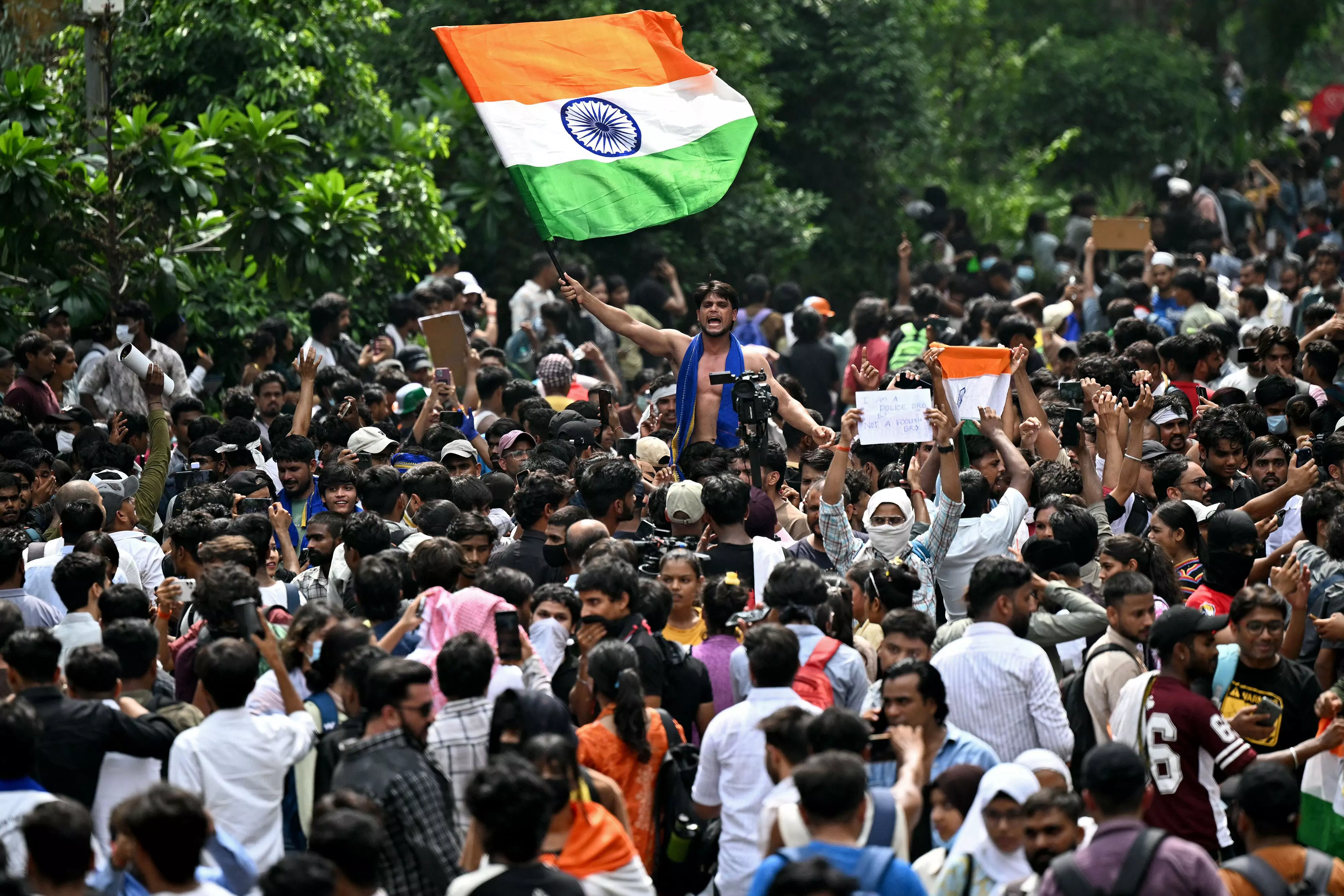
Cockroach Janta Party (CJP) supporters celebrate the resignation of India's Education Minister Dharmendra Pradhan, at Jantar Mantar in New Delhi (Sajjad HUSSAIN / AFP file image)
If you were to ask what universally connects us in today’s world, most people would answer without hesitation: the internet. And while that holds true to an extent, there is another formidable force forging global connections and driving daily transformation: youth power.
Look closely at the systems governing our world—political, commercial, military, and social—and you will find that the primary driving force propelling them forward is the youth of those nations. Our overarching global architecture rests upon their shoulders. At the core of this generation lies a relentless spirit to innovate, test boundaries, and refuse complacency, constantly forging new pathways. This restlessness is not instability; rather, it is the defining hallmark of a vibrant, living society.
Consider a world stripped of its youth—what would remain? More than half the globe would grind to a sudden halt. Young people are far more than mere laborers, service providers, or gears locked within an institutional machine. They are the true catalysts of progress and the bedrock upon which nations stand.
Even in commercial markets, this influence is unmistakable. When a mobile technology company launches a new device, its design and marketing strategies are explicitly tailored around the aspirations of the youth.
Tragically, this extraordinary youth power is also leveraged on darker stages, as nations engaged in reckless conflicts deploy young lives to fight their wars.
To honor this incredible driving force, International Youth Day is celebrated globally. This year, the United Nations’ theme, “Different Contexts, Common Aspirations,” underscores a crucial truth: while young people face vastly different challenges depending on where they live, they remain bound by shared dreams. These collective aspirations unite 1.2 billion youth across the globe into a single, global narrative. Today's youth demand dignity, equal opportunity, and the fundamental right to speak out for their rights and a secure future.
We recently witnessed this power firsthand in our own country through youth-led protests—seeing both their origins and their far-reaching impact. The movement in Delhi was spearheaded by a young leader named Abhijeet Dipke alongside a courageous cohort of young men and women. They reminded us that monumental change always requires someone brave enough to take the first step. When it comes to making bold moves, young people never step back—whether in India, Pakistan, or Sweden.
In this century, we have seen existing regimes and entrenched systems transform when youth power unites. Around the world, remarkable young leaders rising from ordinary backgrounds are standing up for fundamental rights and a better human future, proving that the vanguard of tomorrow is already shaping today.
Across the globe, a new generation is refusing to wait for the future to inherit the world. Unburdened by political inertia and emboldened by moral clarity, young activists are confronting authoritarian regimes, demanding climate justice, challenging political corruption, and standing up against systemic inequality. From local grassroots strikes to historic national uprisings, these young leaders are proving that age is no barrier to profound historical impact.
Champions for Education and Democracy
The fight for basic human rights often finds its strongest advocates in student leaders. In Pakistan, Malala Yousafzai became a global symbol of resistance after defying Taliban bans on female education and surviving an assassination attempt at just fifteen years old. Her fearless stance mobilized millions worldwide and led to her becoming the youngest-ever Nobel Peace Prize laureate. Thousands of miles away in Hong Kong, youth-led political movements have similarly shaken established powers.
At fourteen, Joshua Wong co-founded Scholarism to successfully halt pro-Beijing educational reforms, later becoming a central figure alongside Nathan Law in the 2014 Umbrella Movement and the 2019 democracy protests. Law went on to become the youngest lawmaker elected to Hong Kong's Legislative Council at age twenty-three before being forced into exile, underscoring the high personal stakes involved in challenging authoritarian control.
Youth activism has also proven capable of bringing down long-standing political regimes. In Sudan, twenty-two-year-old Ala’a Salah became the iconic face of the 2019 Sudanese Revolution after a video of her leading anti-government chants atop a car went viral, inspiring millions of young men and women to bring down a thirty-year dictatorship.
More recently, in 2024, university student coordinators Nahid Islam and Asif Mahmud mobilized hundreds of thousands of students across Bangladesh to protest government job quotas, state violence, and deep-seated corruption. What began as a student movement quickly escalated into a widespread national revolution that ultimately forced Prime Minister Sheikh Hasina to step down and flee the country.
A New Era of Digital Mobilization and Accountability
Modern youth movements are increasingly utilizing decentralized digital networks to challenge systemic neglect. During Kenya's 2024 Anti-Finance Bill protests, Hanifa Adan and a leaderless coalition of Gen Z youth used social media platforms like X Space to organize nationwide demonstrations without traditional political party backing. By raising funds digitally and mobilizing tens of thousands of citizens against rising living costs and police violence, they successfully pressured President William Ruto to reject the contentious bill.
In the United States, student survivors of the 2018 Marjory Stoneman Douglas High School shooting in Parkland, Florida—including Emma González and David Hogg—channeled national grief into systemic action. By organizing March for Our Lives, they led one of the largest youth-driven protests in American history, directly challenging powerful gun lobbies and demanding strict legislative reforms for public safety.
In India, student accountability has also taken center stage in the realm of education. Activist Abhijeet Dipke mobilized hundreds of thousands of young people to protest against irregularities and paper leak scandals surrounding national entrance exams like NEET-UG. Demanding fair educational policies and accountability from top political leadership, the movement highlighted the growing refusal of young citizens to accept systemic compromise in their academic futures.
Fighting for the Planet and Indigenous Rights
The existential threat of climate change has mobilized some of the youngest activists on record. Indian climate activist Licypriya Kangujam began her journey at just six years old, holding solo protests outside the Indian Parliament to demand strict climate laws and air quality regulations. She has since taken her message to major international summits, challenging world leaders on environmental governance. Similarly, Mexican-American activist Xiye Bastida helped lead the Fridays for Future movement in New York City, rallying over thirty thousand high school students to highlight how climate inaction disproportionately affects marginalized and Indigenous communities.
In Uganda, Vanessa Nakate launched a solo strike outside parliament to highlight how climate neglect severely impacts the African continent. She later established the Rise Up Movement to provide a dedicated platform for African youth voices on the global stage.
Indigenous youth are likewise holding world leaders accountable for environmental destruction and human rights. Indigenous Canadian activist Autumn Peltier, belonging to the First Nation, began advocating for clean drinking water at age eight. By twelve, she confronted Canadian Prime Minister Justin Trudeau directly over federal pipeline policies and the lack of clean water access in First Nations communities, cementing her position as a vital global advocate for water protection and Indigenous rights.
Together, these young leaders demonstrate that courage, connection, and conviction can dismantle systemic barriers, forcing world powers to listen to the voices of tomorrow, today. The world young people inherit in 2026 is defined by stark economic, environmental, and technological contrasts.
Despite these vast geographic and socioeconomic divides, the core desires remain constant: quality education, decent work, mental well-being, and a seat at the decision-making table.
"Young people are not just leaders of tomorrow; they are essential partners shaping our collective present. Recognizing our common aspirations is the first step toward building an equitable world."
As the world celebrates International Youth Day 2026, the message is clear: while our backgrounds and contexts may vary, our collective future depends on amplifying youth voices everywhere.
( Source : Deccan Chronicle )


Next Story