Militant Infiltration Attempts Dropped Sharply in 2025: BSF

Inspector General (IG) BSF Kashmir Frontier, Ashok Yadav, said all four attempts were comprehensively failed after killing eight infiltrators and successfully pushing back five others in coordinated Army-BSF operations
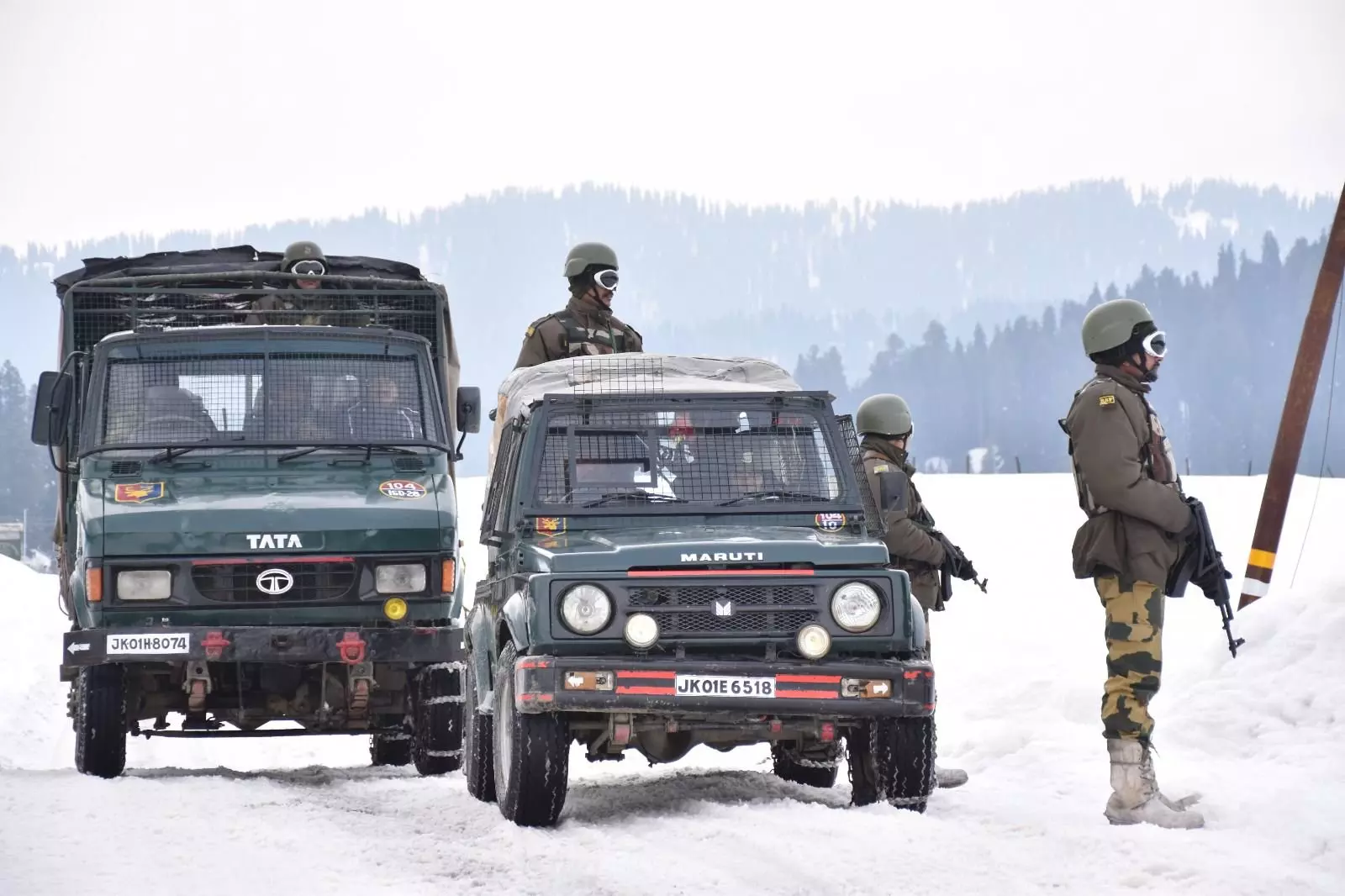
SRINAGAR: The Border Security Force (BSF) on Monday declared 2025 as one of the most successful years in preventing militant infiltration along the Line of Control (LoC) in Kashmir Valley, with only four intrusion attempts recorded so far — two before and two after Operation Sindoor in May.
Addressing the media on the occasion of the force’s 61st Raising Day here, Inspector General (IG) BSF Kashmir Frontier, Ashok Yadav, said all four attempts were comprehensively failed after killing eight infiltrators and successfully pushing back five others in coordinated Army-BSF operations. “Effective domination of the LoC, real-time intelligence sharing and seamless synergy with the Army have ensured zero successful infiltration into the Kashmir Valley this year,” IG Yadav said, describing the outcome as a “major strategic achievement”.
He revealed that the BSF’s G-Branch (intelligence wing) continues to generate high-value inputs leading to preemptive counter-terrorism strikes, recovery of war-like stores and disruption of terror financing networks.
Highlighting Operation Sindoor as the force’s biggest achievement of 2025, Yadav said its first phase (May 6–10) saw precision fire assaults by BSF artillery and units that destroyed several terrorist launch pads and caused heavy casualties and damage to Pakistani troops and terrorist infrastructure across the LoC, despite intense enemy retaliation.
He added that after the Pahalgam terror attack, specially trained BSF teams were deployed in Valley's other premier resort Gulmarg alongside J&K Police. The force also ensured an incident-free Shri Amarnath Yatra 2025 by securing key districts, he said.
The IG said the BSF has upgraded forward defences, inducted advanced night-vision and surveillance systems, modern weaponry and intensified training to counter emerging threats, including BAT (Pakistani Border Action Teams) strikes.
Reiterating the force’s commitment to the people of Kashmir, Yadav said, “We are always here to serve the people of the Valley. Their safety and well-being remain our foremost priority.”
Senior BSF officers in both Srinagar and Jammu have claimed that Pakistan has been forced to dismantle over 70 forward terror launchpads along the LoC and International Border (IB) after the four-day precision fire assault — Operation Sindoor — launched in response to the 22 April Pahalgam terror attack that killed 25 tourists and a local horse handler.
“Virtually the entire terror infrastructure hugging the border has been relocated to depth areas inside Pakistan-occupied Jammu and Kashmir (PoJK) and Pakistani Punjab,” BSF DIG (Operations & Intelligence) Vikram Kunwar said at the weekend.
According to latest intelligence assessments shared by the BSF, around 60–70 launchpads have been shifted 30–70 km inside PoJK and Pakistani Punjab. At least 12 new launchpads are now active in the Sialkot–Zaffarwal sector (depth areas of Pakistani Punjab), it said.
The officers claimed that terrorist groups have abandoned sect-wise training camps and that mixed batches of Jaish-e-Mohammad, Lashkar-e-Taiba and other outfits are now being trained together far from the border. “Launchpads are no longer static. They are activated only for specific infiltration windows in small groups of 2–3 terrorists,” DIG Kunwar had added.
IG BSF (Jammu Frontier) Shashank Anand while issuing a blunt warning to Islamabad said, “If the Government of India gives us another opportunity, the BSF is fully prepared to inflict significantly heavier and more precise damage than we did during Operation Sindoor.” He claimed several Pakistani Ranger posts were abandoned under intense BSF artillery and small-arms fire in May, and it took weeks for Pakistan to re-man them, and some bunkers remain damaged or hastily reinforced — all under constant Indian surveillance.
IG Yadav flagged the rising challenge of “white-collar” modules comprising doctors, engineers and teachers with no prior criminal record. “This silent radicalisation of educated youth is a new concern. All agencies are jointly evolving detection mechanisms and monitoring radicalisation hotspots, including certain educational institutions,” he said.
On narco-terrorism, he said large quantities of narcotics continue to be pushed across the LoC, especially in the Tangdhar sector, both to fund terror and to destabilise border youth through addiction. While drone sightings continue for reconnaissance, no armed or cargo drone has crossed into Indian territory in recent months, officers said.
In a significant operational shift, the officers said, BSF has deployed all-women (Mahila) companies in forward areas along the LoC and on vital roads to counter female couriers and win the trust of border villages. “Our Mahila troops are playing a pivotal role in intelligence gathering and preventing smuggling and infiltration through women sympathisers,” IG Yadav noted.
Along the 198-km IB in Jammu, the BSF reported virtually zero infiltration attempts post-Operation Sindoor. It also said that flood-damaged anti-infiltration obstacles were rebuilt and reinforced within a month, making the grid “two to three times stronger”.
With upgraded thermal imagers, anti-tunnel sensors, quick-reaction teams and winter-ready mobility, the force asserted it remains on maximum alert to any Pakistani misadventure while strictly adhering to the current ceasefire.
As the BSF celebrated its 61st Raising Day, the leadership underlined one clear message- the deterrence created in May 2025 continues to hold, terrorist ecosystems stand disrupted, and the force is battle-ready for any contingency.
