India-US BTA: Zero-for-Zero Tariff Strategy Most Unlikely As Countries at Different Levels of Economic Growth

The sources, however, said that the India-US agreement would always be a ‘package’ deal that could include issues such as goods and non-tariff barriers
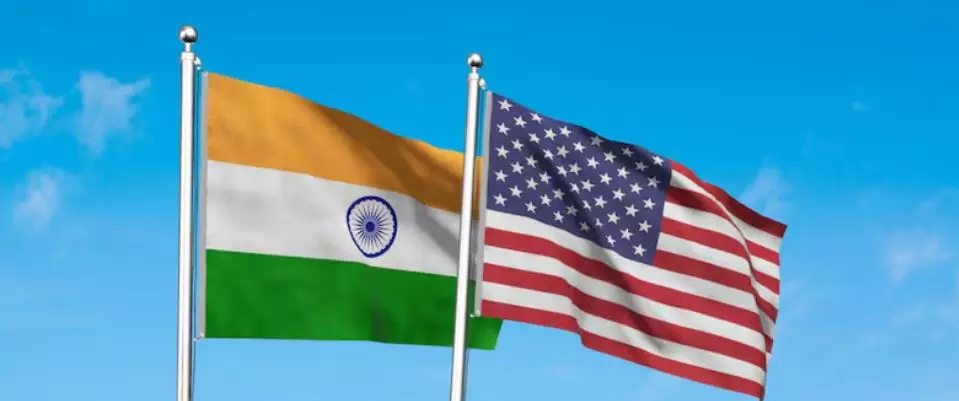
New Delhi: As a significant cut in the US reciprocal tariff on Indian imports is a buzz around in both government and industry officials, however, a ‘zero-for-zero’ tariff strategy under the proposed bilateral trade agreement between India and the US is most unlikely, as the two countries are at different levels of economic development, top official sources said.
The sources, however, said that the India-US agreement would always be a ‘package’ deal that could include issues such as goods and non-tariff barriers, and it does not happen like this if the US will do ‘zero’ in electronics. “We will also do electronics and trade agreements do not happen like this. It is wrong thinking,” the sources added.
Certain trade experts, however, have suggested that India can propose a ‘zero-for-zero’ tariff strategy to the US for addressing America's reciprocal tariff hikes. “A zero-for-zero tariff can be possible between the US and the European Union (EU) as both are developed and advanced nations,” an official said.
In February, Delhi-based think-tank GTRI suggested that India should propose a zero-for-zero tariff strategy to the US for addressing America's tariff hikes. Under this strategy, it has stated that India can identify tariff lines (or product categories) where it can eliminate import duties for American imports and in lieu of that, the US should also remove duties on a similar number of goods.
India and the US have been engaged in negotiating a bilateral trade agreement (BTA) since March. Both sides have targeted to conclude the first phase of the pact by fall (September-October) of this year with an aim to more than double the bilateral trade to $500 billion by 2030 from about $191 billion currently.
India and the US have decided to hold sector-specific talks in the coming weeks under the agreement. The decision to hold discussions in the coming weeks follows four days of talks — between senior officers of India and the US — which concluded here on March 29. “We are lucky that India is far ahead of other countries in negotiating a trade deal. The work for the proposed deal has started for the agreement. We are hopeful that we will clinch a better deal with the United States,” the official added.
In a trade pact, generally two countries either significantly reduce or eliminate customs duties on the maximum number of goods traded between them. They also ease norms to promote trade in services and boost investments. While the US is looking at duty concessions in sectors like certain industrial goods, automobiles, wines, petrochemical products, dairy, agriculture items among others, India is expected to look at duty cuts for labour-intensive sectors like apparels, textiles, gems and jewellery, leather, plastics, chemicals, oil seeds and others.
From 2021-22 to 2023-24, the US was India’s largest trading partner. The US accounts for about 18 per cent of India's total goods exports, 6.22 per cent in imports, and 10.73 per cent in bilateral trade. With America, India had a trade surplus (the difference between imports and exports) of $35.32 billion in goods in 2023-24. This was $27.7 billion in 2022-23, $32.85 billion in 2021-22, $22.73 billion in 2020-21, and $17.26 billion in 2019-20.
In 2024, India’s main exports to the US included drug formulations and biologicals ($8.1 billion), telecom instruments ($6.5 billion), precious and semi-precious stones ($5.3 billion), petroleum products ($4.1 billion), gold and other precious metal jewellery ($3.2 billion), ready-made garments of cotton, including accessories ($2.8 billion), and products of iron and steel ($2.7 billion).
