India to Study Impact of Saudi-Pak Defence Pact

MEA's remark comes hours after Saudi Arabia and Pakistan signed a "Strategic Mutual Defence Agreement," pledging that any aggression against either nation would be treated as an attack on both.
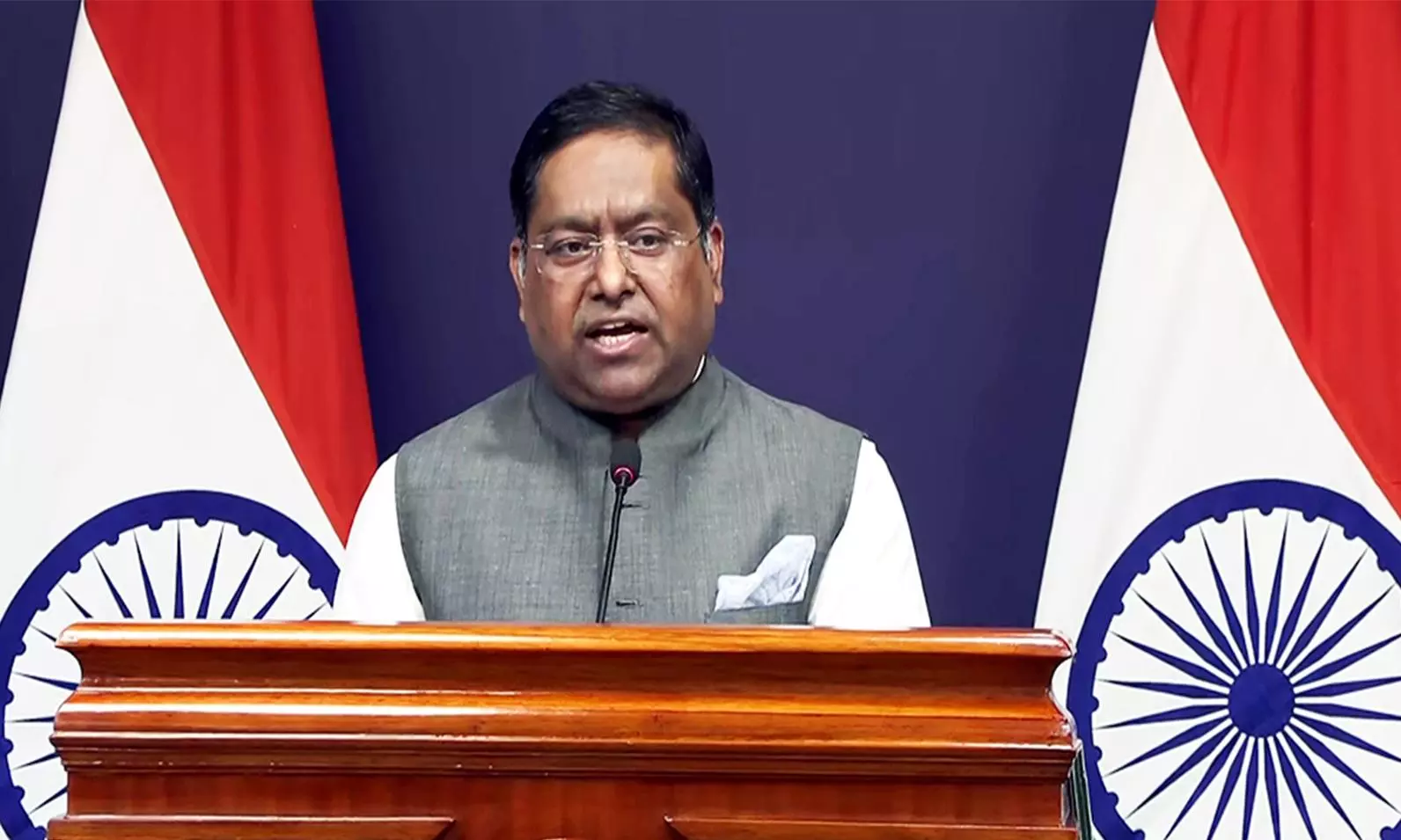
New Delhi: Following the signing of a Saudi-Pakistan defence pact, India on Thursday said it would “study the implications” of the agreement for “our national security” while noting that it “formalises a long-standing arrangement” between the two countries.
Observers, however, pointed out that the pact raises serious questions about whether Saudi Arabia could now be bound to side with Pakistan against India in the event of a future conflict between New Delhi and Islamabad. This comes despite India’s close and friendly ties with the oil-rich Gulf nation, widely regarded as a leader of the Muslim world.
According to reports, the Strategic Mutual Defence Agreement between Saudi Arabia and Pakistan, signed in the presence of Saudi Crown Prince Mohammed bin Salman, Pakistan Army Chief “Field Marshal” Asif Munir, and Prime Minister Shehbaz Sharif, stipulates that an attack on one country would be treated as an attack on both. The pact also comes in the immediate aftermath of the Israeli strike on Qatari soil last week, condemned by several countries including India, which has heightened fears among Arab nations that any of them could be the next target.
New Delhi said on Thursday: “We have seen reports of the signing of a strategic mutual defence pact between Saudi Arabia and Pakistan. The Government was aware that this development, which formalises a long-standing arrangement between the two countries, had been under consideration. We will study the implications of this development for our national security as well as for regional and global stability. The Government remains committed to protecting India’s national interests and ensuring comprehensive national security in all domains.”
Despite the Israel factor, the Pakistan-Saudi pact is a concerning development for India. In April, during Prime Minister Narendra Modi’s visit to Saudi Arabia, the Pahalgam terror attack took place. At that time, Riyadh had extended full support to New Delhi. Both leaders co-chaired the bilateral Strategic Partnership Council and agreed to expand it by including two new sub-committees, one focused on defence cooperation. Just weeks later, India launched Operation Sindoor in May against terror targets in Pakistan, with Saudi Arabia mediating between the two neighbours to defuse military tensions, similar to the role it played in 2019 after the Pulwama terror attack.
Saudi Arabia and Pakistan have traditionally shared close ties, although relations soured about a decade ago when the Pakistan Army Chief General Raheel Sharif refused Riyadh’s request in 2015 to deploy Pakistani troops in Yemen against Shia Houthi rebels, fearing sectarian backlash within Pakistan. Angered by the refusal, Saudi Arabia began strengthening ties with India, which alarmed Islamabad and prompted it to make renewed efforts in recent years to repair its relationship with Riyadh.
