India puts in efforts to regulate trade for economic growth

When asked whether the government is aware of the recent statement of Niti Aayog that tariff protections do not benefit India and reducing tariffs is necessary for economic growth, Prasada, however, replied that India’s tariff policy aims to regulate trade, protect domestic industries, and generate revenue through taxes on imported and exported goods
New Delhi: As the US threats on tariffs are escalating across the world, India is making its all-out efforts to regulate trade on a broader strategy for achieving economic growth, a move aimed at protecting domestic industries and generating revenue through taxes on imported and exported goods.
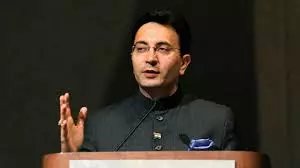
In an attempt to allay fears, Union Minister Jitin Prasada on Tuesday said that India’s tariff policy aims to regulate trade, protect domestic industries and generate revenue through taxes on imported and exported goods. “Recent reforms have focused on streamlining the tariff structure and facilitating trade,” the minister said during the Question Hour in Lok Sabha.
Prasada, union minister of state for commerce and industry, said that the government is aware of the recent statements made by Niti Aayog regarding tariffs and their impact on India's economic growth. “The statement is in line with India’s broader strategy for achieving economic growth and making India a more attractive player in the global economy,” he said.
When asked whether the government is aware of the recent statement of Niti Aayog that tariff protections do not benefit India and reducing tariffs is necessary for economic growth, Prasada, however, replied that India’s tariff policy aims to regulate trade, protect domestic industries, and generate revenue through taxes on imported and exported goods.
The minister further said that India is a member of the WTO and bound to its maximum tariff that can be applied to a given commodity line. “The applied tariffs are generally below the bound tariff for a given commodity line. With the changing trade scenario, India is moving towards having preferential/free trade agreements (PTA/FTA) wherein customs tariffs and non-tariff barriers are reduced or eliminated on substantial trade between the PTA/FTA members,” he added.
The minister also said that the government has initiated comprehensive tariff reforms to correct inverted duty structures, ie; situations where import duties on raw materials exceed those on finished products. “Such reforms are designed to reduce production costs, encourage domestic manufacturing, and enhance global competitiveness. However, despite reductions, some domestic industries advocate for higher tariffs to protect against foreign competition,” he said.
