Govt. Admits E20 Can Hit Fuel Economy by 5% But Offers Better Pickup, Cleaner Combustion

The ethanol controversy has taken a centre stage in India’s when the government mandated shift to 20 per cent ethanol-blended petrol, sparking a fierce public debate over mileage drops, engine wear, and a lack of consumer choice. However, critics are questioning why fuel with 20 percent ethanol is not cheaper than pure petrol or fuel with 10 percent ethanol
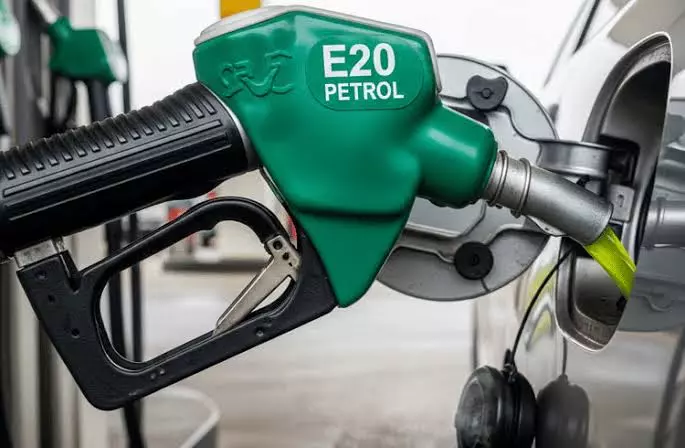
New Delhi: The government on Friday admitted that petrol blended with 20 per cent ethanol (E20) can reduce fuel economy by upto 5 per cent in some vehicles, but argued the impact is outweighed by benefits, including a higher octane rating, superior anti-knock characteristics, faster combustion, better pickup, smoother acceleration, cleaner engine operation, and lower lifecycle carbon emissions.
The ethanol controversy has taken a centre stage in India’s when the government mandated shift to 20 per cent ethanol-blended petrol, sparking a fierce public debate over mileage drops, engine wear, and a lack of consumer choice. However, critics are questioning why fuel with 20 percent ethanol is not cheaper than pure petrol or fuel with 10 percent ethanol.
In a statement in the form of a frequently asked questions (FAQ), the ministry of petroleum and natural gas admitted that E20 blended fuel could result in a 3-5 per cent reduction in the fuel economy of “some vehicles”, but sought an explanation why the blended fuel is not currently cheaper than pure petrol or fuel with lower ethanol levels.
In a detailed FAQ document issued to counter criticism of the E20 programme, the ministry also said E20 was a cleaner, higher-quality and more efficient fuel than E10 or pure petrol and had been rolled out only after years of scientific testing, consultations with automobile manufacturers and the expansion of domestic ethanol production.
The ministry, however, rejected concerns that the programme had been implemented too quickly, saying India’s ethanol blending initiative dates back to pilot projects launched in 2001, with 5 per cent blending introduced in parts of the country by 2006. “While ethanol blending remained around 1.5 per cent until 2014, the government accelerated production after introducing the national policy on biofuels in 2018 and expanding feedstock’s beyond sugarcane,” the ministry said.
The ministry also claimed that India achieved 10 per cent ethanol blending in 2022, ahead of schedule, and reached 20 per cent blending during the 2025-26 ethanol supply year after investments in dedicated ethanol plants, storage and logistics. “The E20 underwent extensive testing covering engine durability, fuel systems, material compatibility, corrosion resistance, drivability and emissions before its nationwide rollout,” the ministry said.
It cited feedback from major automobile manufacturers such as Maruti Suzuki and Hero MotoCorp, saying they had not reported E20-related corrosion, abnormal wear or component-life damage in vehicles serviced under real-world conditions. The ministry also dismissed demands for petrol pumps to offer multiple fuel grades such as pure petrol, E10 and E20, saying maintaining parallel nationwide supply chains would increase logistics costs and complicate fuel distribution across India's network of more than 100,000 retail outlets.
On the pricing front, the ministry also said that E20 is not necessarily cheaper than conventional petrol because ethanol procurement prices are fixed at remunerative levels to support farmers and can exceed the cost of petrol when international crude prices are relatively low. “The programme’s objective was to reduce India's dependence on imported crude, improve price stability and strengthen energy security rather than lower pump prices,” it said.
