FM Stresses For Local Body Reforms To Make India Into Developed Nation

The finance minister also said that the government was pursuing reforms to open up markets, listed companies and government-owned enterprises to fresh capital, which could support their expansion and growth across sectors. “However, reforms should not remain confined to the central government, and state governments and local bodies are also required to undertake measures to improve governance and facilitate economic development,” she said
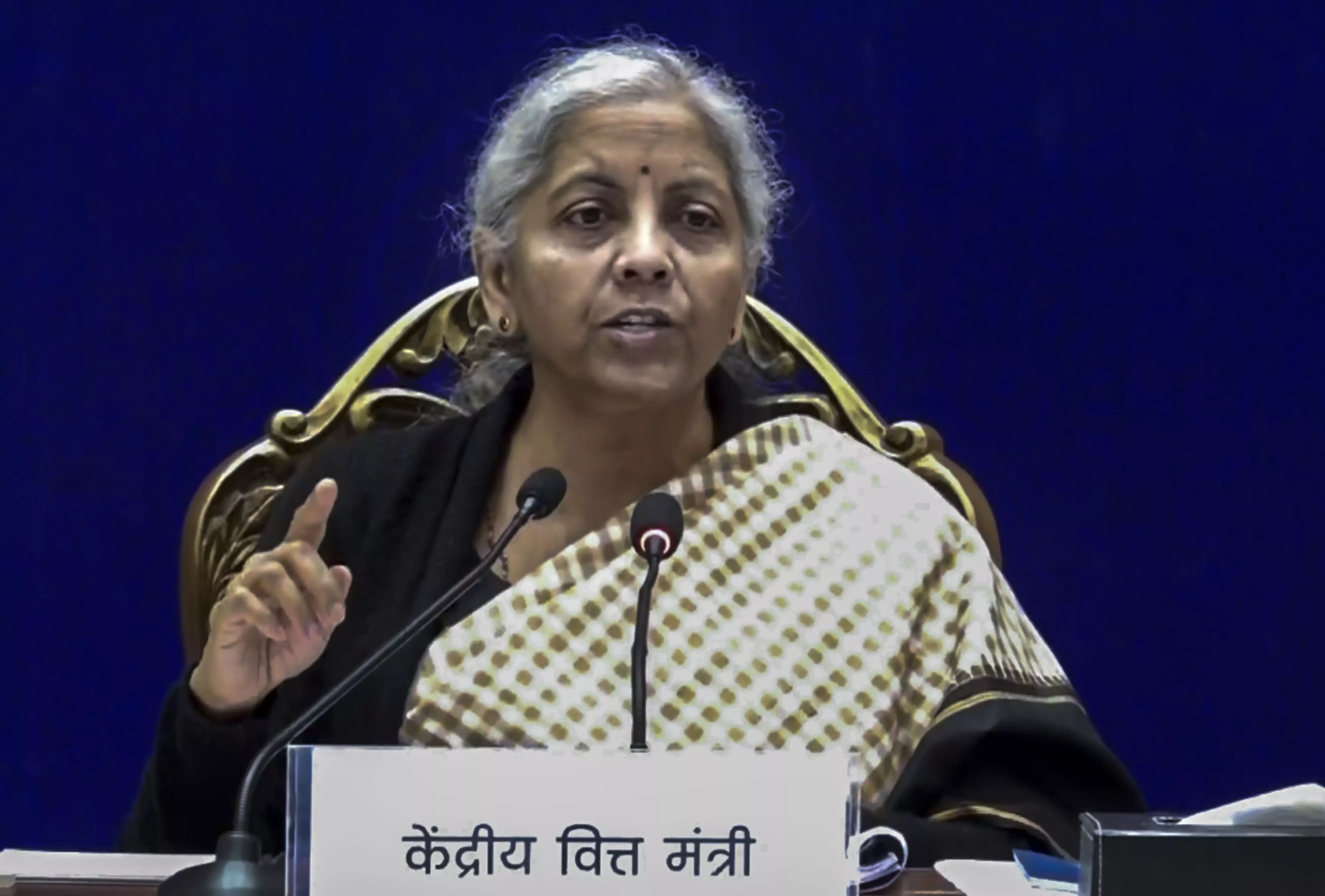
New Delhi: Stressing the need for reforms across all levels of government, Union finance minister Nirmala Sitharaman on Friday underscored the need for deeper reforms at the grassroots level, particularly in municipalities and village panchayats, to accelerate India's journey towards becoming a developed nation by 2047. Besides, she also said that India wants to promote trade settlements in rupee to help partner countries facing a shortage of hard currencies so that they continue importing essential goods.
“The more we reform our systemic issues and move forward, the greater the ease in moving towards Viksit Bharat. The global investors were recognising the opportunities in India as a result of ongoing reforms, citing a recent disinvestment in IDBI Bank in which international investors had acquired close to 60 per cent of the shares,” Sitharaman said while interacting with the Atlantic Council on the sidelines of the IMF-World Bank annual meetings at Bangkok, Thailand.
The finance minister also said that the government was pursuing reforms to open up markets, listed companies and government-owned enterprises to fresh capital, which could support their expansion and growth across sectors. “However, reforms should not remain confined to the central government, and state governments and local bodies are also required to undertake measures to improve governance and facilitate economic development,” she said.
She, meanwhile, highlighted about trade stumble blocks concerned with rupee, saying that India wants to promote trade settlements in rupee to help partner countries facing a shortage of hard currencies so that they continue importing essential goods. “When countries struggling to access hard currencies often face difficulties in maintaining trade despite their need to import goods, local currency settlements could help address the problem,” she said.
“One of the things that we in India want to do is settle in rupee, whatever the payment is to be done by those countries which import goods from us. India was working to facilitate settlements in rupee to ensure that trade continued with countries facing foreign currency constraints. Rupee and local currency settlements are something which we want to do for the benefit of countries which are starved of hard currencies but yet need to import some goods, and, therefore, rupee trade is trying to make it possible,” she said.
“It is a method we have understood and are working on it. This mechanism was also developed against the backdrop of increasing economic downturns affecting nations in many adverse ways. Increasing geopolitical tensions, including wars, had pushed many countries into a debt trap and balance of payments crisis. Multilateral development institutions took years to respond to these problems, as much as three to four years and these kinds of things are getting corrected now,” she added.
