Debate, Dissent Part of Healthy Democracy: VP Radhhakrishnan at JNU

The vice president urged graduates to uphold three core responsibilities -- intellectual honesty in the pursuit of truth, social inclusion to reduce inequalities, and active contribution to national development
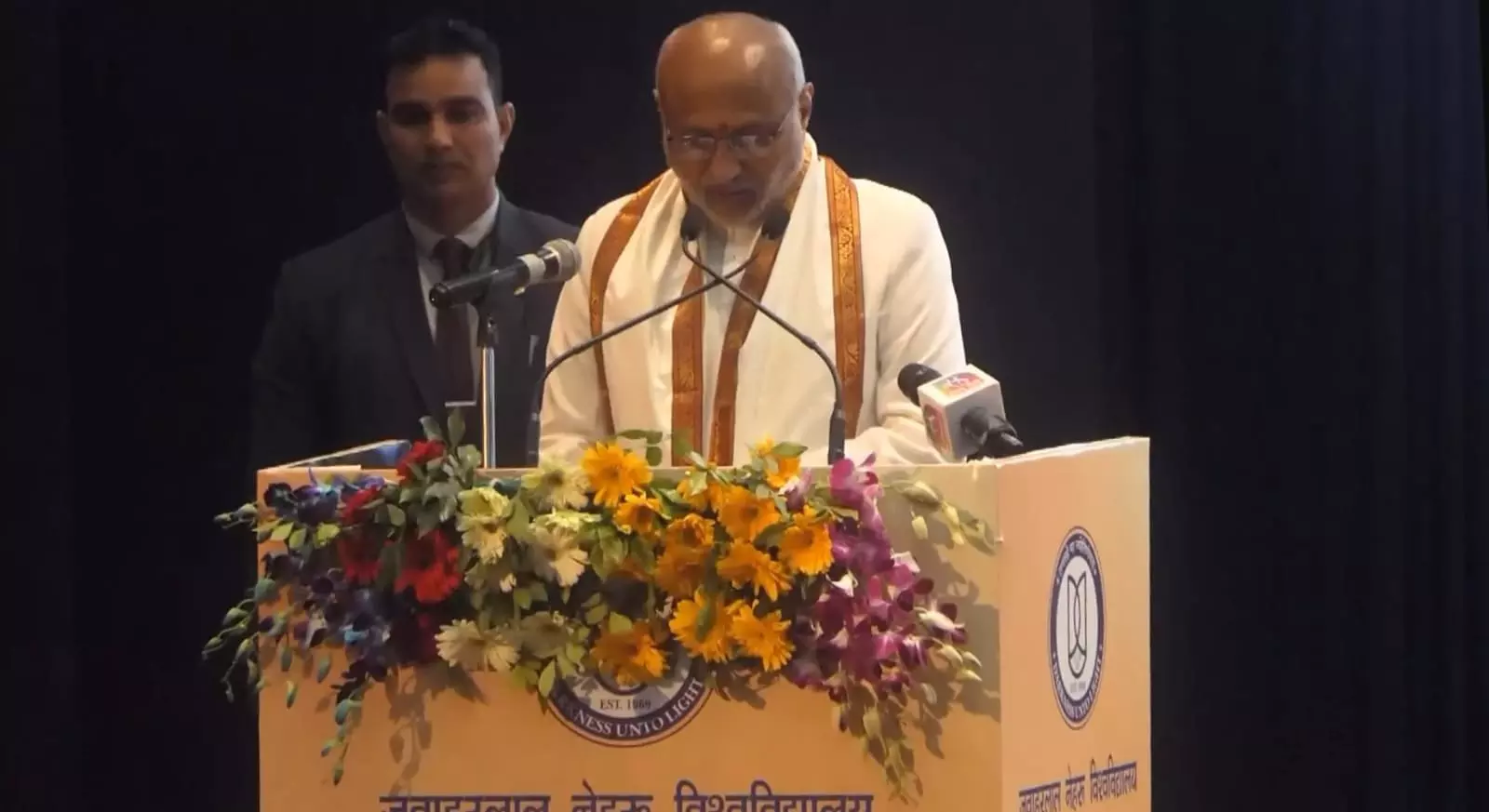
New Delhi: Vice President C P Radhhakrishnan on Monday said that debate, discussion, dissent and even confrontation are essential elements of a healthy democracy, but such processes must ultimately lead to a conclusion. He underlined that once a decision is taken, there must be a collective willingness to cooperate in its implementation to ensure smooth and effective administration.
Addressing the ninth convocation of Jawaharlal Nehru University here, he urged the graduating students to dedicate their knowledge and skills to the service of the nation.
Recalling the teachings of Swami Vivekananda on his birth anniversary, the vice president said that education must go beyond degrees to build character, strengthen intellect and empower individuals to stand on their own feet.
He emphasised that education and proper training alone would enable India's youth to realise Prime Minister Narendra Modi's vision of a Viksit Bharat at 2047.
Highlighting India's civilisational tradition of knowledge, Radhakrishnan referred to the ancient centres of learning such as Nalanda and Takshashila and noted that Indian scriptures and classics, from the Upanishads and the Bhagavad Gita to Kautilya's Arthashastra and Thiruvalluvar's Thirukkural, have consistently placed learning at the centre of societal and ethical life.
He underlined that true education shapes conduct and character, and is not limited to the acquisition of degrees.
Referring to the democratic ethos of JNU, the vice president said that debate, discussion, dissent and even confrontation are essential elements of a healthy democracy. However, he added that such processes must ultimately lead to a conclusion. Once a decision is made, he emphasised, there must be a collective willingness to cooperate in its implementation to ensure smooth and effective administration.
The vice president urged graduates to uphold three core responsibilities -- intellectual honesty in the pursuit of truth, social inclusion to reduce inequalities, and active contribution to national development.
He called upon them to remain guided by constitutional values and India's civilisational ethos, and to always respect their parents and teachers.
