Rafale Deal Green-Lit: India Takes Big Step to Address Fighter Shortfall

Legacy aircraft like the MiG-21 and others were phased out, leaving the service with roughly 30 operational squadrons, far below the 42 squadrons defence planners consider necessary to handle threats from both the western and northern borders
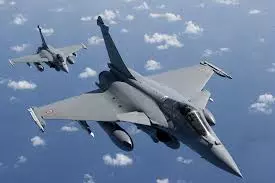
The Defence Acquisition Council’s clearance for the purchase of 114 Rafale fighter jets for the Indian Air Force along with six P-8I maritime patrol aircraft for the Navy is a landmark step in strengthening India’s air power and defence preparedness. This move comes at a time when the Indian Air Force (IAF) has been operating with far fewer aircraft and squadrons than its authorised strength, and has repeatedly pressed for new jets to address this imbalance.
For years the IAF’s combat fleet has been shrinking as older jets retired faster than new ones could arrive. Legacy aircraft like the MiG-21 and others were phased out, leaving the service with roughly 30 operational squadrons, far below the 42 squadrons defence planners consider necessary to handle threats from both the western and northern borders. This decline in numbers has created real operational challenges and emphasised the need for a rapid influx of modern fighters.
The Rafale is a highly capable multi-role fighter jet developed by France’s Dassault Aviation. It combines advanced avionics, powerful radar and sensor systems, electronic warfare capabilities, and the ability to carry a wide range of precision weapons. It is designed to handle air-to-air combat, deep strike missions against ground targets, reconnaissance, and deterrence roles. Because the IAF already operates Rafales and has experience with their training, maintenance and support systems, bringing more of the same aircraft into service will be faster and more efficient than introducing a completely new type.
The Rafale has already demonstrated strong performance in real operations. IAF leaders have noted that these jets were among the most effective platforms in recent exercises and missions, showing the type’s speed, reach and flexible combat abilities. This real-world performance reinforces why the service sees Rafale as a valuable addition to its fleet.
With the new deal, India is set to expand its Rafale fleet substantially. A significant portion of the 114 jets are planned to be delivered in a “fly-away” condition, while the rest will be assembled in India under the Make in India initiative, with a high degree of local content. This approach not only strengthens operational capability but also supports domestic defence industry and manufacturing.
Adding 114 Rafales can translate into six to seven new fighter squadrons, which will help reduce the gap between current and desired squadron strength. This is a considerable boost to India’s air combat capabilities, especially as other procurement programmes like indigenous Tejas jets and next-generation fighters take time to scale up. It also simplifies logistics, pilot training and maintenance because the service expands an existing platform rather than introducing an entirely new one.
In simple terms, the Rafale is not only a modern and capable aircraft but a practical and timely solution to a pressing problem. It brings advanced technology into service quickly, helps plug a long-standing gap in squadron strength, and strengthens India’s ability to defend its airspace and deter aggression. By expanding the Rafale fleet, India moves closer to a more balanced and credible air force that can respond effectively to future challenges.
