Congress Flags South’s Representation Concerns in Delimitation

According to sources, the Centre plans to use the 2011 Census as the basis for delimitation and seat redistribution
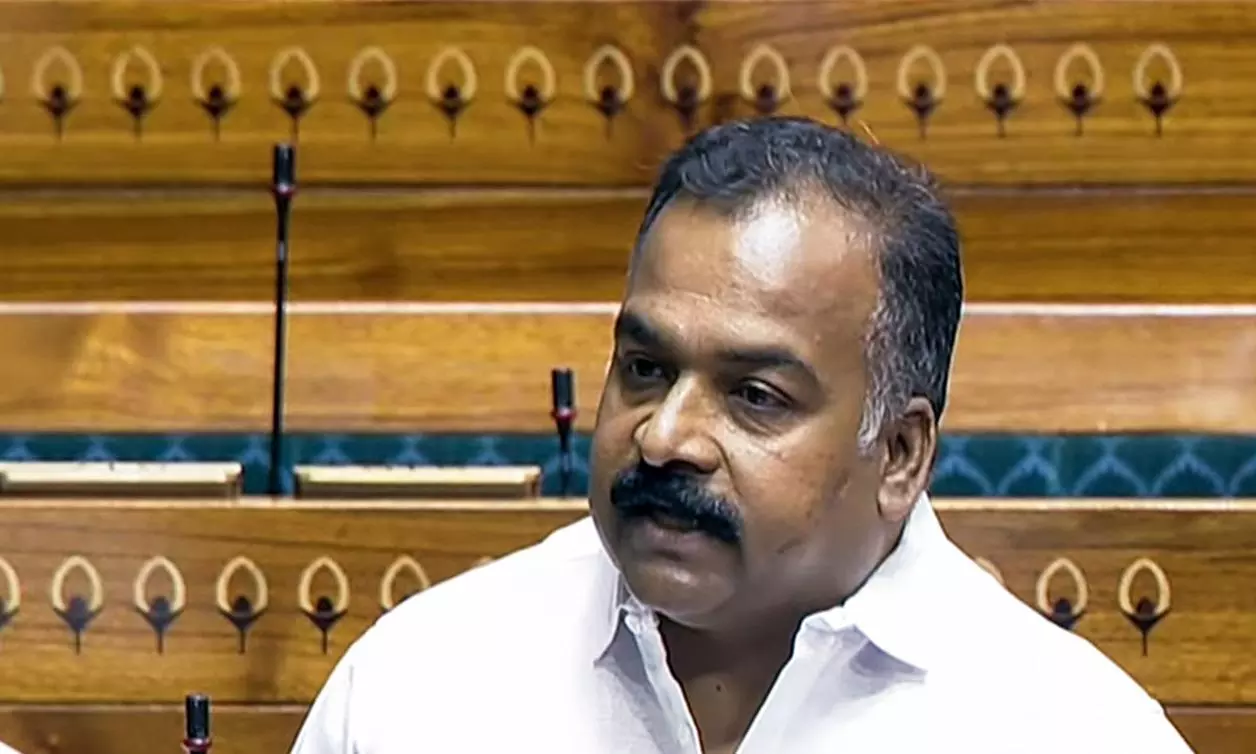
New Delhi: Congress MP Manickam Tagore on Tuesday raised concerns over the long-due delimitation exercise, flagging a risk of southern states being "pushed to political margins" as northern states may gain more seats in the Lok Sabha expansion.
According to sources, the Centre plans to use the 2011 Census as the basis for delimitation and seat redistribution, in an attempt to implement the 2023 Nari Shakti Vandan Act for women's reservation in Parliament. Currently, the Lok Sabha has 543 seats. With a proposed 50 per cent increase, the number of seats will rise to 816, with 273 (about a third) reserved for women.
In a post on X, Manickam Tagore estimated that northern states may gain about 200 seats, compared to 66 for southern states. He noted that while a uniform increase based on the principle of 'one person, one vote' sounds fair, states with higher populations would gain more seats in the Lok Sabha.
Backing criticism from Tamil Nadu and Telangana Chief Ministers, he wrote, "The proposed Lok Sabha expansion is not just about adding seats -- it's about who gains power and who gets pushed aside. Tamil Nadu Chief Minister Thiru MK Stalin raised it. As highlighted by Telangana Chief Minister Revanth Reddy garu, Uttar Pradesh: 80 → 120 seats, Telangana: 17 → 26 seats."
"The gap widens from 63 to 94 seats. Now look at the larger picture: Southern States gain 66 seats (129 → 195), Northern States gain ~200 seats. 200 vs 66 -- who is really gaining power? This is where the concern begins," he added.
Highlighting a "structural disadvantage" for southern states, he said that a uniform increase may appear fair but, in reality, benefits more populous states, shifting the balance of power toward the Hindi belt.
Further, he stressed that Parliament should not reflect regional bias. "Democracy is not just 'one person, one vote'. It is also about fair representation of all regions. If numbers alone decide power, Northern States gain over 200 additional seats, Southern States risk being pushed to the political margins. India is a Union of States -- not a system where some dominate, and others are reduced to spectators," the post read.
As per sources, the Centre plans to move an amendment to the Nari Shakti Vandan Act along with a Delimitation Bill. If passed, it would mark one of India's biggest democratic shifts since independence, potentially resulting in 273 women MPs by 2029. The 2029 general elections could be held for 816 Lok Sabha seats, raising the majority mark from 272 to 409.
Delimitation is the process of fixing boundaries of territorial constituencies. Delimitation Commissions have been constituted four times -- in 1952, 1963, 1973, and 2002. The number of Lok Sabha seats has remained unchanged at 543 since 2002, with the last expansion taking place in 1973.
Earlier, Tamil Nadu Chief Minister and DMK president MK Stalin also raised concerns over reports suggesting that women's reservation in Parliament and State Assemblies may be implemented based on the 2011 Census. He called for the "right to fair delimitation."