CJI Calls for Unified National Judicial Policy, Faster Case Disposal

Justice Kant added that he cannot achieve this alone and that the judges of the apex court have extended their full cooperation.
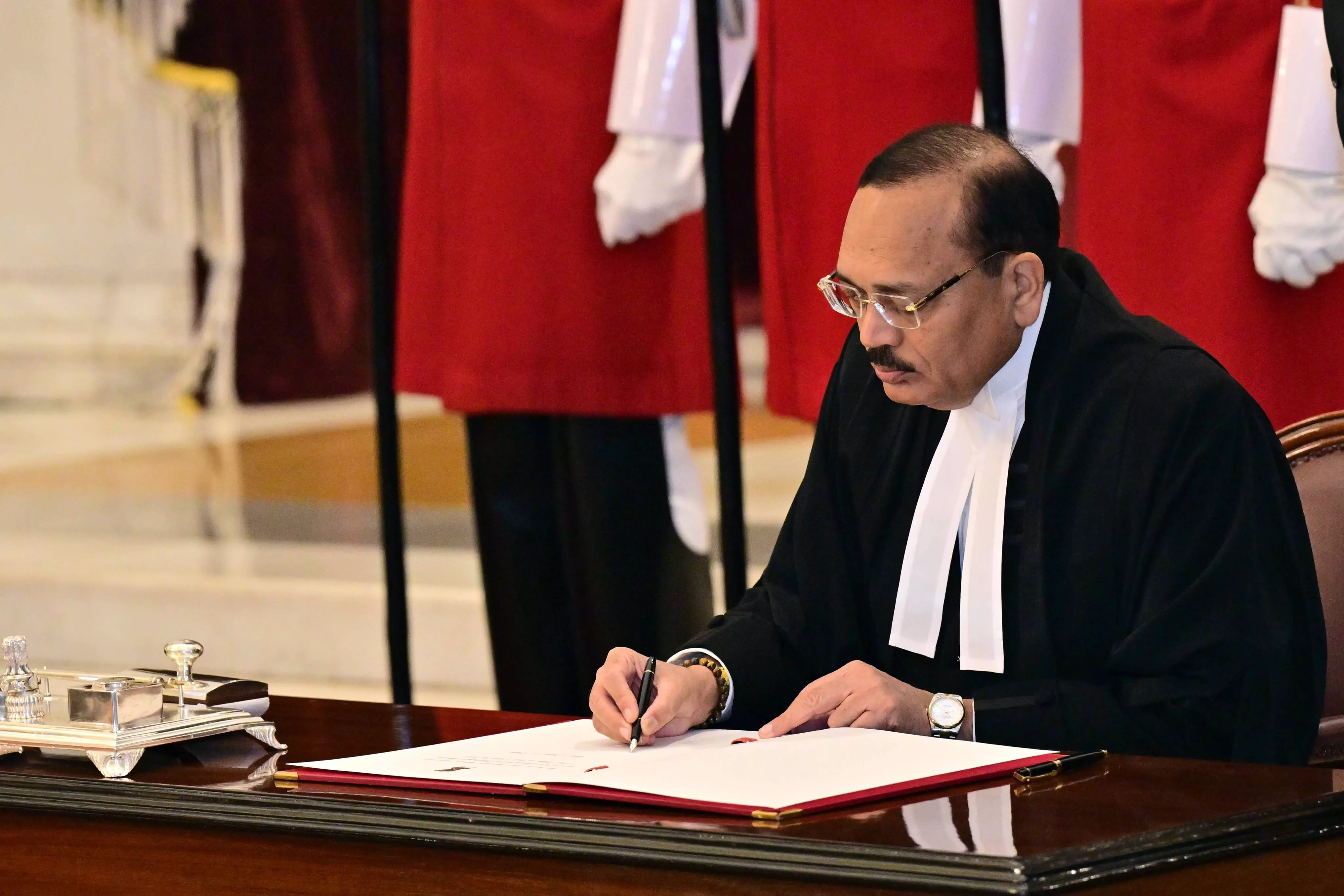
New Delhi: Sending a “strong message” that the Supreme Court exists for the common man, Chief Justice of India Surya Kant on Saturday said that a predictable timeline and a unified national judicial policy for the early disposal of pending cases would be his top priority.
Speaking at a media conclave, the CJI referred to access to justice and said his focus is on reducing the cost of litigation and prescribing a reasonable timeline within which cases are decided. Responding to a question on the independence of the judiciary, Justice Kant referred to the constitutional philosophy of separation of powers, saying the Constitution has clearly defined the roles of the judiciary, legislature and executive, while ensuring that there is no overlap.
The CJI said, “My first priority will be a predictable timeline and a unified national judicial policy-based early decision of the pending cases. I am not talking about eliminating all arrears. That will never happen, and it should not happen, because litigation is an ongoing process. People have trust and faith in the judicial system. Cases will continue to be filed, but the old cases staring us in the face need to be tackled, and for that we must explore mediation as one of the powerful game-changers.”
Stressing that some reforms will be introduced in the Supreme Court in the coming days, including prioritisation of certain litigations, the CJI said, “I want to send a very clear and strong message that the Supreme Court is also meant for the common man, and any ordinary litigant will have sufficient space and time in the Supreme Court. For that, I am prioritising certain matters for listing.”
Justice Kant added that he cannot achieve this alone and that the judges of the apex court have extended their full cooperation.
Pointing out that the judicial system will face new challenges, the CJI cited the rise of digital arrests and cybercrimes. “New challenges will continue to emerge. We need to update our judiciary and train judicial officers to deal with these issues,” he said.
On optimum utilisation and fair evaluation of human resources, he said there must be recognition of merit within the institution.
The CJI said there is now a concerted effort to bring judges from different regions to ensure community and regional representation. “In that process, we have kept in view that persons from marginalised communities and women must receive adequate and fair representation. That inclusivity and diversity have brought a rich culture to the Supreme Court,” he added.
