Centre Opposes Deadlines for President, Governors to Act on Bills

Challenging the apex court’s earlier approach, the SG contended that Articles 200 and 201.
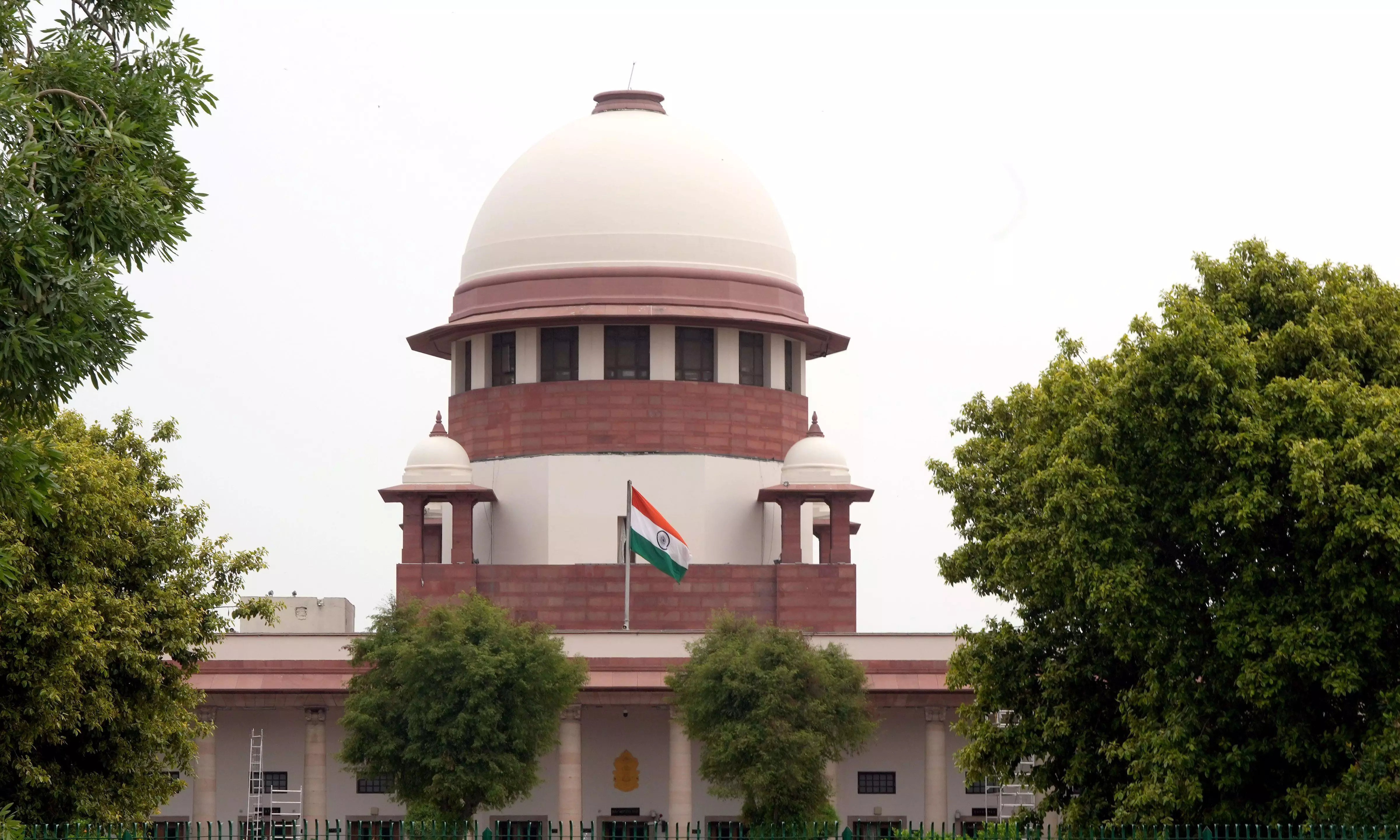
New Delhi: The Centre has told the Supreme Court that imposing fixed timelines on governors and the President to act on Bills passed by State Assemblies would amount to one organ of the government assuming powers not vested in it by the Constitution, leading to a “constitutional disorder.”
The assertion was made in written submissions filed in response to a Presidential Reference raising constitutional questions on whether timelines could be imposed for dealing with Bills passed by State Assemblies. The submissions come as the apex court has scheduled hearings on the Presidential Reference beginning August 19.
A five-judge Constitution Bench headed by Chief Justice of India B.R. Gavai, and comprising Justices Surya Kant, Vikram Nath, P.S. Narasimha and A.S. Chandurkar, has asked the Centre and states to file written submissions.
“The alleged failure, inaction or error of one organ does not and cannot authorise another organ to assume powers not vested in it by the Constitution. If any organ arrogates to itself the functions of another on a plea of public interest, institutional dissatisfaction, or even on constitutional ideals, the consequence would be a constitutional disorder not envisaged by the framers,” the Centre said.
Solicitor General Tushar Mehta, in his note, argued that imposing fixed timelines would disturb the Constitutional equilibrium and negate the rule of law. He added that perceived lapses, if any, must be addressed through constitutionally sanctioned mechanisms such as electoral accountability, legislative oversight, executive responsibility, reference procedures, or consultative processes. “Article 142 does not empower the court to create a concept of ‘deemed assent’, which would turn the constitutional and legislative process on its head,” the Centre maintained.
The Centre also said that the positions of the governor and president are “politically plenary” and embody “high ideals of democratic governance.” Any perceived lapses, it stressed, must be addressed through political and constitutional means rather than judicial intervention.
Challenging the apex court’s earlier approach, the SG contended that Articles 200 and 201, which deal with the options available to governors and the president after receiving a state bill, deliberately contain no timelines. “When the Constitution seeks to impose time limits, it explicitly does so. Where it consciously keeps powers flexible, no fixed timeline is imposed. To judicially read in such a limitation would be to amend the Constitution,” Mehta argued.
The Centre further noted that despite checks and balances, certain functions remain exclusive to one of the three organs of the State, and the plenary positions of the governor and president fall in that category.
“The gubernatorial assent is a high prerogative, plenary, non-justiciable power that is sui generis in nature. Though exercised by the apex of the executive, the assent itself is legislative in nature. Its blended and unique character makes it non-justiciable, as no judicially manageable standards exist,” the note said.
The bench has proposed to begin hearings on August 19 with preliminary objections filed by states such as Kerala and Tamil Nadu challenging the maintainability of the Presidential Reference. The court said the Centre and states supporting the Reference will be heard on August 19, 20, 21, and 26, while states opposing it will be heard on August 28 and September 2, 3, and 9.
In May, President Droupadi Murmu invoked Article 143(1) to seek the Supreme Court’s opinion on whether judicial orders could impose timelines for the president while dealing with Bills passed by State Assemblies.
The Presidential Reference followed the court’s April 8 verdict in a case involving the Tamil Nadu government, in which the court, for the first time, prescribed that the president must decide on bills reserved for her consideration within three months of receiving such references from governors.
