Centre Clears ₹11,440 cr Pulses Mission, hikes MSP for rabi crops

The government also announced a 6.59 per cent increase in the minimum support price (MSP) for wheat to Rs 2,585 per quintal for the 2026-27 marketing year, up from Rs 2,425 per quintal last year. “In absolute terms, the highest increase has been announced for safflower at Rs 600 per quintal, followed by lentil (masur) at Rs 300 per quintal,” an official statement said
New Delhi: India’s farmers have a reason to cheer as the Union cabinet on Wednesday approved two key decisions for the agriculture sector — an investment worth over Rs 11,440 crore in a mission for Aatmanirbharta in pulses for next six years, starting 2025-26 and hiking minimum support prices (MSP) for rabi crops for marketing season 2026-27.
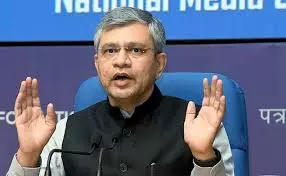
Briefing the media after the Cabinet meeting, information and broadcasting minister Ashwini Vaishnaw said that the Union cabinet approved a six-year central scheme aimed at achieving self-sufficiency in pulses production, with a financial outlay of Rs 11,440 crore. “We are going to start a mission on pulses for six years. Several initiatives will be taken under this,” the minister said.
The ‘Mission for Aatmanirbharta in Pulses’, approved by the Centre, will be for the period from 2025-26 to 2030-31. The mission follows Union finance minister Nirmala Sitharaman’s announcement in the 2025-26 Budget. The mission will particularly focus on increasing production of tur, urad and masoor, with assured procurement by government agencies National Agricultural Cooperative Marketing Federation of India (Nafed) and National Cooperative Consumers' Federation of India Ltd (NCCF) from registered farmers.
As per the official statement, under the mission the government has set a target to increase pulses production to 350 lakh tonnes by 2030-32 from 242 lakh tonnes achieved in 2023-24. “The area under pulses cultivation will be expanded to 310 lakh hectares from 242 lakh hectares, while yield is targeted to improve to 1,130 kg per hectare from 881 kg per hectare,” the statement said.
The initiative comes as India, the world’s largest producer and consumer of pulses, grapples with rising imports. Domestic production has not kept pace with demand driven by rising incomes and standard of living, leading to a 15-20 per cent increase in pulse imports in recent years. The mission will be implemented through a cluster-based approach across 416 focused districts.
“About 1,000 new packaging and processing units will be set up, with a maximum subsidy of Rs 25 lakh available for establishing processing and packaging facilities. To improve productivity, the emphasis will be on developing and disseminating the latest varieties of pulses that are high in productivity, pest-resistant and climate-resilient. Multi-location trials will be conducted in major pulse-growing states to ensure regional suitability,” the statement said.
Meanwhile, the government also announced a 6.59 per cent increase in the minimum support price (MSP) for wheat to Rs 2,585 per quintal for the 2026-27 marketing year, up from Rs 2,425 per quintal last year. “In absolute terms, the highest increase has been announced for safflower at Rs 600 per quintal, followed by lentil (masur) at Rs 300 per quintal,” an official statement said.
“For rapeseed and mustard, the increase is Rs 250 per quintal; gram Rs 225 per quintal; barley Rs 170 per quintal; and wheat Rs 160 per quintal. The MSP for barley has been increased to Rs 2,150 per quintal from Rs 1,980 per quintal. Among key rabi pulses, the support price for gram has been fixed at Rs 5,875 per quintal, up from Rs 5,650 per quintal, while lentil MSP has been raised to Rs 7,000 per quintal from Rs 6,700 per quintal,” it said.
For oilseeds, the statement said, the MSP of rapeseed and mustard has been raised to Rs 6,200 per quintal from Rs 5,950 per quintal, while safflower support price has been increased to Rs 6,540 per quintal from Rs 5,940 per quintal. “The increased MSP for rabi crops is aimed at ensuring remunerative prices for farmers and incentivising crop diversification,” it added.
