BRICS Day 2: Leaders to Discuss Resilience, Innovation, Cooperation

The session is expected to provide an opportunity for BRICS leaders to deliberate on areas of common interest and discuss ways to strengthen cooperation among member countries
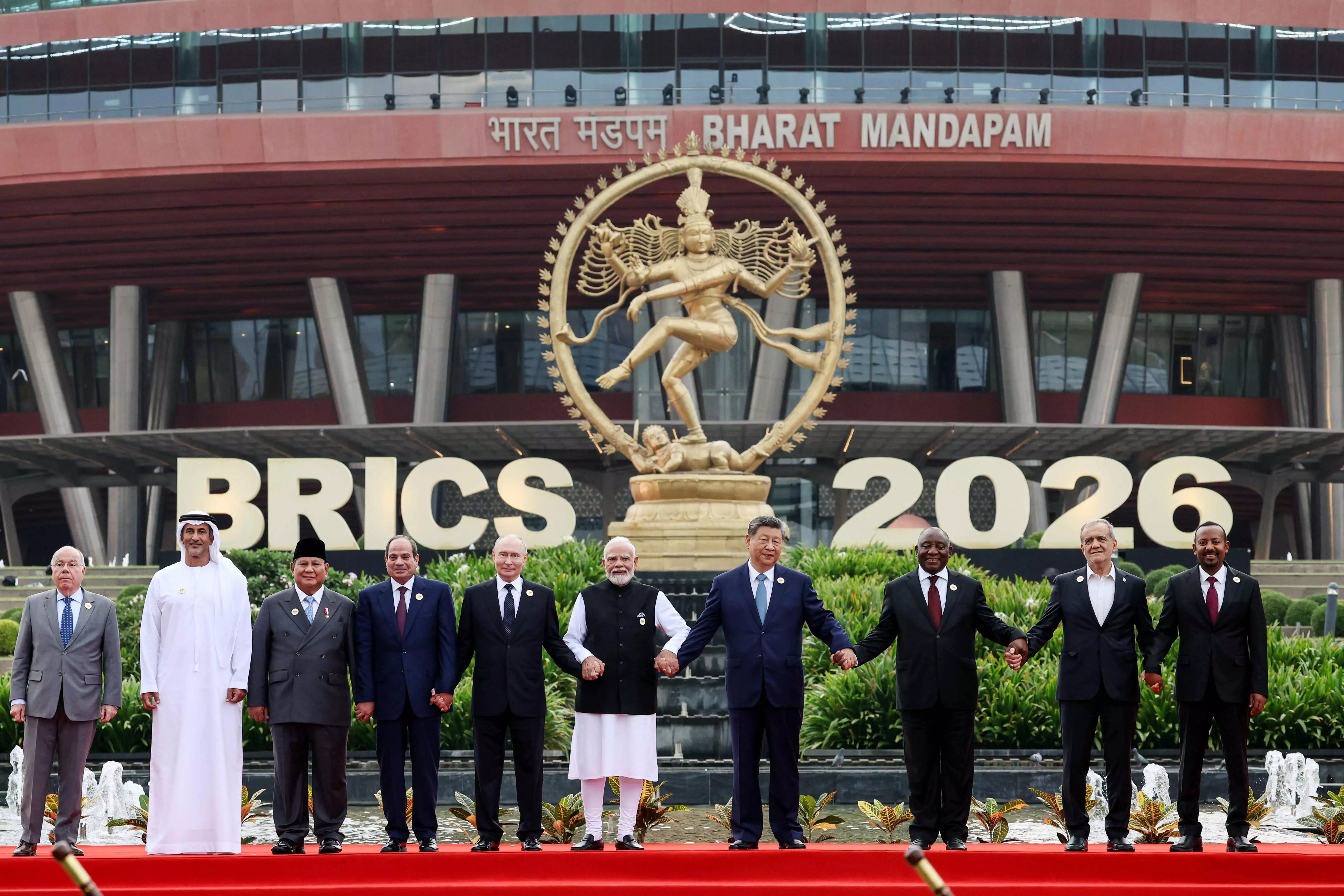
New Delhi: The second day of the 18th BRICS Summit will see leaders hold an open session on Sunday focusing on the core pillars of the central theme — resilience, innovation, cooperation and sustainability — as India hosts the grouping's annual summit under its 2026 chairship.
The session, titled “Resilience, Innovation, Cooperation and Sustainability: Shaping the Future for Inclusive Global Growth”, will be held at the Summit Hall inside Bharat Mandapam in New Delhi.
The open session is part of the two-day BRICS Summit being hosted by India on September 12-13 under the chairship theme, “Building for Resilience, Innovation, Cooperation and Sustainability.”
The session is expected to provide an opportunity for BRICS leaders to deliberate on areas of common interest and discuss ways to strengthen cooperation among member countries while advancing an inclusive approach to global growth.
Earlier, on Saturday, BRICS leaders unanimously adopted the New Delhi Declaration 2026, with Prime Minister Narendra Modi describing the outcome as a reflection of a BRICS that is “wider in reach and stronger in purpose”.
In a series of posts on X, PM Modi said the declaration focuses on innovation, sustainability and people-to-people ties, with the aim of making cooperation “more practical, development-oriented and responsive to the aspirations of the BRICS nations”.
“I thank all the fellow BRICS nations and their leaders for its adoption,” the Prime Minister said.
The presidency, which began on January 1, 2026, is guided by the theme “Building for Resilience, Innovation, Cooperation and Sustainability”, deploying a human-centric approach across its core pillars to reinforce institutional strength and support sustainable growth.
Under the resilience pillar, the chairship strives to fortify economic, social and institutional frameworks, ensuring member states are better prepared to address global uncertainties, supply-chain interruptions, health crises and climate hazards through robust, adaptable systems designed to encourage inclusive progress.
The innovation pillar focuses on leveraging emerging technologies, including artificial intelligence, digital public infrastructure and fintech, to refine service delivery, foster future-ready economic expansion and promote joint knowledge-sharing and technological cooperation across the bloc.
Through the cooperation pillar, India aims to deepen ties among members by enhancing policy alignment, development finance, trade facilitation and joint engagement on multilateral governance reforms, placing practical collaboration and people-focused partnerships at the centre of the group's widening scope.
Meanwhile, the sustainability pillar drives collective action on climate mitigation, green finance, energy transition and sustainable development while respecting individual national developmental priorities.
These issues are being placed at the core of dialogues across various ministerial and working-level forums throughout the presidency year.
The grouping has evolved into a vital platform for diplomatic and political alignment among major emerging markets and developing countries, currently comprising 11 full members: Brazil, Russia, India, China, South Africa, Egypt, Ethiopia, Indonesia, Iran, Saudi Arabia and the United Arab Emirates.
Additionally, a partner-country framework has been introduced, encompassing 10 countries: Belarus, Bolivia, Cuba, Kazakhstan, Malaysia, Nigeria, Thailand, Uganda, Uzbekistan and Vietnam.
Collectively, this expanded alliance holds significant demographic and economic influence, representing approximately 49.5 per cent of the global population, 40 per cent of world gross domestic product (GDP) and 26 per cent of international trade.
Carrying forward this legacy, India's 2026 presidency bridges established reform goals with expanded priorities, placing resilience, innovation, cooperation and sustainability at the heart of the bloc's collective agenda.
As leaders convene in New Delhi on the second day of the summit, discussions are expected to further shape the grouping's priorities and assess its evolving role in global governance, economic cooperation and sustainable development.
The summit will also provide an opportunity for member countries to strengthen coordination on issues affecting developing nations and chart the path forward for the expanded BRICS grouping.