Govt Credits Tax Relief and 'Ramrajya' Vision for India's Economic Surge Under PM Modi

The release also said that increased taxpayer confidence has enabled greater investment in roads, hospitals, infrastructure, and other initiatives aimed at strengthening the country's future
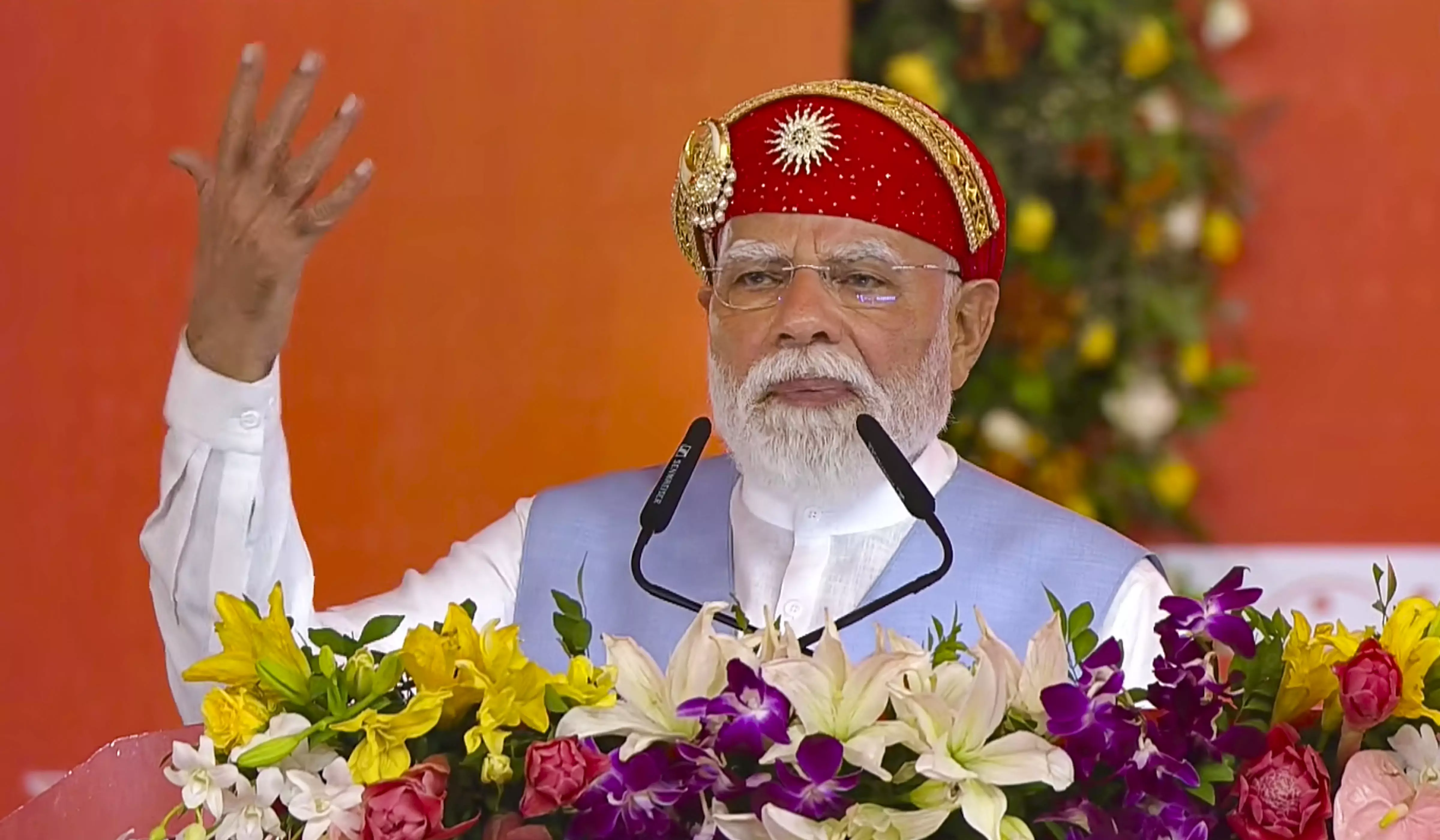
New Delhi: The government on Wednesday said that the reduction in income tax burden over the past 12 years reflects the government's vision of 'Ramrajya', said a booklet released by the government to mark Narendra Modi's tenure as India's longest-serving Prime Minister. “Reforms like GST, faceless tax, and digital India have helped build 12 years of trust in the public system, which will support India in becoming a $5-trillion economy,” the government said in a booklet.
Highlighting the achievements of the Modi government, the release also said that increased taxpayer confidence has enabled greater investment in roads, hospitals, infrastructure, and other initiatives aimed at strengthening the country's future. The Modi government has provided tax relief to people on four occasions since 2014.
Annual tax-free income limit has been hiked 6 times in the last 12 years — from Rs 2 lakh to Rs 12.75 lakh now. The income taxpayer base rose sharply to 12.13 crore from 5.26 crore during the period. When the government's income increased, that money did not stay in the treasury; it returned to the citizens,” the booklet said.
Also, quicker income tax refunds have improved cash availability for taxpayers. “The tax burden has decreased, and people's trust has increased. The result is that the number of taxpayers keeps growing because people see their money going into roads, hospitals, and the future of the country. This is what good governance is, this is the message of 'Ramrajya',” it added.
Modi on Wednesday became the longest continuously serving Prime Minister of India. On May 26, 2014, Modi took charge as India's prime minister with a landslide victory. He was re-elected with a bigger mandate in 2019, and his second term began on May 30 of the same year. His third consecutive term started on June 9, 2024.
India's growth story, the release said, has transitioned from 'Fragile Five' to 'Fastest Growing Economy'. In 2013, India was ranked among the world's five most vulnerable economies; however, decisive reforms completely turned the tide. “Today, India stands proudly as the world's fastest-growing major economy. Behind this monumental transformation lies a series of decisive reforms,” it said.
Listing out the reforms, it also said that the government successfully brought inflation under control, implemented GST, thus unifying the entire nation into a single market, and carried out banking reforms, which led to a reduction in non-performing assets (NPAs). “Twelve years of reforms have become twelve years of trust. Whether it is GST, faceless tax, or Digital India, every step has made citizens feel that they too are nation-builders. India is moving towards a 5-trillion-dollar economy. This is not just a figure, it is the flight of every Indian's dream,” the booklet said.
On the next-generation GST reforms, it said that the Centre has simplified the lives of citizens and brought in savings of up to 10 per cent across all income groups. “The GST collection has reached an all-time high of Rs 2.42 lakh crore in April. The middle class has emerged as the biggest beneficiary of these reforms, and domestic consumption increased by nearly Rs 2 lakh crore,” it said.