The military drill, which was named ‘Exercise Drone Prahaar’, was led by General Officer Commanding of the Dimapur-based Spear Corps (or III Corps) Lieutenant General Abhijeet S Pendharkar who observed that the drill designed to validate the integration of drone technology into tactical operations by Infantry and supporting arms
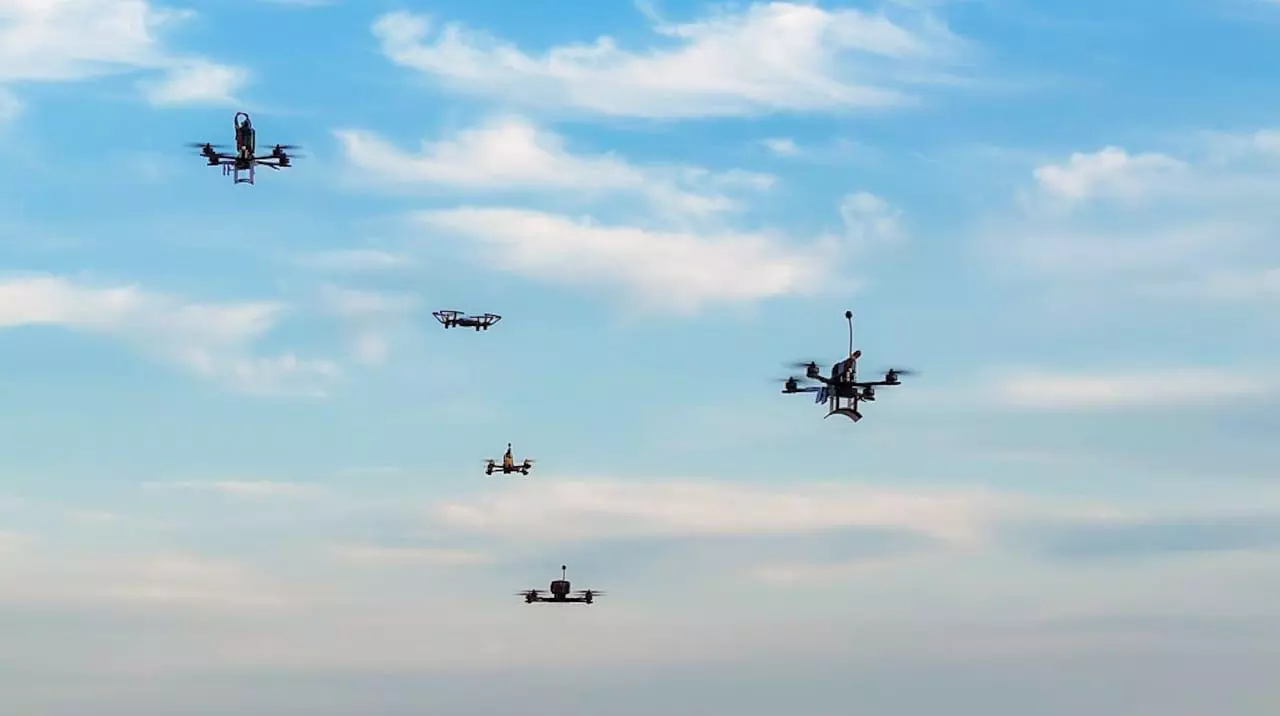
Guwahati: Amid the confusion over multiple drone strikes targeting camps of outlawed United Liberation Front of Asom-Independent (Ulfa-I) in Myanmar recently, the Indian Army on Saturday said that they have carried out an ‘advanced’ military drill in forward areas near Myanmar border.
The military drill, which was named ‘Exercise Drone Prahaar’, was led by General Officer Commanding of the Dimapur-based Spear Corps (or III Corps) Lieutenant General Abhijeet S Pendharkar who observed that the drill designed to validate the integration of drone technology into tactical operations by Infantry and supporting arms.
“Executed under realistic operational conditions, the exercise showcased the effective deployment of drones for Intelligence, Surveillance and Reconnaissance (ISR), real-time sensor-to-shooter links and precision targeting throughout the tactical and operational layers of the battlefield. A primary objective was to enhance command reach and situational awareness for tactical commanders through layered surveillance and support for dynamic decision-making,” a defence spokesman told reporters.
Security sources said that the exercise also tested critical enablers for battlefield drone integration including airspace deconfliction, secure communications and coordination protocols across multiple arms and services.
The defence sources said that the drill will boost preparedness and adaptability for future challenges. The exact location of the drill was not revealed, but the official said it was along the forward areas of the Dimapur-based formation of the Indian army.
It is significant that two bases of the outlawed Ulfa-I were nearly destroyed in multiple drone strikes earlier this month, killing several cadres including three top leaders of the outfit.
The Indian Army had officially denied its involvement in the strikes.
Meanwhile, outlawed Ulfa-I chief Paresh Baruah in a telephonic interview to a local newspaper claimed that from time to time he talks with the Assam chief minister Himanta Biswa Sarma but not regularly. “Let us see whether he can influence the Central Government to hold talks with Ulfa-I on the core issue,” said Mr Baruah.
The Ulfa-I chief claimed that the drone attacks on their camps in Myanmar were launched from two helipads – one in Arunachal Pradesh and one in Nagaland. The Army took truckloads of drones to the helipads to launch the attacks. Some drones landed in the forests and one landed on a camp of the PLA, which was located near the Ulfa-I camps. But the NSCN camps were not targeted, he said.
On Army’s denial of the attacks, Mr Baruah while citing various instances pointed out that immediately after the attacks on Ulfa-I camps, senior Army officers of India visited Myanmar and held talks with Myanmar army rulers.
Mr Baruah asserted that the outfit would continue its armed battle but assured that they would not target Assamese people. He also said that they would not target Assamese police officers unless attacked first.

