CTA Rebukes Sonam Wangchuk’s Tibet Comparison Amid Ladakh Anniversary Protests

Climate activist defends himself: They don't know what happened in Leh on September 24, 2025
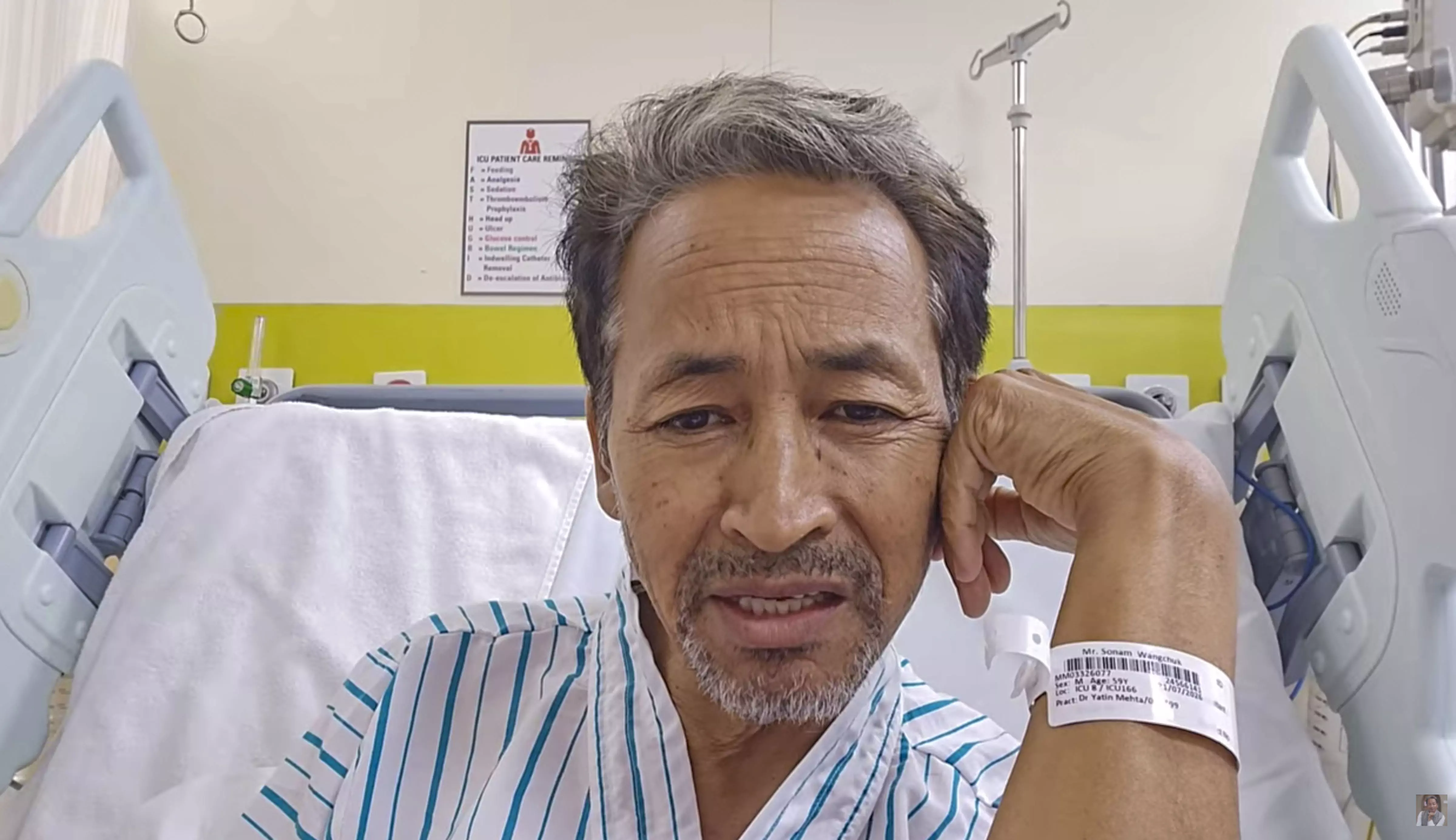
Srinagar: The Central Tibetan Administration (CTA) has publicly criticised climate activist Sonam Wangchuk over remarks he made during a gathering in Ladakh, where he drew a comparison between the Indian government's treatment of Ladakhis and the Chinese government's treatment of Tibetans.
The controversy emerged against the backdrop of commemorations marking the first anniversary of the violent unrest that shook Ladakh on September 24, 2025 and continues to influence the region's political discourse.
In an official statement issued on Friday, CTA spokesperson Tenzin Lekshay expressed deep concern over Wangchuk's comments, describing the comparison as both "misplaced and inaccurate". The criticism centred on Wangchuk's assertion during a public address that "even the Chinese are not treating Tibetans the way the Indian government is treating Ladakhis".
According to the CTA, such a comparison fails to accurately reflect the realities faced by Tibetans living under Chinese rule and risks undermining the severity of the situation in Tibet.
Responding through a post on 'X', Lekshay stated that the CTA was troubled by Wangchuk's remarks because they did not represent the actual conditions prevailing inside Tibet. He emphasised that Tibet remains under China's authoritarian rule, where Tibetans continue to face systematic restrictions on their fundamental rights, religious freedoms and cultural expression. The CTA further argued that Beijing has intensified efforts aimed at eroding Tibet's distinct cultural, linguistic and religious identity, making any comparison with Ladakh's current political grievances inappropriate.
The disputed remarks were made earlier in the week at a gathering in Leh organised to mark the first anniversary of the violence that erupted during protests demanding statehood for Ladakh and the extension of Sixth Schedule constitutional safeguards to the Union Territory. Those protests turned violent and resulted in the deaths of four civilians, while eighty others sustained injuries.
To commemorate those who lost their lives, Leh, Kargil and several other parts of Ladakh observed a shutdown on Thursday. Local organisations, community groups and activists, including Wangchuk, called for the day to be observed as Shaheed Diwas (Martyrs' Day). Prayer meetings and memorial gatherings were organised at several locations to honour the deceased and remember the events that unfolded a year earlier.
In a move seen as an attempt to address some of the lingering tensions, Ladakh Lieutenant Governor Vinai Kumar Saxena announced on the eve of the anniversary that criminal cases against 20 individuals connected to the protests would be withdrawn.
Following the criticism from the CTA, Wangchuk defended his original remarks in a detailed post on 'X' on Friday night. He argued that many people questioning the comparison with Tibet were unaware of the extent of what had occurred in Leh during the September 2025 violence because the region had experienced a prolonged internet blackout in the aftermath of the disturbances. Stressing that he has long sympathised with the Tibetan cause and consistently opposed Chinese repression in Tibet, Wangchuk said his comments were rooted in the suffering witnessed in Leh rather than any attempt to diminish the hardships faced by Tibetans.
Wangchuk maintained that while Ladakh had historically been "happy and prosperous in India", the situation over the last six years had changed significantly, with the events of September 2025 representing the lowest point. He pointed to the deaths of four civilians in a town of roughly 20,000 people, a subsequent suicide, injuries suffered by around 80 individuals, and the arrest of 75 people, many of whom faced serious charges, including attempted murder. He further alleged that the violence occurred without authorised firing orders and described it as what many believed to be a "stage-managed" episode.
Drawing a political parallel, Wangchuk questioned why demands for accountability had emerged in Delhi over the use of pellet guns and police action against protesters at Jantar Mantar, while, in his view, a stronger response had not followed the incidents in Leh. Referring to video footage that he described as evidence of police excesses against peaceful hunger-strike participants, Wangchuk said that the final judgement should be left to the public after examining the available evidence for themselves.
"While in Delhi the Parliament came to a halt demanding Amit Shah's resignation for use of pallet guns and lathi charge at Jantar Mantar... Shouldn't he resign for this (the incidents that unfolded in Leh on September 24 last year)?", he wrote, posting a video clip of those incidents and saying, "You can watch this clip of police brutality on people sitting on peaceful hunger strike. Rest I leave it to viewers to decide."
