Al‑Falah University Under Intensifying Scrutiny Amid Delhi Blast Probe

The National Assessment and Accreditation Council (NAAC) has issued a show-cause notice to the university over allegations of claiming accreditation status it did not hold, raising fresh questions about the institution’s credentials
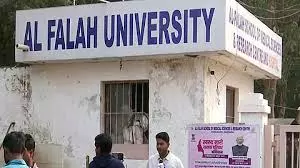
Faridabad / New Delhi: The privately-run Al-Falah University, located in Dhauj village, Faridabad and managed by the Al-Falah Charitable Trust, has become a major focal point in India’s investigation following the car explosion near the Red Fort in New Delhi on November 10. Authorities now probing a so-called “white-collar terror module” say multiple persons affiliated with the institution are under investigation and significant evidence has been seized from campus-linked locations.
Key developments today
Investigators have seized a vehicle from the campus of Al-Falah University registered in the name of Dr Shaheen Shahid, one of the individuals linked to the terror-module probe. The vehicle is described by officials as the third terror-linked car found so far.
The National Assessment and Accreditation Council (NAAC) has issued a show-cause notice to the university over allegations of claiming accreditation status it did not hold, raising fresh questions about the institution’s credentials.
Earlier, the university’s website was hacked and displayed a message condemning “radical Islamic activities” with reference to the recent blast in Delhi — adding to the controversy surrounding the campus.
Why the university is in the spotlight
The probe into the Red Fort blast has uncovered links between several of the accused and Al-Falah University. Among them:
Dr Umar Un Nabi (also known as Dr Umar Mohammad), identified as the driver of the exploded car, was previously employed at the university. Dr Muzammil Shakeel was also on the university faculty and is alleged to have coordinated logistics from campus-linked rooms; from his premises a massive cache of explosives was recovered.
The institute’s recruitment processes, vetting of staff, and alleged usage of campus infrastructure for non-academic purposes are now under investigation.
Institutional and regulatory issues
In addition to the terror probe, the university is facing regulatory scrutiny:
NAAC says the institution’s website displayed that it had accreditation though it had neither completed nor applied for the proper accreditation cycle.
The hack of the university website suggests vulnerabilities and raises concerns about campus propaganda or ideological infiltration.
University response
Al-Falah University has issued a statement condemning the blast, asserting that the institution had no knowledge of the alleged activities beyond the employment of the doctors in question. It claimed “no unauthorised material or chemicals” were stored on campus and said it is cooperating with security agencies.
Implications
The proximity of the university (≈ 30 km from Delhi) and its involvement in the probe has heightened concerns about the spread of radicalisation in educational institutions.
The discovery of seized vehicles and explosives in locations tied to the campus raises alarm about misuse of academic settings for terror logistics.
Regulatory oversight of private universities, especially those offering medical education and large-scale facilities, may come under stricter scrutiny in the aftermath.
What happens next
Investigative agencies say they will:
Examine the full staffing, financial, land- and recruitment-related records of Al-Falah University.
Determine whether campus infrastructure was used for procurement, storage or planning of terror operations.
Coordinate with regulatory bodies such as NAAC and the University Grants Commission (UGC) to assess accreditation, donor funding and compliance lapses.
As the probe into the Red Fort car blast continues, Al-Falah University has emerged as a significant node in the investigation — not merely because of the individuals involved, but because of the broader concerns it raises about institutional oversight, radical infiltration and the linkage between academic settings and terror networks. The coming days are expected to clarify the depth of the university’s involvement.
