An extended sitting of an existing session can be convened with a minimum two-day notice, compared with at least 14 days for a fresh session.
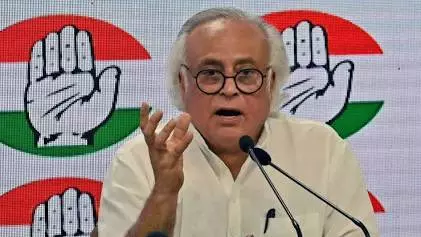
New Delhi: The Congress on Monday accused the Centre of deliberately keeping Parliament's Monsoon session unprorogued for a record 88 days to facilitate the passage of contentious delimitation legislation.
Congress general secretary Jairam Ramesh alleged that the delay was intended to give Union home minister Amit Shah time to secure a two-thirds majority in the Lok Sabha for the proposed bills.
Both Houses were adjourned sine die on August 13, but neither had been formally prorogued as of Monday morning. The 88-day gap surpassed the previous record of 87 days in 2008.
In a post on X, Ramesh cited the parliamentary reference book Kaul and Shakdher, which says the gap between adjournment sine die and prorogation is generally two to four days.
He acknowledged that Parliamentary Affairs Minister Kiren Rijiju had cited the 87-day gap in 2008, but said that instance arose from exceptional circumstances and had the consensus of political parties.
Ramesh alleged that the present delay was intended to enable the government to secure the numbers required to pass what he called “dangerous and destructive” delimitation bills.
He said Congress president Mallikarjun Kharge had written to Prime Minister Narendra Modi four times in six months seeking an all-party meeting to discuss delimitation proposals transparently before introducing legislation, but the request had not been accepted.
The prolonged gap has kept open the possibility of Parliament being reconvened at short notice to consider legislation linked to delimitation and implementation of women's reservation.
An extended sitting of an existing session can be convened with a minimum two-day notice, compared with at least 14 days for a fresh session.
The issue assumes significance as a Constitution Amendment Bill linked to delimitation and implementation of women's reservation failed to secure the required majority in the Lok Sabha on April 17.
However, the Constitution does not prescribe a deadline for proroguing Parliament after adjournment sine die. A prolonged gap does not, by itself, constitute a constitutional or procedural violation.