Climate Crisis, Stink Bugs Hit Bihar Shahi Litchis Production

8 Jun 2026 4:29 PM IST8 Jun 2026 4:29 PM IST
Litchis have now become vulnerable to infestation by the Litchi Stink bugs, known scientifically as Tessaratoma Javanica.
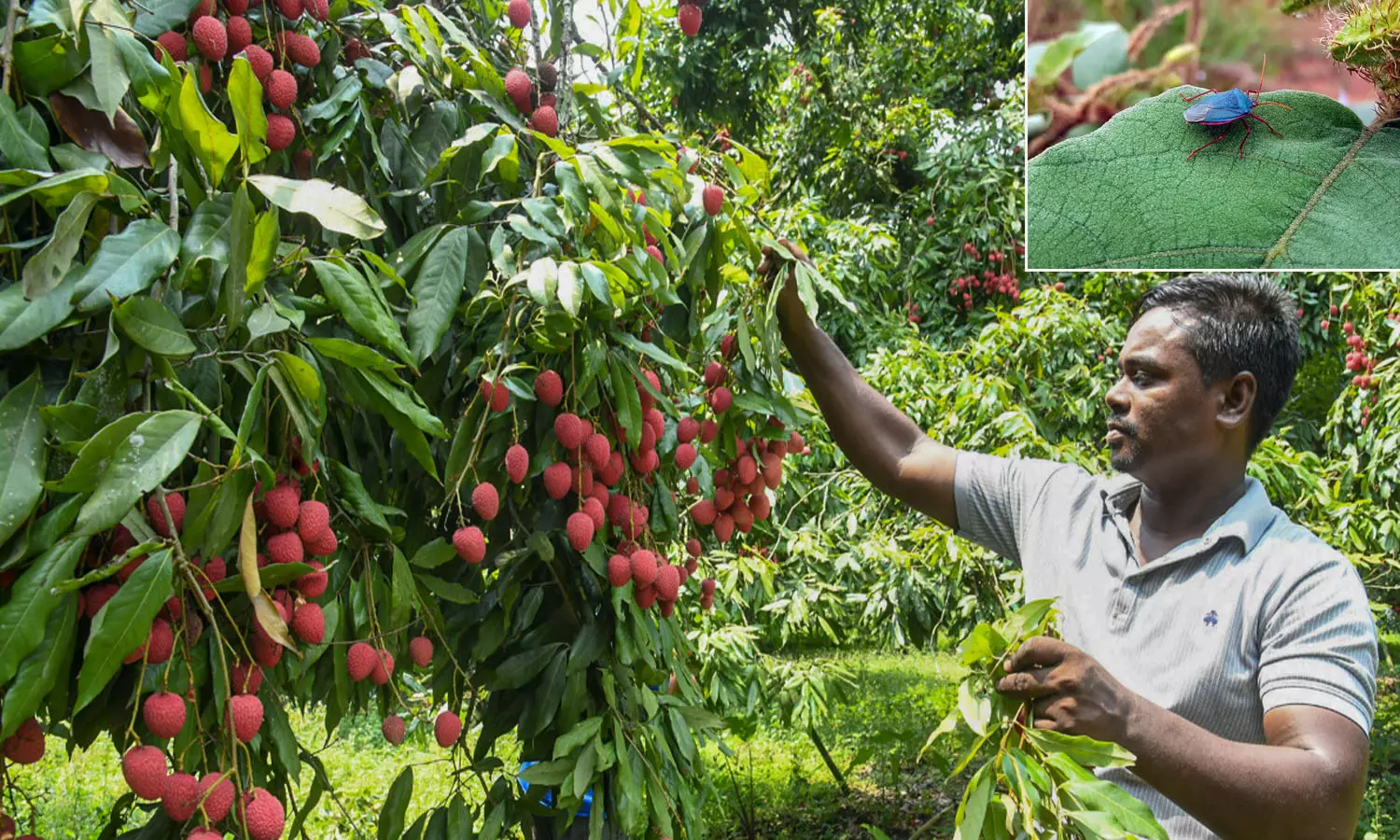
A worker plucks litchi inside an orchard during the harvest season, in Sonitpur. PTI Image
Bihar’s unmistakable Shahi Litchis have found themselves in a crisis due to the infestation of Litchi Stink Bugs and erratic weather due to climate change.
A summer special fruit, exported worldwide, Litchis are known to be succulent, fleshy, and sweet, serving to be a perfect fruit for the heat. At unprecedented levels of heat this summer in India, the loss of Litchis is evident.
With a delicate biological cycle that involves litchis starting their reproductive process in the dry winters and reap its fruits in the summer, a bad winter season that was unduly hot and irregular rains has put a break to its biological cycle. Weakened after the winter, Litchis have now become vulnerable to infestation by the Litchi Stink bugs, known scientifically as Tessaratoma Javanica. A minor pest until a few years ago, it most probably migrated from other states by log transportation and the use of old trucks.
At an estimated 70% loss of litchi production in some areas of Bihar, a combination of bad weather and infestation by the stink bugs has proven fatal for the market that contributes to 40% of India’s production. Rural farmers who spend months at orchards taking care of these fruits, hoping for a return of premium fruits that would provide for them and their family’s lives, have found themselves going back home empty-handed.
Unseasonal rains in March also put the orchards under pressure. As the fruits were starting to take shape and mature, harsh rains thrashed them down before they could mature to a level that would let them survive this type of weather. With an already sensitive biological cycle disturbed, unseasonal rains and unforgiving weather made any hope that the farmers would have held in the litchis surviving for a healthy reaping bleak.
These crushing weather conditions also brought out more problems for farmers. With high moisture and sudden heat following one another, the Litchi Stink bugs found ideal conditions to reproduce and multiply. Rarely seen at these levels in Bihar, the stink bugs found a home in the orchards of Bihar. When pesticides got washed away due to the rains, the stink bugs found hardly any opposition and thrived.
The bugs attacked the tender shoots and fruit stalks of the litchi, taking away important nutrients from the plant, leaving little for the fruits. When they drop before ripening, the litchis are just husks of their expected result, discoloured and massively unfit for sale.
The National Research Centre on Litchi is recommending early pest control and surveillance with the adoption of Good Agriculture Practices (GAP) to prevent repeated instances of the same in the future. Recommendations towards more biological approaches rather than chemical interventions have also followed up, aiming to preserve the delicate life cycle rather than brute force it with chemical interventions.
Adoption of modern techniques, smart management of resources, and detailed maintenance of the soil might perhaps be the only way forward for Litchi farmers amid irregular weather conditions and the rise of pests such as Litchi stink bugs.
This article is written by Arnav Madhura, a student of Krea University, interning with Deccan Chronicle.
( Source : Guest Post )

Next Story