China Urges India Not To Use Tibet Card Ahead Of Jaishankar Visit

13 July 2025 10:34 PM IST13 July 2025 10:34 PM IST
China warns India against using the Tibet issue ahead of Jaishankar’s SCO visit, calls Dalai Lama’s succession “internal affair.”
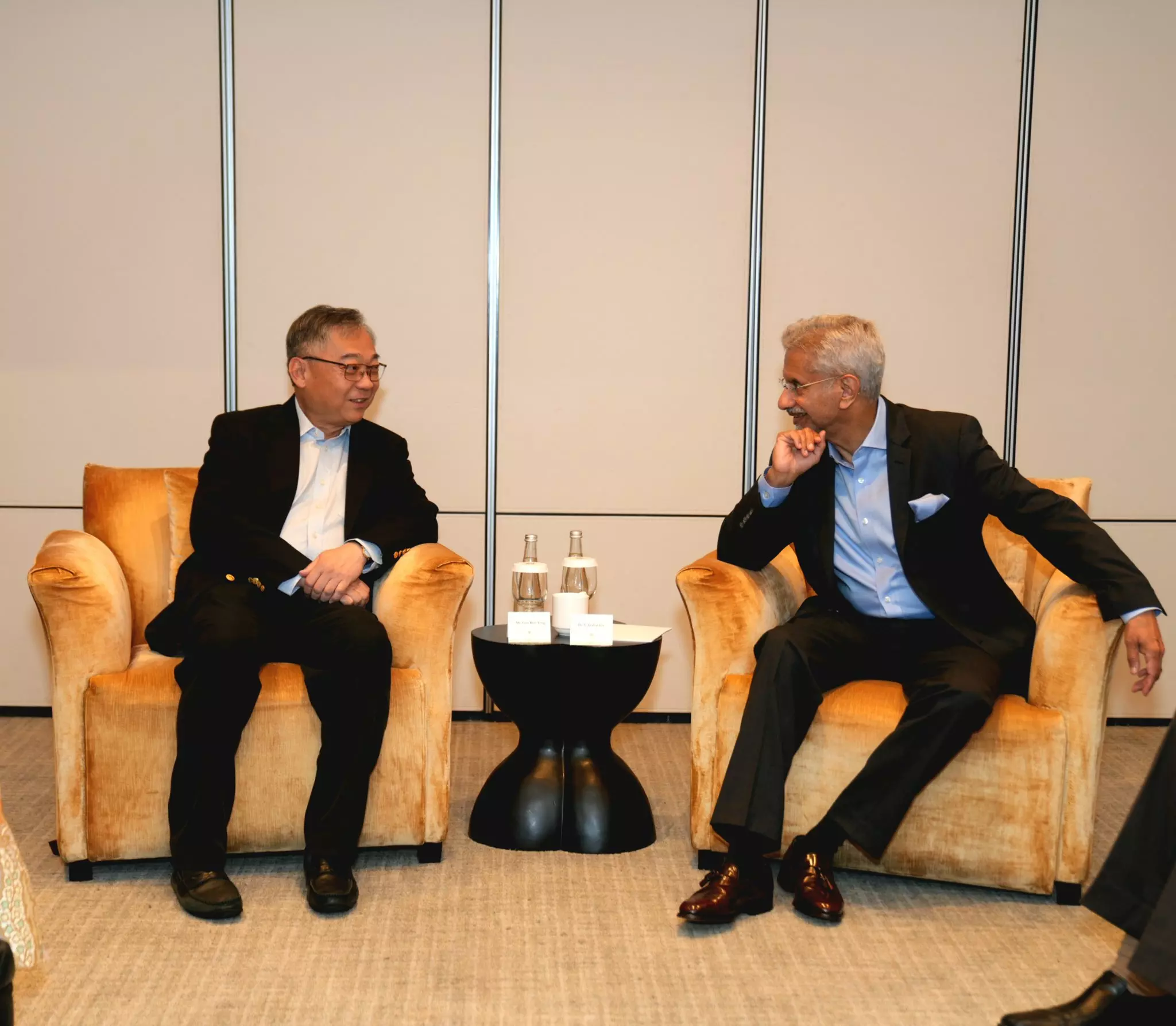
External affairs minister S. Jaishankar’s visit to China for the Shanghai Cooperation Organisation Foreign Ministers’ meeting in Tianjin, Beijing (Image:DC)
New Delhi: Just ahead of external affairs minister S. Jaishankar’s visit to China for the Shanghai Cooperation Organisation Foreign Ministers’ meeting in Tianjin, Beijing issued a thinly veiled warning to India against playing the “Xizang (Tibet) card.” On Sunday, a Chinese Embassy spokesperson stated, “In reality, the Xizang-related issue is a thorn in China-India relations and has become a burden for India. Playing the ‘Xizang card’ will definitely end up shooting oneself in the foot.” Xizang is the Chinese name for Tibet.
Spokesperson Yu Jing posted on X that “some individuals from strategic and academic communities, including former officials, have made improper remarks on the Dalai Lama’s reincarnation, contrary to the Indian government’s public stance. As foreign-affairs professionals, they should recognize the sensitivity of Xizang-related issues and understand that the Dalai Lama’s reincarnation and succession are China’s internal affairs, allowing no external interference. The Indian government has politically committed to China, acknowledging that the Xizang Autonomous Region is part of the People’s Republic of China and prohibiting Tibetans in India from engaging in political activities against China. The Chinese government places great importance on protecting and developing ethnic-minority cultures. In Xizang, Tibetans continue freely to maintain their traditional attire, cuisine and architectural styles.”
The Chinese Embassy also criticised a recent report by the US-based Tibet Action Institute alleging the ill-treatment and beating of Tibetan children in Chinese schools. The embassy responded that “Xizang is a high-altitude region with a dispersed population. For children from herding families, traveling long distances to school is unavoidable. Boarding schools offer a practical solution to guarantee equal access to education. Like schools in other regions, Xizang boarding schools emphasize family involvement through parent committees and open-day events. Students may return home every weekend, during holidays and festivals, and throughout winter and summer breaks. Parents can visit or take their children home at any time. The schools provide courses in Tibetan language, literature and folk dance. Students enjoy traditional Plateau cuisine and may wear traditional clothing on campus.”
In October last year, India and China reached a breakthrough by signing a pact on military disengagement in the Depsang and Demchok sectors of Ladakh after several rounds of diplomatic and military talks. Relations had been strained since April–May 2020, when Chinese troops amassed along the Line of Actual Control in Ladakh, violating border agreements and leading to the deadly Galwan Valley clash in mid-June 2020. Bilateral ties have since begun to rebuild, with the Kailash Mansarovar pilgrimage by Hindu devotees to Tibet resuming this year.
Historically, Tibet’s spiritual leader, the Dalai Lama, is chosen through a reincarnation process. The current Dalai Lama, Tenzin Gyatso (born 1935), fled to India in 1959 after a failed revolt against Chinese rule and now resides in Dharamsala, Himachal Pradesh. His advanced age has raised concerns about his succession, which could become a flashpoint between Beijing and his exiled followers in India’s Central Tibetan Administration. Although India officially recognizes Tibet as part of China, it has recently avoided reiterating this stance, instead maintaining that the Dalai Lama is an “honored guest” and “religious leader” with a large following in India.
( Source : Deccan Chronicle )

Next Story