Chhari Mubarak Begins Final Leg Of Amarnath Yatra

The Chhari Mubarak left the Dashnami Akhara after morning puja and Vedic rituals: Reports
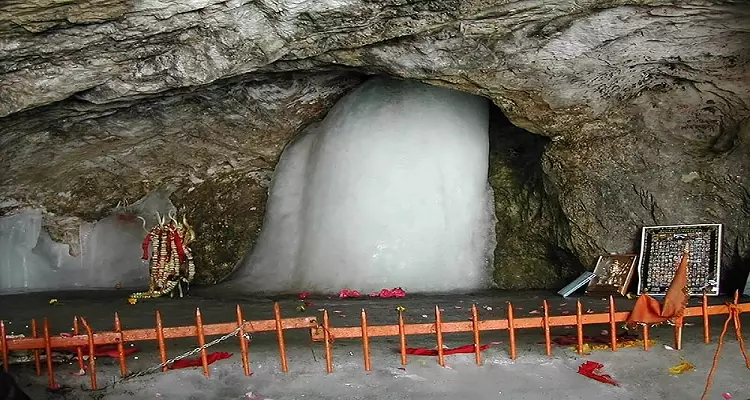
SRINAGAR: The Chhari Mubarak, the sacred mace of Lord Shiva, commenced its traditional and final journey toward the Amarnath cave shrine on Saturday, with its custodian Mahant Deependra Giri reiterating a strong message of peace, unity, and communal harmony
Speaking to reporters before departing Srinagar for Pahalgam, the Mahant underscored the spiritual and cultural significance of the procession, describing it as a symbol not only of devotion but also of Kashmir’s longstanding tradition of coexistence.
Mahant Giri said that he and the sadhus accompanying him would offer prayers at the holy cave for the well‑being of the nation, with special emphasis on lasting peace and prosperity in Jammu and Kashmir, a region he praised for its centuries‑old ethos of brotherhood.
He noted that people belonging to different faiths and regions have historically contributed to the smooth conduct of the Yatra, adding that their cooperation continues to uphold the pilgrimage’s sanctity. Reflecting on his more than three decades of service to the Chhari Mubarak, he recalled earlier times when residents from all communities would gather at the Dashnami Akhara in Srinagar’s Budshah Chowk-Maisuma quarter to bid farewell to the holy mace, calling it a testament to Kashmir’s composite culture.
The Chhari Mubarak left the Dashnami Akhara after morning puja and Vedic rituals, making its way to Pahalgam with ceremonial stops at traditional sites including Bijbehara and the Martand Sun Temple. At Pahalgam, the Mahant said, Pujan and Yisarjan ceremonies would be performed on the banks of the Lidder River, followed by the customary Kari Pakuri Bhandara for sadhus. The procession will then move to Chandanwari—the last motorable point on the route—before beginning the foot journey through Sheshnag and Panchtarni.
The holy mace is scheduled to reach the Amarnath cave on August 28, coinciding with Shravan Purnima and Raksha Bandhan, when the final rituals, installation ceremony, and Vedic chanting will take place. After the cave rituals, the procession will return to Panchtarni and proceed via Sheshnag and Chandanwari to Pahalgam on August 29. The annual pilgrimage will formally conclude on August 30 with prayers and the traditional Visarjan ceremony, after which the Chhari Mubarak will return to its abode at the Dashnami Akhara in the first week of September.
This year’s Yatra, which began on July 3, faced multiple weather‑related disruptions, including suspension of the general pilgrimage from August 9 due to track damage and persistent rainfall. Despite these challenges, more than 4.8 lakh pilgrims had visited the cave shrine till August 8. While the Baltal route reopened briefly earlier in the month, the traditional Pahalgam axis remained closed for regular pilgrims due to ongoing restoration work.
The number of pilgrims departing from Jammu fell sharply in the final week of July, largely due to disruptions along the Jammu–Srinagar National Highway (NH44) and a series of weather‑related hazards. Individuals involved in managing pilgrimage logistics also suggested that the complete melting of the naturally formed ice Shivling inside the cave—an annual occurrence increasingly influenced by rising temperatures—prematurely may have further contributed to the decline in pilgrim turnout.
The authorities had anticipated that this year’s Amarnath Yatra would surpass all previous records. However, the final tally fell short of expectations. More than 4.14 lakh pilgrims visited the shrine in 2025 , compared with over 5.12 lakh pilgrims in 2024, the highest in twelve years. In 2012, a total of 621,145 pilgrims—the only year on record when the Amarnath Yatra crossed the six‑lakh mark—offered prayers at the revered cave shrine, nestled high in the Kashmir Himalayas at an altitude of 3,888 metres (12,756 feet).
The Chhari Mubarak procession, however, continues along the traditional route as the ceremonial culmination of the Yatra. Mahant Giri acknowledged the difficulties posed by weather and terrain but said the devotion of pilgrims and the support of local communities remain central to the Yatra’s enduring spirit.
