Centre Names Former RBI Governor Urjit Patel As IMF Executive Director

The Appointments Committee of the Cabinet approved the appointment of Dr. Urjit Patel to the post of Executive Director (ED) at the IMF, for a period of three years
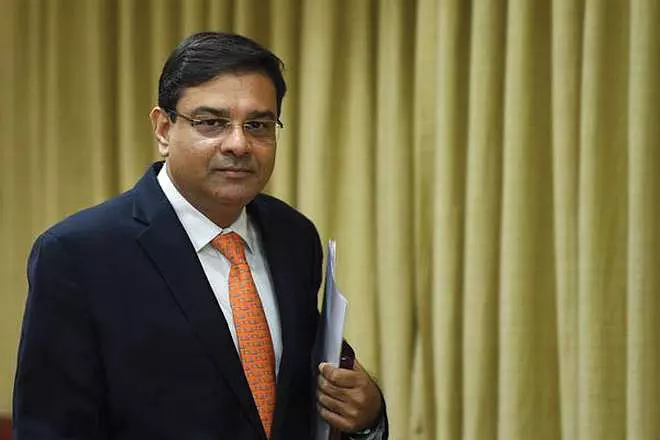
Chennai: Former RBI governor and economist Urjit Patel has been appointed Executive Director of the International Monetary Fund for a three-year period, the government said in an order.
“The Appointments Committee of the Cabinet has approved the appointment of Dr. Urjit Patel, Economist and Former RBI Governor, to the post of Executive Director (ED) at the International Monetary Fund, for a period of three years with effect from the date of assumption of charge of the post, or until further orders, whichever is earlier,” the order said.
The post of Executive Director, representing India, had fallen vacant early this year after K V Subramanian, who had also served as the Chief Economic Adviser to the Government of India, was called back before the end of his tenure.
Urjit Patel, who served as the 24th Governor of the RBI from September 4, 2016, resigned from the post before completing his term, citing personal reasons in 2018 and became the first RBI governor after 1990 to resign before the completion of tenure following a public spat with the government.
He has served IMF earlier as an economist between 1990 and 1995. Between 1996-1997, he was on deputation from the IMF to the central bank. From 1998 to 2001, Urjit Patel worked as a consultant for the Finance Ministry.
He also has been an advisor at Boston Consulting Group (BCG); President of Business Development at Reliance Industries and held Board positions at Gujarat State Petroleum Corporation and Multi Commodity Exchange of India. He has done his education from London School of Economics, Oxford as well as Yale universities.
The IMF's Executive Board conducts day-to-day business. It consists of 24 Executive Directors elected by member countries or blocs. The Board reviews the economic policies of each member at the national, regional, and global levels. The Board approves IMF financing to assist members with temporary balance of payments issues and oversees its development initiatives.
