Delhi HC Refuses to Entertain Plea Alleging Forceful Conversion in Chhattisgarh

It was alleged that in March 2026, a mob including local panchayat members allegedly entered the homes of the Christian Adivasi families and demanded that they either convert to Hinduism or leave the village
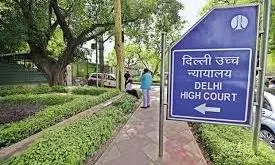
New Delhi: For want of territorial jurisdiction, the Delhi High Court has refused to entertain a plea alleging forceful religious conversion of Adivasi families living in Chhattisgarh from Christianity to Hinduism.
The high court said the Chhattisgarh High Court would be the appropriate forum to examine the grievance of the petitioner.
Justice Swarana Kanta Sharma rejected the submission of the petitioner that the Delhi High Court has the jurisdiction to entertain the petition since it was challenging an order of the National Human Rights Commission (NHRC) which has its office in Delhi.
"It is also undisputed that NHRC deals with complaints of violation of human rights from across the country, which can be lodged online from any part of India, as was done in the present case. If the contention of the petitioner were to be accepted, every order of the NHRC, concerning an incident anywhere in the country, would be amenable to challenge before this court merely because the NHRC has its office at New Delhi," Justice Sharma said in a November 19 judgment.
The court was hearing a petition in which it was stated that the petitioner and other Adivasi families of village Chitlanar in Chhattisgarh's Sukma district have been peacefully practising Christianity for about 18 years and have been cultivating their ancestral lands for their livelihood.
It was alleged that in March 2026, a mob including local panchayat members allegedly entered the homes of the Christian Adivasi families and demanded that they either convert to Hinduism or leave the village.
Those who refused were allegedly assaulted with lathis and the families were also threatened with death, the plea said, adding that the local police, despite being present, did not intervene.
Due to the threats and violence, the petitioner and other affected families, including women, children and elderly persons, were forced to leave the village and take shelter in Sukma town, the plea claimed.
It further said that the families have remained displaced and are living in makeshift shelters since then.
The petitioner thereafter approached the NHRC with a detailed complaint under the provisions of the Protection of Human Rights Act.
In June, the NHRC disposed of the complaint by transmitting it to the district magistrate (DM) and superintendent of police (SP), Sukma, with directions to take appropriate action within eight weeks, associate the complainant or victims in the process and inform them of the action taken.
Aggrieved by the NHRC's decision to dispose of the complaint, the petitioner approached the Delhi High Court seeking a direction to treat the NHRC's order as an interim direction rather than a final disposal of his complaint.
He also sought fresh consideration of the complaint by the NHRC, including an opportunity of hearing before any order of disposal.
The petition was opposed by the central government, which contended that the entire cause of action had arisen in Sukma, as the alleged incidents, displacement and inaction were attributable to the local police and district administration.
It said that the mere fact that the NHRC was headquartered in Delhi could not confer territorial jurisdiction on the high court.
The high court noted that neither the state of Chhattisgarh nor the DM or the SP, Sukma, against whom the entire grievance of inaction is directed and who are required to act upon the impugned directions, have been arrayed as a party in the present proceedings by the petitioner.
"This court is not inclined to entertain the present petition for want of territorial jurisdiction and on the principle of forum conveniens. Accordingly, the present petition, along with pending application, if any, stands dismissed, with liberty to the petitioner to avail the remedies available to him in accordance with law before the appropriate forum, including the High Court of Chhattisgarh," Justice Sharma said.
