Bullet Train Hits Milestone With Palghar Tunnel Breakthrough

Union railway minister Ashwini Vaishnaw said the 454-metre-long tunnel, with a width of 14.4 metres, will accommodate both up and down tracks of the bullet train corridor.
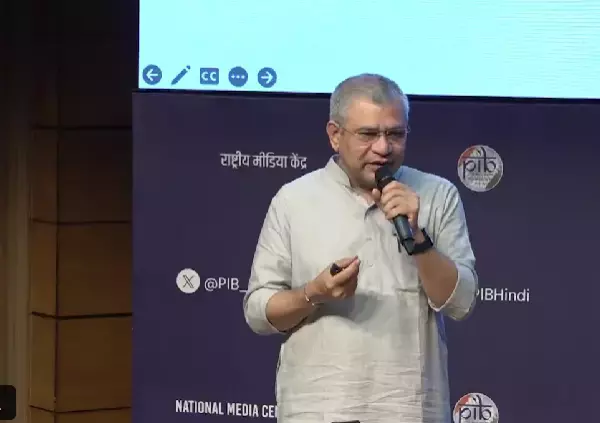
NEW DELHI: India’s first high-speed Mumbai-Ahmedabad rail project reached a key engineering milestone with the successful breakthrough of the second mountain tunnel in Maharashtra’s Palghar district.
Union railway minister Ashwini Vaishnaw said the 454-metre-long tunnel, with a width of 14.4 metres, will accommodate both up and down tracks of the bullet train corridor. He said this was the second mountain tunnel breakthrough in Palghar within a month, following the breakthrough of MT-5 near Saphale on January 2.
The tunnel, identified as MT-6, was excavated from both ends using the New Austrian Tunnelling Method (NATM) and completed within 12 months. A tunnel breakthrough marks the stage when excavation teams from opposite ends meet, creating a continuous passage through the mountain.
Vaishnaw said the pace of work on the high-speed rail project had boosted confidence and was drawing global attention for innovations in construction and technology. He noted that several advanced construction technologies and large machines used in the project were manufactured in India.
The minister said commercial operations on the Gujarat section of the corridor were expected to begin next year. High-speed rail services are projected to extend up to Thane by 2028, with the corridor reaching Mumbai by 2029.
Hemant Vishnu Savara, Lok Sabha MP from Palghar, said the district was witnessing rapid development through major railway projects, including the high-speed rail corridor, the Dedicated Freight Corridor and the proposed Vadhvan Port. He said railway investment in Maharashtra had increased since 2014, leading to faster execution and improved services.
Officials said NATM was chosen due to its suitability for complex geological conditions in Palghar district, allowing real-time adaptation using shotcreting, rock bolts and lattice girders. The method does not require very heavy machinery and is effective where tunnel boring machines are less suitable.
Vaishnaw said worker safety inside the tunnel was ensured through geotechnical instruments, real-time monitoring systems, fire safety measures, ventilation and controlled access arrangements.
In Maharashtra, construction is progressing on several fronts. Work on the project’s longest river bridge across the Vaitarna has reached pier level, while foundation works are under way on other major rivers, including the Ulhas and Jagani. Construction is also advancing at all four stations, highway crossings using long-span steel bridges, and a 21-km tunnel between Bandra Kurla Complex and Shilphata. A total of seven mountain tunnels are under construction in Palghar district.
The Mumbai-Ahmedabad High Speed Rail (MAHSR) project spans about 508 km, covering 352 km in Gujarat and Dadra and Nagar Haveli, and 156 km in Maharashtra. The corridor will connect major cities including Sabarmati, Ahmedabad, Anand, Vadodara, Bharuch, Surat, Bilimora, Vapi, Boisar, Virar, Thane and Mumbai.
As of January 27, about 334 km of viaducts, 17 river bridges and 12 major crossings over highways, railways and other infrastructure had been completed. Track laying and electrification work has also gathered pace in the Gujarat section.
