Bengal's shattered resistance to the BJP's expansion plans also carries immense symbolic and strategic weight, reflecting deep political polarisation and effectively completes the saffron sweep across the region.
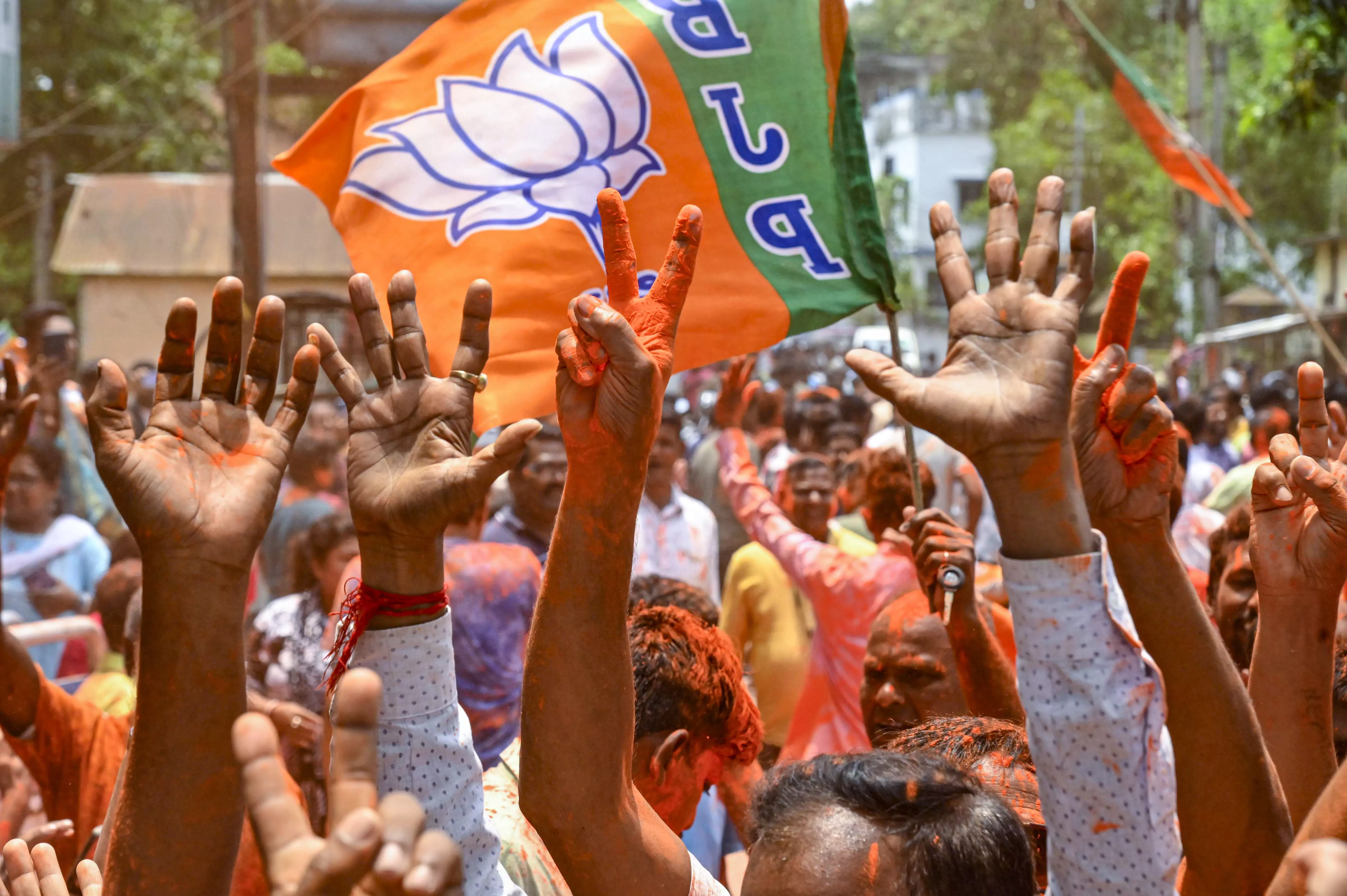
Kolkata: In a watershed moment that redraws India's political map, the BJP on Monday stormed to power in West Bengal, transforming years of steady gains into a historic breakthrough and marking its arrival in the last major eastern bastion that had resisted its expansion for over a decade.The emphatic victory is more than electoral arithmetic –it has dealt a significant blow to Mamata Banerjee's long-standing dominance in the state and reshaped the regional political landscape.
Bengal's shattered resistance to the BJP's expansion plans also carries immense symbolic and strategic weight, reflecting deep political polarisation and effectively completes the saffron sweep across the region.
"The Lotus blooms in West Bengal! The 2026 West Bengal Assembly Elections will be remembered forever. People's power has prevailed, and BJP's politics of good governance has triumphed," Prime Minister Narendra Modi said on X.
"I bow to each and every person of West Bengal. The people have given a spectacular mandate to BJP and I assure them that our Party will do everything possible to fulfil the dreams and aspirations of the people of West Bengal. We will provide a Government that ensures opportunity and dignity to all sections of society," he said.
What began as a modest foothold during the 2014 Lok Sabha elections has culminated in a decisive mandate, fulfilling the promise of its dramatic surge in the 2019 Lok Sabha elections and overcoming the setbacks of the 2021 West Bengal assembly polls.
At the national level, the Bengal win significantly strengthens the BJP's political narrative, reinforcing the perception of continued expansion and resilience. It is also likely to enhance the stature of central leaders and regional figures, positioning Bengal as a key pillar in the BJP's eastern India strategy.
The BJP's victory also serves as a strong validation of its carefully calibrated political strategy in the state, built around a distinct set of core issues.
Central to this approach was a pledge to curb illegal cross-border migration, sealing the yet unfenced patches of the international boundary with Bangladesh and reinforcement of security along the strategically vital Siliguri Corridor, framing these concerns squarely within the ambit of national security.
Equally prominent were promises to fast-track the Citizenship Amendment Act (CAA) and the Uniform Civil Code (UCC).
Alongside this, the party worked to consolidate Hindu support in carefully targeted constituencies, giving final shape to focused electoral equations.
From the governance aspect of the state, policy directions could shift notably with the BJP assuming power. Campaign themes of the party have included stronger law-and-order measures, industrial development, welfare restructuring, ensuring women's security, and implementing central policies.
Observers say that governance would be closely watched, particularly in areas such as administrative reform, investment climate, and centre-state coordination –areas where the BJP has promised a departure from existing models.
In a redux of the 2021 assembly polls and 2024 Lok Sabha election, the BJP deployed its hardest hitters in Bengal, with Prime Minister Modi and Union Home Minister Amit Shah leading the charge.
Their relentless political attacks on the Mamata Banerjee administration's failures not only caught the voters' imagination but also clearly captured the simmering anti-incumbency sentiments.
The poll outcome effectively endorses that political blueprint, strengthening its prospects for replication in future assembly contests, particularly in states with significant minority populations and porous international borders.
However, even with this decisive win, the BJP may still face significant challenges in the months and years ahead in Bengal. The party would need to govern a politically polarised state with entrenched regional identities and strong opposition from the TMC. Managing social cohesion, especially amid sensitive issues like citizenship and migration, would be critical.
Additionally, expectations of rapid development and administrative change could test the party's ability to deliver on campaign promises.
That said, the saffron victory marks a decisive turning point, transforming the BJP from a challenger into the ruling force and redefining West Bengal's political trajectory.
It would also signal that the state's electoral landscape has entered a new era, where national parties can displace entrenched regional dominance, reshaping the balance of power not just in Bengal, but across India.