Assault on Kashmiri Shawl Seller in Uttarakhand Sparks Outrage

The assailants reportedly questioned the brothers about their origin, and upon learning they were from Kashmir, began verbally abusing them with slurs before launching a physical attack.
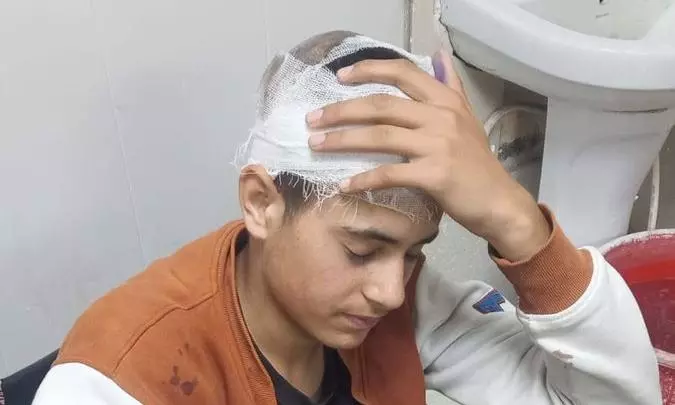
Srinagar: In a disturbing incident that highlights ongoing concerns about the safety of Kashmiri residents outside their home region, an 18-year-old shawl seller Tabish Ahmed from the Valley was brutally assaulted in the Vikasnagar area of Dehradun, Uttarakhand, on Wednesday.
According to a complaint lodged with local police, Tabish and his brother Danish were at a local shop when they were confronted by a group including shopkeeper Sanjay Yadav and at least one other individual. The assailants reportedly questioned the brothers about their origin, and upon learning they were from Kashmir, began verbally abusing them with slurs before launching a physical attack.
Tabish suffered severe head injuries requiring medical attention, including stitches, while his brother sustained minor injuries. The assault allegedly involved the use of iron rods, escalating what began as an argument into a violent confrontation that left the young vendor hospitalised but out of danger.
Jammu and Kashmir Chief Minister Omar Abdullah swiftly responded to the incident, personally speaking with his Uttarakhand counterpart, Pushkar Singh Dhami, urging immediate and strict action against the perpetrators. Abdullah's office confirmed that Dhami assured him of decisive measures, including the registration of a First Information Report (FIR) and enhanced safety protocols for residents from J&K in Uttarakhand.
A report said that the local authorities lodged FIR No. 26/2026 at the Vikasnagar Police Station under Sections 117(2) and 352 of the Bharatiya Nyaya Sanhita (BNS), which pertain to causing hurt and assault. Sanjay Yadav, one of the accused, was promptly taken into custody, with legal proceedings underway.
Abdullah had earlier during the day on Thursday publicly condemned the attack via a post on 'X', describing it as part of an unacceptable series of incidents targeting Kashmiris, including a recent one in Himachal Pradesh. He emphasised that claims of J&K being an integral part of India ring hollow if its people live in fear elsewhere, vowing that his government would intervene wherever necessary to prevent recurrences and calling on the Union Home Ministry to sensitise other states accordingly.
The Congress party also vehemently protested the assault, framing it as a symptom of what it alleged is broader societal divisions exacerbated by Prime Minister Narendra Modi's policies since 2014.
In a detailed post on 'X', the party highlighted Tabish's youth and innocence, noting that his only "fault" was being from Kashmir while earning a living by selling shawls. The party accused the BJP-led central government of relying on hate and division for political gain, pointing out that such attacks have become recurrent, particularly in BJP-ruled states, eroding India's social fabric. The post reminisced about a time when Kashmiri vendors were warmly welcomed across the country, contrasting it with the current climate of fear and intimidation based on religion or region.
Urging introspection, the Congress demanded that the BJP government ensure strict accountability, deliver justice to the victim's family, and halt the politics of division before it irreparably damages national unity.
Nasir Khuehami, the National Convener of the Jammu and Kashmir Students Association (JKSA), played a pivotal role in escalating the matter, directly raising it with Uttarakhand's Director General of Police, Deepam Seth. Khuehami reported that the authorities took the incident seriously, leading to the FIR and Yadav's arrest. He praised this as a positive initial step but stressed the need for time-bound, transparent, and exemplary accountability to deter future acts of communal profiling, mob violence, and intimidation against vulnerable communities. Khuehami underscored that such assaults on individuals pursuing honest livelihoods cannot become normalised, advocating for stronger safeguards to protect the rights, dignity, and safety of Kashmiri students and citizens nationwide.
