Assam Continues to Grapple with Worsening Flood Conditions, Over 41000 Affected

Floodwaters have submerged numerous low-lying areas, damaging over 3,800–4,200 hectares of cropland and affecting more than 76,000 livestock and poultry.
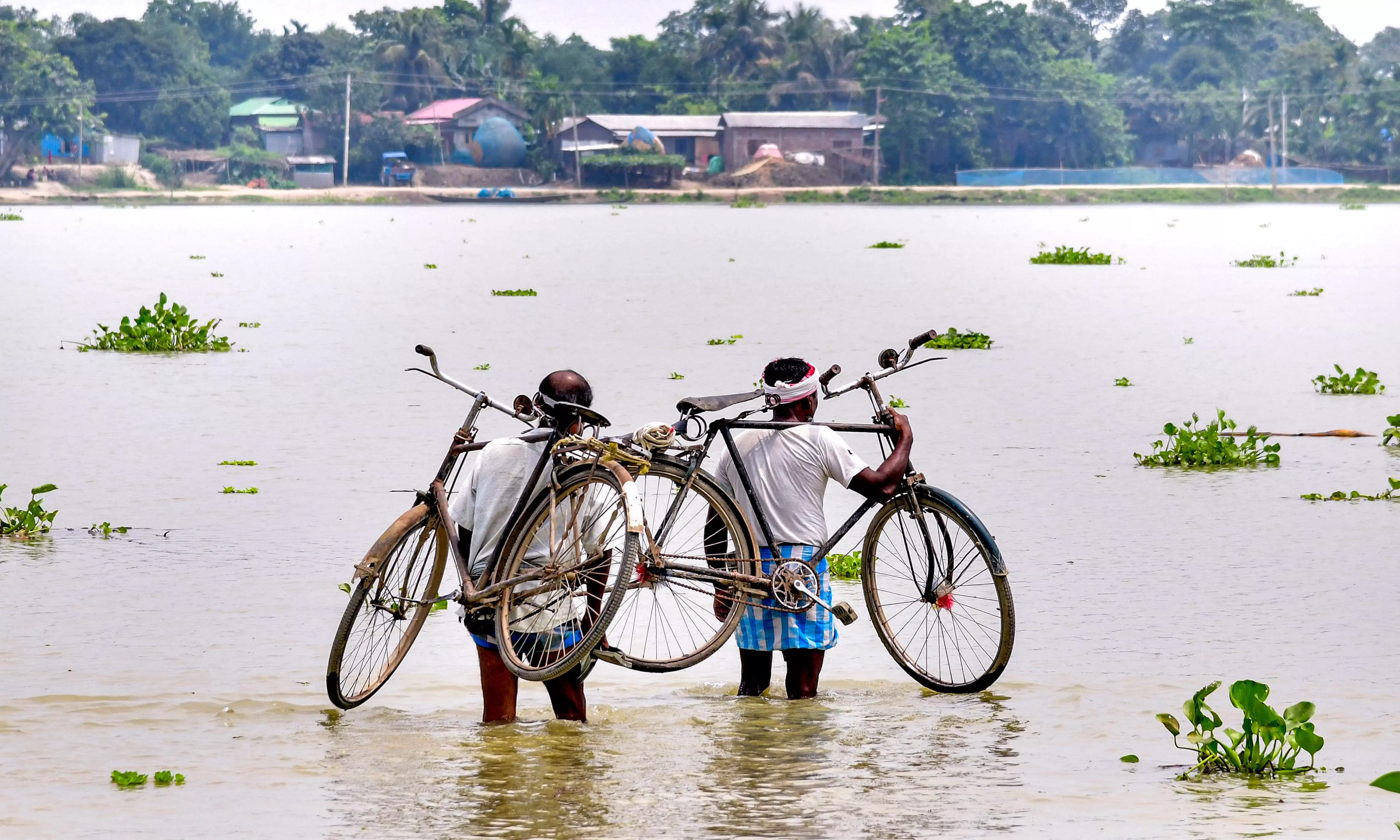
Guwahati: The flood situation in Assam on Wednesday remained grim due to heavy monsoon rains and rising river levels, primarily triggered by upstream deluges in Arunachal Pradesh. As of now nearly 47,000 people across multiple districts have been affected, with the first flood-related fatality reported and significant damage to homes, crops, and infrastructure.
According to the Assam State Disaster Management Authority (ASDMA), around 46,938 people in 221 villages and 10 revenue circles across six districts—Dhemaji (worst-hit, with over 41,000 affected), Dibrugarh, Nalbari, Chirang, Lakhimpur, and Biswanath—remain affected. Floodwaters have submerged numerous low-lying areas, damaging over 3,800–4,200 hectares of cropland and affecting more than 76,000 livestock and poultry.
Informing that one woman was swept away by floodwaters in Sissiborgaon, Dhemaji district, official sources said that it was the season's first confirmed death, while another person was reported missing earlier, with search operations ongoing. Authorities have set up four relief camps and six distribution centres sheltering over 450 displaced people, distributing essential supplies like rice, dal, salt, and oil. Over 88,000 animals have also been affected.
The authorities said that rivers like the Disang have crossed danger levels at plces such as Nanglamuraghat, while the Brahmaputra and its tributaries remain elevated following flash floods and landslides in neighbouring Arunachal Pradesh. The India Meteorological Department (IMD) has issued alerts for continued heavy rainfall, prompting heightened vigilance.
Meanwhile the Assam State Disaster Management Authority (ASDMA) has identified as many as 366 locations across the Kamrup Metropolitan district as landslide-prone, raising concerns over safety in several vulnerable pockets of Guwahati and its surrounding areas.
The listed areas fall mostly within hilly terrains and regions that have witnessed landslides or soil instability in the past. These include localities along the city’s hill slopes, cutting zones, and areas experiencing rapid urban expansion.
The data has been compiled based on field assessments, historical incidents, and geographical vulnerability.
People living in or near these identified zones should remain cautious, particularly during heavy rainfall. Residents have been advised to watch for early warning signs such as cracks in the ground, tilting trees or electric poles, and unusual water seepage.
