India's Legal Fraternity Questions Reliance On Foreign Arbitration
7 Sept 2026 12:34 PM IST7 Sept 2026 12:34 PM IST
Experts Call For World-Class Arbitration Institutions Within India

With Indian companies expanding globally, legal experts are questioning continued reliance on Singapore and other foreign arbitration centres and calling for stronger domestic dispute-resolution institutions.
As India's economic footprint expands globally, a key question is gaining attention within the legal fraternity: why should Indian companies continue to take their commercial disputes to foreign arbitration centres?
Supreme Court Justice Manmohan recently highlighted the issue, noting that Indian lawyers were not receiving enough arbitral appointments at the Singapore International Arbitration Centre (SIAC). He said India contributed about 178 SIAC references last year, while Indians received only around 31 tribunal seats.
Justice Manmohan made the remarks on August 28 at the India-Singapore Legal Bridge, organised by the General Counsels' Association of India with Drew & Napier during Singapore Convention Week 2026.
Singapore, London and Hong Kong have long been preferred seats for international arbitration because of their neutrality, procedural certainty, efficient case management and limited judicial intervention. However, as India emerges as a larger and more sophisticated economy, the continued dependence on foreign arbitration centres is prompting a debate over whether India should develop its own globally trusted arbitration ecosystem.
"The issue is not whether foreign arbitration centres are good. The real question is whether Indian and eventually global companies trust India just as much. India cannot become an economic powerhouse while exporting its disputes," said Senior Counsel Tushad Cooper.
The debate has gained relevance following the recent Singapore judgment in The Tata Power Company Ltd. v. Kleros Capital Partners Ltd. The dispute involved concerns over the arbitral tribunal's reasoning, disclosure of professional and institutional connections, and relationships involving the arbitration ecosystem and third-party litigation funding. The Singapore Court declined to interfere with the award, reiterating the narrow grounds available for judicial review.
The case is also significant for Odisha, where Tata Power operates four electricity distribution companies. The state is attracting major investments in mining, metals, energy, infrastructure and manufacturing, increasing the potential for complex domestic and cross-border commercial disputes.
India has undertaken several arbitration reforms, including amendments to the Arbitration and Conciliation Act in 2015, 2019 and 2021, aimed at faster proceedings, greater neutrality and reduced judicial intervention. Institutions such as the Delhi International Arbitration Centre have also established administrative mechanisms, rules and panels of arbitrators.
However, building trust remains the key challenge. Businesses choose established foreign centres because of confidence in institutional independence, professionalism and predictability—qualities India must develop at scale.
"This is not an argument for protectionism. Nor should Indian arbitration become an instrument for favouring Indian parties. The objective should be to create institutions that are so independent and professionally administered that neither side needs to worry about where the arbitrator comes from," Cooper said.
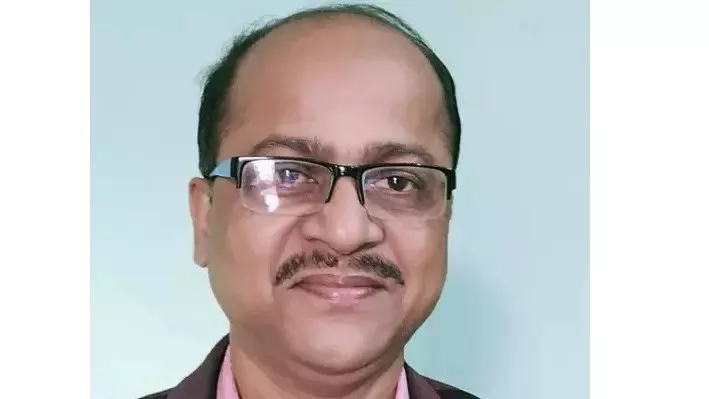
Tapan Kumar Swain, an Odisha-based lawyer, said Indian corporates should approach the choice of arbitration seat as strategically as they approach investments and international partnerships, considering transparency, fairness, accountability and confidence in the dispute-resolution process.
For rapidly industrialising states such as Odisha, credible dispute-resolution mechanisms could become increasingly important as commercial activity expands. India's ambition to become a global economic power will require not only infrastructure and investment but also institutions capable of resolving complex commercial disputes.
( Source : Deccan Chronicle )

Next Story