Armed Forces Future: Govt Aims for Enhanced Female Representation

9 March 2026 7:52 AM IST9 March 2026 7:52 AM IST
Women joined the National Defence Academy, with 17 cadets graduating in May 2025, marking a historic milestone for gender inclusion in military training.
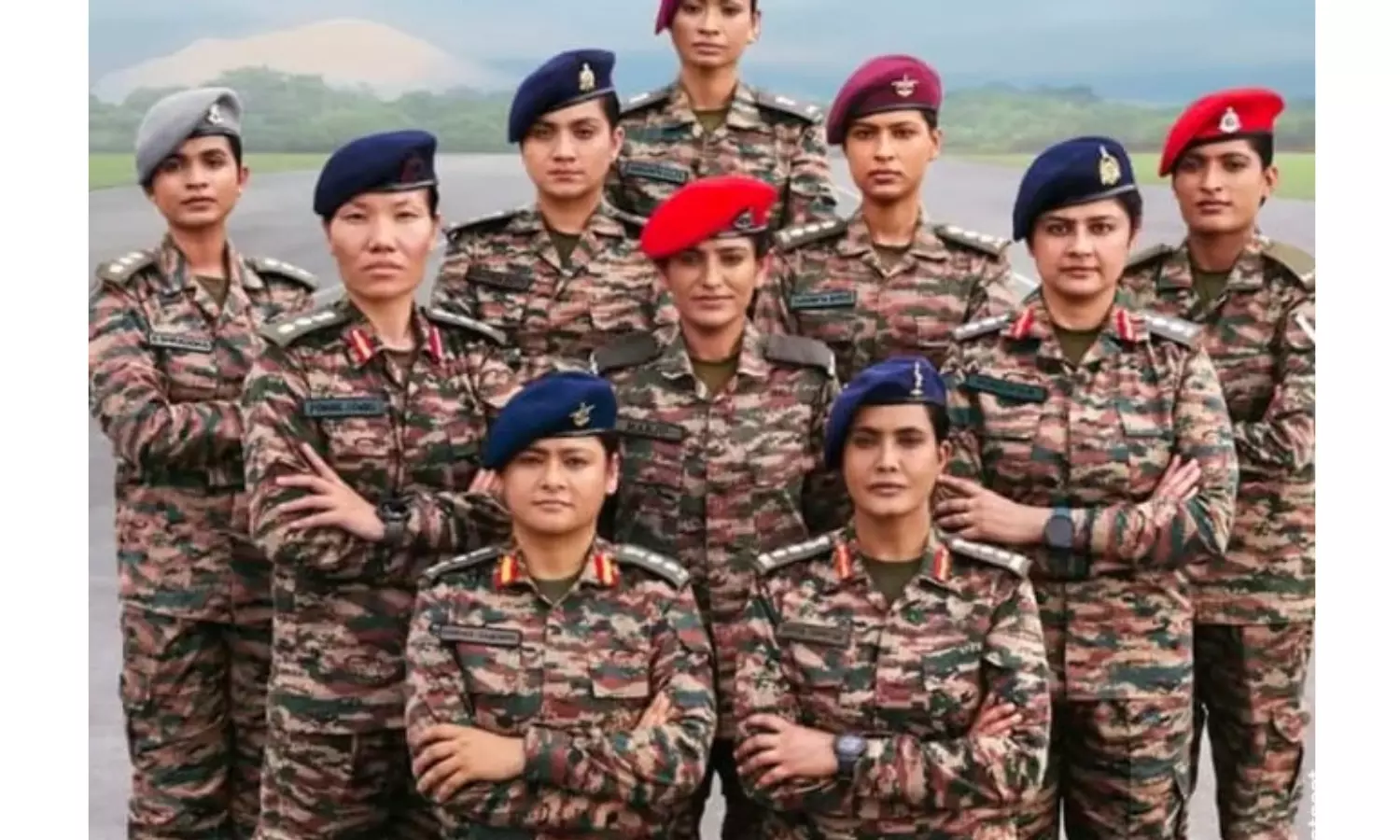
Representational image/X
New Delhi: The combined strength of women officers in the armed forces stood at nearly 3,000 in 2014, and it has since risen to more than 11,000, reflecting not only quantitative growth, but also a "broader shift" in institutional outlook, the government said on Sunday.
On the occasion of Women's Day, the Press Information Bureau (PIB) shared a fact sheet on women's participation in the three Services -- the Army, the Navy and the Indian Air Force (IAF).
Women's entry into the National Defence Academy (NDA) has "progressed significantly," with 17 women cadets graduating in May 2025 and 15 in November 2025, it said.
Also, women officers now hold senior leadership and operational command roles, including lieutenant general rank, fighter pilots, and commanders of key units, the government said.
"In 2014, the combined strength of women officers in the Army, Navy, and the IAF was approximately 3,000. This number has since risen to over 11,000, reflecting not only quantitative growth, but also a broader shift in institutional outlook," according to the fact-sheet.
And their growing presence in the armed forces stands out as a "significant milestone".
From operational duties to leadership positions, women are increasingly shaping the country's defence landscape with professionalism and dedication, it said.
"Over the past decades, their integration has emerged as one of the most significant institutional transformations in India's defence sector. From a historically limited presence largely confined to medical and nursing roles, women's participation has steadily expanded through progressive policy reforms, judicial support, and sustained institutional efforts aligned with national goals of gender equity and operational inclusivity," it added.
Today, women officers are increasingly undertaking commanding, strategic, and decision-making responsibilities across the three Services, "marking a new era of inclusivity, professionalism, and strengthened operational capability in India's defence forces," the government said.
The future trajectory for women in the Indian armed forces points towards a "substantially larger participation, driven by ongoing reforms, Nari Shakti initiatives, and institutional commitments to gender equity," it said.
Progressive expansion in recruitment -- through increased vacancies at the NDA, gradual induction of women into other ranks, and equal-opportunity policies -- will enable women officers to shoulder greater responsibilities across services, the government underlined.
In 1958, for the first time, women doctors were granted regular commissions in the Army Medical Corps on the same terms as men, the fact-sheet said.
In 1992, the Indian armed forces opened officer-level entry to women. The Indian Army introduced the Women Special Entry Scheme (WSES), allowing women to be commissioned in non-combat branches, while also extending eligibility to widows of service personnel killed in action as a compassionate measure, it said.
The same year witnessed parallel progress across the other services. The Indian Navy inducted women officers for the first time, while the Indian Air Force began commissioning women as Short Service Commission officers in flying, technical, and non-technical branches, the fact-sheet said.
Collectively, these initiatives in 1992 represented a "decisive shift" in India's defence policy, laying the foundation for the gradual expansion of women's roles across the armed forces, it said.
( Source : PTI )

Next Story