From Healing to Homecoming: The Rituals of Puri Rath Yatra Explained

The chariots of Lord Jagannath and his two siblings, Balabhadra and Subhadra, began their soujourn on the Grand Road of this seaside pilgrim town on Thursday.
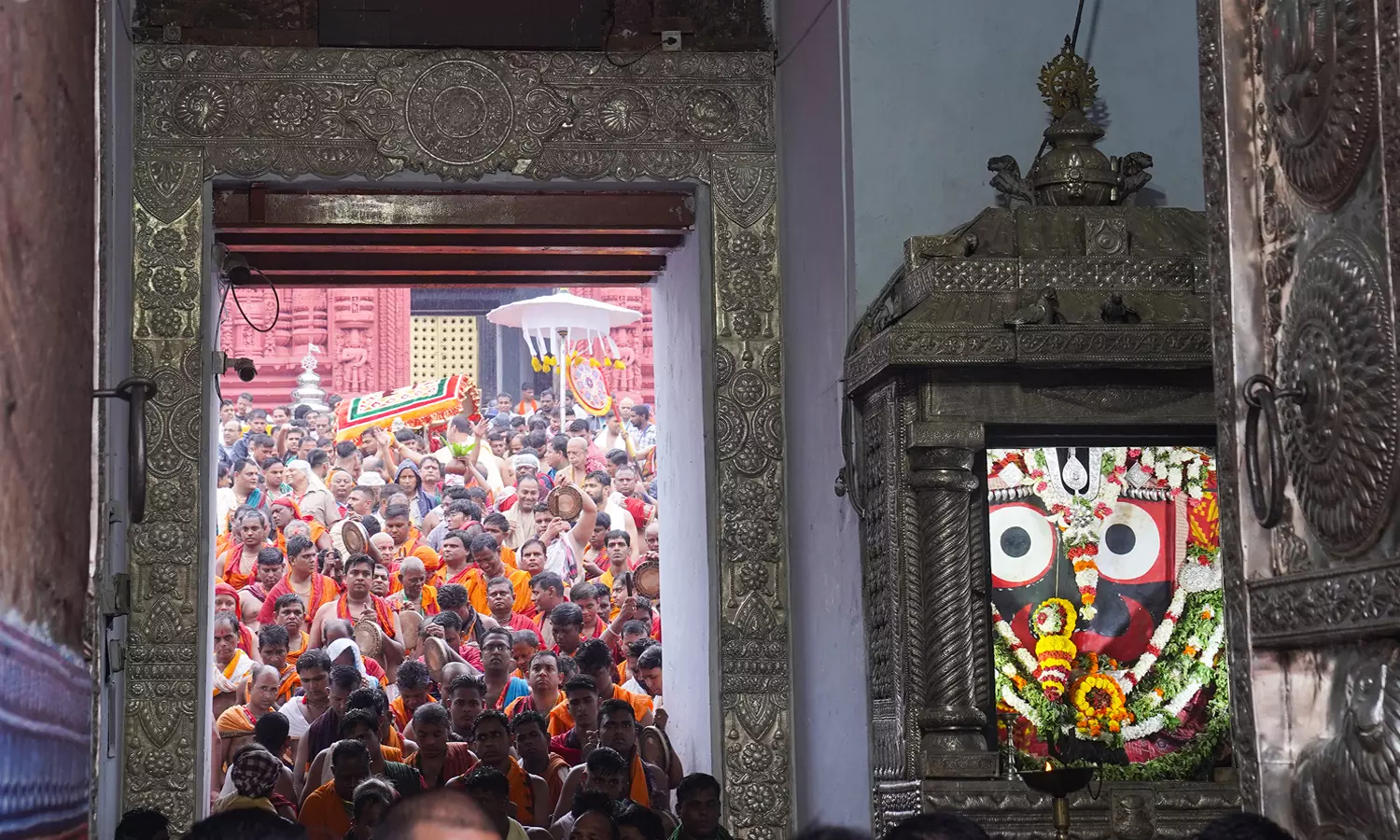
Puri: The chariots of Lord Jagannath and his two siblings Balabhadra and Subhadra began their soujourn on the Grand Road of this seaside pilgrim town on Thursday, as nearly two lakh devotees reached the venue to celebrate the annual Rath Yatra despite heavy rains.
Pahandi' ritual
Braving relentless rainfall, lakhs of devotees witnessed the 'Pahandi' ritual, in which idols of Lord Jagannath and his two siblings are taken to chariots from the 12th-century Puri temple, marking the beginning of the nine-day annual Rath Yatra in Odisha. Amid the beating of gongs and the blowing of conches and cymbals, Chakraraj Sudarshan was first taken out from the main temple and seated at the 'Darpadalan' chariot of Devi Subhadra.
PTI Image
Sunya Pahandi procession
Devotees began pulling the chariots at 4 pm after the traditional chariot sweeping by Puri's titular king Gajapati Maharaja Dibyasingha Deb and Puri Shankaracharya Swami Nischalananda Saraswati's visit, a temple official said.
'Chhera Pahanra' ritual
Puri's titular king Dibyasingha Deb performed 'Chhera Pahanra', a ritual of sweeping the floors of three chariots of Lord Jagannath and his two siblings, as part of the annual Rath Yatra festival. As per tradition, the titular king, who was carried in a silver-plated palanquin to the Shree Jagannath Temple, offered prayers to the deities seated on the chariots.
He cleaned the floors of the chariots with a gold broom, as priests chanted Sanskrit 'slokas' and sprinkled flowers and fragrant water.
The ritual, performed before devotees get their turn to pull the chariots, is emblematic of the belief that all are equal before the almighty.
Gajapati Maharaj Dibyasingha Deb, also considered the first servitor of Lord Jagannath, performed 'aarti' to the deities and greeted the people after the completion of the ritual. The 'Chhera Pahanra' ritual is also performed by the titular king on the occasion of 'Snana Purnima' (Lord Jagannath's bathing ritual) and 'Bahuda Yatra' (return car festival).
PTI Image
The 500-year-old Anasara ritual before Rath Yatra
For 15 days after Snana Purnima, the Jagannath Temple in Puri observes Anasara, also called Anavasara, a sacred period of seclusion that has continued for over 500 years. The ritual begins with the belief that after being bathed with 108 pots of sacred water during Snana Purnima, Lord Jagannath, Lord Balabhadra, and Devi Subhadra develop a fever. The deities are then moved to the Anasara Ghara, an isolation chamber inside the temple, and remain completely hidden from public view.
During this time, the Daitapati servitors attend to them with Ayurvedic care. A special paste made from Dasamula, roots of ten medicinal plants, and other herbs is applied as a treatment. Simultaneously, temple artists perform Banaka Lagi, painstakingly repainting the wooden idols with natural, vibrant colors in total privacy. The 15-day seclusion concludes with Netrotsava, the ceremonial painting of the deities’ eyes, followed by Naba Yauvana Darshan. On this day, devotees get the first glimpse of the rejuvenated, youthful forms of the Trinity. This divine healing sets the stage for the Rath Yatra.
The Festival of Chariots marks the grand public departure of the siblings from the Jagannath Temple to their aunt’s abode, the Gundicha Temple, a journey that symbolizes renewal, devotion and the living bond between the deities and their people.
