Amit Shah Likely to Review Security Situation in Post-Maoist Bastar

Union home minister may assess conditions for phased withdrawal of Central forces during May 18 Bastar visit
Raipur: Union Home Minister Amit Shah is likely to visit Bastar in Chhattisgarh on May 18 for a two-day review of the security situation in the region after it was declared free of armed Maoists earlier this year.
According to senior officials in the state home department, the visit is expected to focus on assessing whether the ground situation is suitable for the phased withdrawal of Central forces from the former Left Wing Extremism-affected region.
This will be Shah’s first visit to Bastar since Chhattisgarh was declared Maoist-free on March 31. More than 65,000 personnel from various Central Paramilitary Forces are currently deployed in Bastar for counter-insurgency operations.
Deputy Chief Minister Vijay Sharma had earlier indicated that Central forces may continue in the region for another year despite the improvement in the security situation.
Security camps set up across Bastar are gradually being converted into “Jan Suvida Kendras” or public service centres, providing healthcare, education, banking and access to welfare schemes for local villagers.
Around 400 security camps are currently operational across Bastar division, which includes Bastar, Kanker, Kondagaon, Dantewada, Sukma, Narayanpur and Bijapur districts.
Officials said Shah may inaugurate a public service centre at Netanar in Bastar district during the visit. The facility has been established at a security camp run by the CRPF’s 80th Battalion.
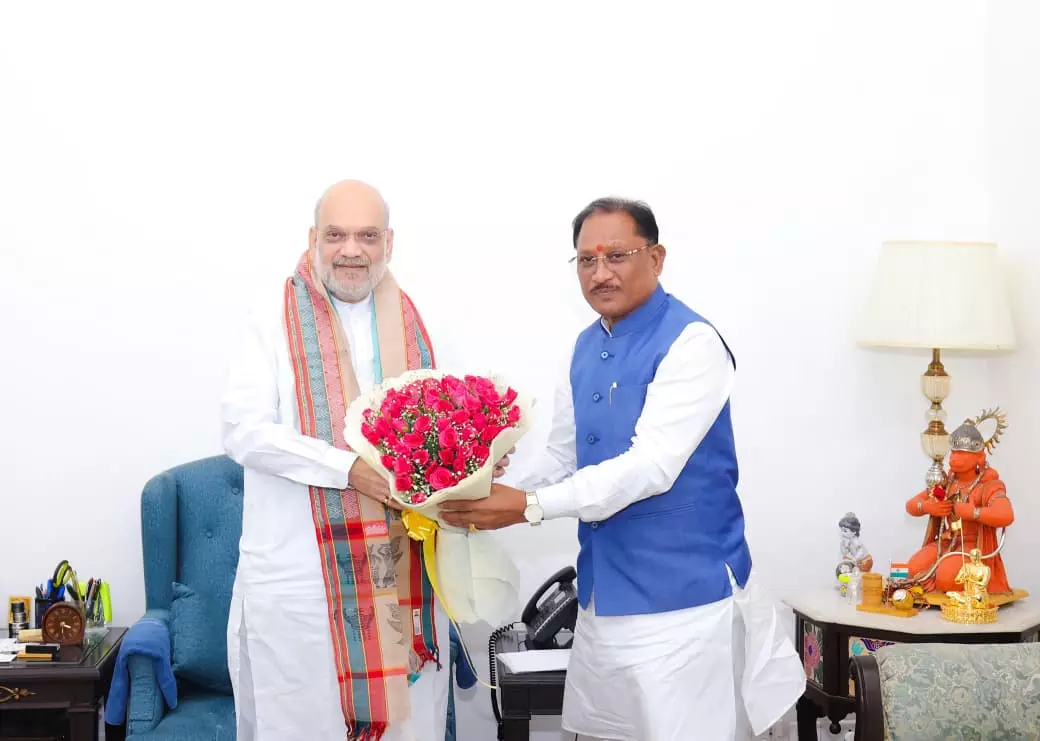
Ahead of the proposed visit, Shah on Thursday held discussions in New Delhi with Chief Minister Vishnu Deo Sai regarding the post-Maoism security and development scenario in Bastar. Vijay Sharma also attended the meeting.
According to the state government, Sai briefed Shah on ongoing development initiatives and rapid transformation taking place in the tribal region. The chief minister also highlighted efforts to improve healthcare access in remote forest villages through newly established medical facilities.
