Amarnath Yatra Suspended From August 9 Amid Track Damage And Severe Weather Alerts

The decision was taken after continuous rains created hazardous conditions along vulnerable stretches of the trekking paths: Official spokesman
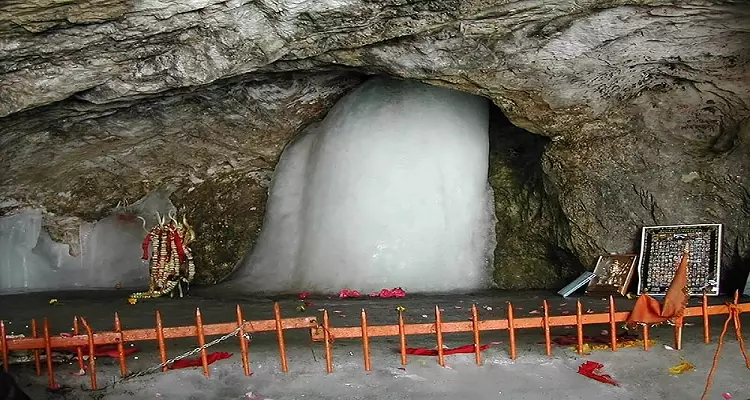
SRINAGAR: The Amarnath Yatra, which began on July 3, will be suspended from both the traditional Pahalgam route and the shorter Baltal route starting August 9, following extensive track damage caused by persistent rainfall and a fresh advisory of adverse weather conditions.
Officials emphasised that the suspension—coming midway through the 57‑day annual pilgrimage—is a precautionary measure to safeguard pilgrims and ensure that essential restoration work can be carried out without risk.
According to an official spokesman, the decision was taken after continuous rains created hazardous conditions along vulnerable stretches of the trekking paths. More than 4.8 lakh devotees have already visited the holy cave this year, but the recent spell of bad weather has made repair and maintenance unavoidable. The Border Roads Organisation (BRO) is currently engaged in stabilising and restoring damaged portions of the route, particularly where landslides and erosion have compromised the track.
Divisional Commissioner Kashmir Anshul Garg noted that the India Meteorological Department (IMD) has predicted further deterioration in weather over the coming days. In view of this forecast, authorities have ordered a complete halt to the Yatra from both access routes beginning August 9. He confirmed that the Chaddi Mubarak—the sacred Mace of Lord Shiva—will still proceed via the traditional Pahalgam route as per religious custom, culminating the Yatra on August 28, coinciding with Shravan Purnima and Raksha Bandhan.
Officials have urged all pilgrims to strictly follow safety advisories and cooperate with the administration to ensure the smooth conduct of the remaining religious rituals. The spokesman reiterated that the suspension is temporary and driven solely by safety concerns.
The pilgrimage had only recently resumed from the Baltal route on August 1 after a halt triggered by relentless rainfall and damage to the trekking path. Pilgrims camping at Baltal were allowed to move toward the cave shrine—located at an altitude of about 3,880 metres—once emergency repairs were completed and weather conditions improved. However, the Pahalgam axis remains closed due to ongoing restoration work and persistent instability along the longer traditional route.
The broader situation across the Himalayan region has been complicated by intense rainfall over the past week, which has caused landslides, flash floods and widespread damage to roads and communication networks. The Jammu–Srinagar National Highway (NH‑44), the Valley’s crucial all‑weather lifeline, has been repeatedly shut due to mudslides and shooting stones along the Ramban–Banihal stretch, disrupting vehicular movement and halting the scheduled pilgrim convoy from Jammu.
Despite these challenges, the Yatra has witnessed an overwhelming turnout this year, with lakhs of devotees braving difficult terrain and unpredictable weather to offer prayers at the revered cave. However, the number of pilgrims departing from Jammu has dropped sharply over the past week, largely due to highway disruptions and weather‑related hazards. Some people associated with the pilgrimage logistics, also believe that the complete melting of the naturally formed ice Shivling inside the cave—an annual phenomenon influenced by rising temperatures—may have contributed to the decline in pilgrim numbers.
Authorities continue to monitor the situation closely, stressing that all decisions are being taken with the sole aim of protecting lives and ensuring the sanctity and smooth culmination of the Yatra.